
Closed Security Council Consultations on Sudan
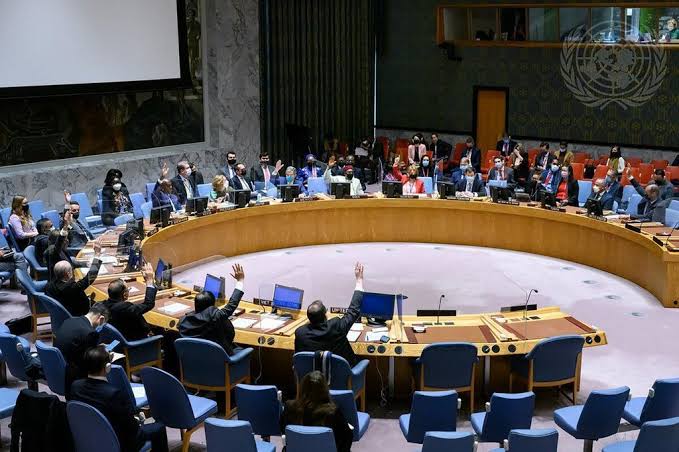
The Security Council’s agenda this week includes discussions on several current issues, including the Iranian-Israeli escalation and the situations in Libya, Sudan, and Afghanistan.
Today, Monday, the Security Council will hold an open briefing on Afghanistan. The Special Representative of the Secretary-General and Head of the United Nations Assistance Mission in Afghanistan (UNAMA), Rosa Otunbayeva, the Assistant Secretary-General for Humanitarian Affairs and Emergency Relief Coordinator, Joyce Msuya, and the Executive Director of UN Women, Sima Sami Bahous, will deliver a media briefing. Closed consultations are scheduled to follow the open briefing.
Tomorrow, Tuesday, the Security Council will hold an open briefing and closed consultations on the situation in Libya and the work of the United Nations Support Mission in Libya (UNSMIL). The Special Representative of the Secretary-General for Libya and Head of the United Nations Support Mission in Libya (UNSMIL), Hanna Serwa Tetteh, will provide a briefing on the Libyan situation.
The Council explained that, following consultations on the United Nations Support Mission in Libya (UNSMIL), Council members will discuss Myanmar under “any other business,” at the request of the United Kingdom, and will consider the draft presidential statement on Myanmar circulated by the United Kingdom.
On Tuesday, a briefing will be held on the Secretary-General’s report on the implementation of resolution 2231, which endorsed the Joint Comprehensive Plan of Action (JCPOA) on Iran’s nuclear program in 2015. Briefings are expected from Under-Secretary-General for Political and Peacebuilding Affairs Rosemary DiCarlo; Ambassador Samuel Zbojar (Slovenia), the Council’s facilitator for the implementation of resolution 2231; and the Head of the European Union Delegation to the United Nations, Stavros Lambrinidis, in his capacity as coordinator of the Joint Commission established by the parties to the JCPOA to oversee its implementation.
The following day, Council members will hold their annual open debate on children and armed conflict, chaired by Findia Persaud, Minister of Humanitarian Services and Social Welfare of Guyana. The expected presenters are Virginia Gamba, Special Representative of the Secretary-General for Children and Armed Conflict, Sheema Sengupta, UNICEF Director of Child Protection and Migration, and a civil society representative.
The Security Council will hold a briefing and consultations on Thursday on the Central African Republic, including the work of the United Nations Multidimensional Integrated Stabilization Mission in the Central African Republic (MINUSCA). Under-Secretary-General for Peace Operations Jean-Pierre Lacroix is expected to brief the media. At Russia’s request, Council members will discuss, as part of “any other business,” a proposal to change the background of the Security Council’s media monitoring.
Next Friday, the Council will hold an open briefing, followed by closed consultations, on the situation in Sudan pursuant to resolution 2715. The Assistant Secretary-General for Africa in Political and Peacebuilding Affairs and Peace Operations, Martha Ama Akia-Pope, is expected to brief in the open room. The Chair of the Sudan Sanctions Committee, Ambassador Jongkook Hwang, will also brief on the work of the Committee. The Secretary-General’s Personal Envoy for Sudan, Ramtane Lamamra, is expected to brief during the closed consultations.
On Friday, Council members will hold a briefing on the Democratic Republic of the Congo, including the work of the United Nations Organization Stabilization Mission in the Democratic Republic of the Congo (MONUSCO). The Special Representative of the Secretary-General for the Democratic Republic of the Congo and Head of MONUSCO, Bintou Keita, will brief. Closed consultations are scheduled to follow the open briefing.
It is noteworthy that yesterday, Sunday, witnessed an emergency meeting on Iran, which requested the meeting in a letter dated June 21, following the US strikes carried out overnight, targeting three nuclear sites and facilities: Fordow, Natanz, and Isfahan. Russia supported the request for the meeting, and IAEA Director General Rafael Mariano Grossi and an official from the Department of Political and Peacebuilding Affairs gave a briefing. The US strikes came in the wake of an escalation in the direct conflict between Israel and Iran, after Israel launched attacks on Iran on June 13, and Iran carried out retaliatory strikes against Israel. Council members continue to monitor the situation and may hold additional meetings depending on developments. Members are also expected to discuss this week a draft resolution circulated by China, Pakistan, and Russia on June 22, condemning the attacks on nuclear facilities in Iran.