
“Sudan’s Road to Recovery Runs Through Agriculture: Salah Hamid Ismail’s Vision for Rebuilding the Nation”
Rebuilding Sudan from the Roots: Agriculture, Unity, and the Path to Recovery
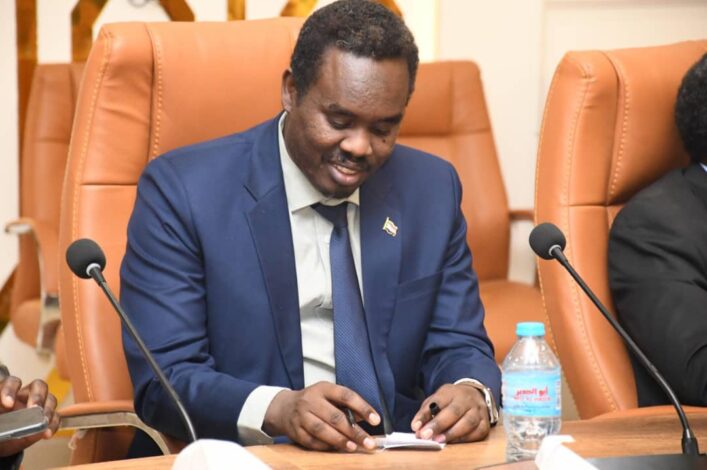
Interview by: Staff Writer
Having lived through both war and peace, Salah Hamid Ismail has built a career spanning politics and public service. He served as Minister of Agriculture and Natural Resources in the Darfur Regional Government, later as Sudan’s Federal Minister of Roads and Bridges during the second year of the war, and currently serves as Deputy Chairman of the Sudan Liberation Forces Alliance.
Ismail believes Sudan’s future begins in its rural communities and that agriculture is the country’s most effective pathway to economic recovery and national reconstruction. He argues that overcoming the consequences of war requires a comprehensive national vision capable of returning millions of displaced people to their homes and reconnecting them with productive livelihoods.
In this interview, he discusses the state of Sudan’s agricultural sector, political unity, the “Internal Front Cohesion” initiative, post-war reconstruction priorities, and his proposed roadmap for reviving the national economy.
*To begin, could you introduce yourself and tell us about your professional journey?
My name is Salah Hamid Ismail Al-Wali, and I was born in El Geneina, West Darfur. I earned diplomas in English Language and Administration. I began my professional career in journalism, working as a photojournalist, which gave me the opportunity to closely engage with people’s daily lives and concerns.
Later, I entered political life, serving as the official spokesperson for the Sudan Liberation Forces Alliance before becoming its Deputy Chairman. I also served as Minister of Agriculture and Natural Resources in the Darfur Regional Government and later as Sudan’s Federal Minister of Roads and Bridges.
*How do you assess the state of agriculture in Darfur based on your experience as Minister of Agriculture?
That experience marked a major turning point in my career because it brought me closer to farmers and producers, allowing me to understand their challenges firsthand rather than through office reports.
With this in mind, we organized the First Darfur Regional Agricultural Conference, bringing together directors of agriculture, university professors, agricultural associations, experts, and stakeholders to develop a shared vision for advancing the sector.
Despite the difficult circumstances, Darfur possesses enormous agricultural potential. However, the sector continues to face significant challenges, including inadequate financing, shortages of agricultural inputs, limited access to improved seeds, and the dominance of brokers and speculators in the market. These factors have weakened the direct relationship between producers and consumers and reduced the competitiveness of Sudanese agricultural products in international markets.
*How do you evaluate the role of the Sudan Liberation Forces Alliance in unifying political forces?
The Alliance itself is a product of unity. It was formed through the merger of three political and military movements into a single organization following extensive internal dialogue that responded to calls from our grassroots supporters, youth, and students for greater unity.
We firmly believe that preserving Sudan’s unity is a fundamental principle that cannot be compromised, particularly after the secession of South Sudan. We therefore reject any project that could lead to further division of the country.
We also believe that the current war has targeted the Sudanese state and its resources amid clear foreign interference. Defending Sudan is therefore a national responsibility, and our leadership remains alongside the Sudanese Armed Forces on the front lines.
Furthermore, we maintain that any political dialogue must be Sudanese-led and Sudanese-owned. The foremost priority for any future government should be addressing the devastating consequences of the war, beginning with the return of more than ten million displaced persons and refugees to their homes, while also completing the transitional process and paving the way for free elections.
*Tell us about the “Internal Front Cohesion” initiative ?
After reviewing Sudan’s political experience over the past seven decades, we concluded that the country urgently needs a national project capable of rebuilding trust among its diverse communities.
The war has left profound social and humanitarian scars and has weakened the country’s social fabric. In response, we launched the Internal Front Cohesion Initiative to strengthen solidarity among tribes, political groups, and local communities, believing that lasting peace must begin within society itself.
We have also implemented several community-based initiatives in the fields of health, education, and public services, including a major campaign in Al Jazirah State in partnership with the government.
We believe that rebuilding trust among Sudanese citizens is the true foundation for achieving lasting peace and national stability.
*How would you describe the scale of Sudan’s current humanitarian crisis? What are the main challenges facing return and reconstruction efforts, and what solutions do you propose?
The humanitarian crisis Sudan is experiencing today is unprecedented. Never before has the country witnessed displacement on such a massive scale. The greatest challenge now is how to reach displaced people, facilitate their safe return to their communities, and reintegrate them into productive economic activities.
The current government has shown responsiveness, and there is ongoing cooperation with international organizations and development agencies operating on the ground, which has helped address urgent humanitarian needs. However, in the long term, we must focus on tackling the root causes of the crisis rather than merely responding to its consequences.
One of the most significant obstacles is the weakness of infrastructure. Most war-affected areas lack essential public services, while limited financial resources have hindered the implementation of large-scale recovery programs.
It is also important to recognize that many displaced families are farmers who have strong ties to their land and livelihoods. Simply returning them to their villages is not enough. They must be provided with secure access to farmland, opportunities for production, and sustainable sources of income.
Our vision for both the current and future governments is clear: returning people to safe areas, rehabilitating those communities, reconnecting citizens with agriculture and productive activities, and restoring basic services. Without these measures, the humanitarian crisis will continue.
*Following the extensive destruction in states such as Al Jazirah and Khartoum, what should be the priorities for restoring public services and rebuilding state institutions?
The Sudanese people have stood firmly behind their national army throughout this difficult period, and they deserve access to quality public services. However, such services cannot be restored without comprehensive reform of state institutions.
The immediate priority is to resume the normal delivery of essential services while rebuilding and modernizing the public sector.
This requires several parallel steps, including institutional reform, capacity building, updating laws and regulations to accommodate technological advancement and empower younger generations, and ensuring adequate financial support for public service sectors.
The war has consumed enormous public resources, but rebuilding requires a clear national vision backed by sustainable funding and broad public participation to ensure that reconstruction efforts meet citizens’ real needs.
*What economic roadmap do you propose for overcoming Sudan’s current crisis?
Sudan’s economy is facing extremely difficult conditions. Inflation has exceeded 75 percent, largely due to the severe imbalance between exports and imports.
To control inflation, we must address its root causes by increasing production. Price stability cannot be achieved without expanding both production and productivity.
Our proposed roadmap rests on four main pillars.
The first is prioritizing productive sectors. The government must demonstrate strong political commitment to supporting agriculture, livestock, manufacturing industries, and mining. These sectors should become the primary focus of the relevant ministries.
The second pillar is making better use of Sudan’s secure regions and abundant natural resources, particularly the vast agricultural and grazing lands that remain underutilized.
The third is strengthening institutional capacity and improving the investment climate through sound governance, qualified personnel, and reforms that encourage both domestic and foreign investment.
Finally, Sudan must expand access to international markets by opening new export opportunities and facilitating the global competitiveness of Sudanese products.
At the same time, farmers and producers must have access to affordable agricultural inputs, including improved seeds, fertilizers, fuel, and financing, to enable sustainable production and economic recovery.
*As a former Minister of Agriculture, how did this position shape your understanding of the needs of rural Sudan and Sudan’s role as a productive nation?
My experience as Minister of Agriculture taught me one fundamental truth: Sudan is, at its core, a rural country. Once you leave the boundaries of the cities, you immediately realize that the countryside is the backbone of the nation.
The migration of people from rural areas to urban centers has come at a tremendous cost to the national economy. We have witnessed its impact over the years. This is why I firmly believe that any genuine national renaissance must begin with rural development.
A productive rural economy depends on three essential pillars.
First, providing adequate basic services and infrastructure. Second, reconnecting rural communities to productive economic activities so they can generate sustainable livelihoods. Third, encouraging those who migrated to cities to return to their villages, because Sudan’s rural areas are rich in resources and capable of driving the country’s economic recovery.
Agriculture is rooted in the countryside. We should also go a step further by promoting small-scale agro-industries linked to local agricultural production. Every state has its own comparative advantage. Gezira , Sennar, and Blue Nile, for example, possess significant potential in textile production, cotton processing, and agro-industrial manufacturing. These sectors should be developed through small and medium-sized industries that create employment opportunities and add value to local products.
*What were the biggest challenges you faced as Federal Minister of Roads and Bridges, and what lessons did you learn from that experience?
The greatest challenge was the lack of funding. There was virtually no development budget allocated to the sector, which had suffered from years of neglect. At the same time, the war led to the displacement of many highly qualified technical professionals.
One of the most important lessons I learned was that government resources alone are not sufficient to develop the transport sector. Once properly developed, the sector itself can attract investment and international financing.
Instead of relying on costly private contractors, we focused on utilizing the expertise of the National Roads Authority to maintain and operate the existing road network.
The reality was extremely difficult. Sudan has approximately 16,000 kilometers of national roads, many of which have deteriorated significantly, while bridges and protective infrastructure require urgent rehabilitation.
For this reason, we proposed developing the national highway extending from Port Sudan by dividing it into several implementation phases. This strategic corridor passes through ten states and serves agriculture, livestock, trade, and the country’s ports.
Our vision was to establish integrated service centers every 100 to 200 kilometers along the route, including health clinics, commercial markets, and specialized logistics facilities to stimulate economic activity and improve services for travelers and local communities.
We also call upon the Ministry of Transport to continue maintaining the existing road network while actively securing funding to modernize Sudan’s transportation infrastructure and establish an integrated national transport system capable of supporting economic development and post-war reconstruction.
*How do you assess the condition of Sudan’s agricultural sector after the war? Where do you believe the solution lies?
In my assessment, the agricultural sector has been directly affected by the war. At the same time, it represents the key to Sudan’s recovery. Agriculture is closely linked to markets, small-scale producers, and the state’s ability to provide a stable environment. As such, it offers one of the fastest paths toward economic and social recovery.
What Sudan needs is a dynamic, measurable national recovery plan that addresses all sectors rather than relying on temporary solutions. Recovery must be comprehensive to reduce dependence on imported consumer goods, which consume large amounts of foreign currency on non-essential imports such as ceramic products and similar items.
The solution lies in adopting a national recovery strategy built on Sudan’s own resources, supported by clear performance indicators and strong political commitment. Agriculture is the engine of economic recovery, and through its revival, the rest of the country can recover as well.