
Sudan’s Human Resources Undersecretary Plays Active Role at the Arab Administration Forum
Supporting Recovery and Addressing the Challenges Facing Sudanese Migrants in Morocco
Rabat /
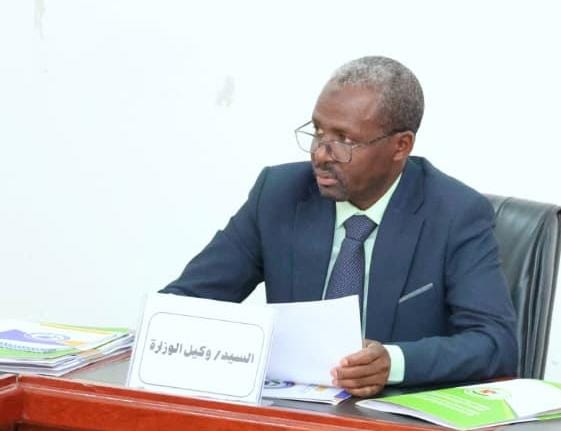
Sudan, represented by the Undersecretary of the Ministry of Human Resources and Social Welfare, Dr. Abubakar Koko Dahiya, actively participated in the Arab Administration Forum, recently hosted and organized by the Kingdom of Morocco in Rabat.
Advancing Equity
The forum adopted a number of key recommendations aimed at supporting Sudan’s recovery and reconstruction efforts. These included the development of inclusive digital government services that take social and gender considerations into account, respond to citizens’ needs, and ensure that vulnerable groups and those with limited internet access are not excluded.
The forum also emphasized the importance of facilitating the work of the Sudanese Embassy in Morocco, enabling it to better fulfill its responsibilities toward undocumented Sudanese migrants.
Strengthening Strategic Partnerships
The recommendations called for activating the Memorandum of Understanding between Sudan’s Ministry of Human Resources and Social Welfare and Morocco’s Ministry of Digital Transition. They also proposed preparing a new Memorandum of Understanding with Morocco’s Ministry of Administrative Reform.
In addition, the forum recommended drafting cooperation agreements between Sudan’s Ministry of Human Resources and the Ministry of Culture and Information, as well as with the Islamic World Educational, Scientific and Cultural Organization (ICESCO), which pledged to rehabilitate the Sennar Regional Center for Resources and Cultural Diversity. The recommendations further highlighted the importance of designing advanced training programs that meet the needs of both countries and expanding cooperation with ICESCO in youth capacity-building initiatives.
Modernizing Public Administration
Addressing the forum’s opening session, Dr. Abubakar Koko Dahiya stated that reinventing government in today’s rapidly changing world is no longer an intellectual luxury or an optional choice, but an unavoidable necessity driven by accelerating transformations.
He stressed that the crises and challenges confronting public institutions require a reassessment of priorities and place governments before a real test: building institutions that are more flexible, more citizen-centered, and more responsive to people’s aspirations.
Ministry’s Vision
Dr. Dahiya described digital transformation as a comprehensive philosophy for governance and the foundation for building a smart, transparent, and accessible government.
He told the forum:
“I have not come here in a spirit of helplessness or surrender. I have come carrying the determination of a people who refuse to be defeated and the resolve of a nation that has chosen to begin again through reconstruction and renewal.”
He explained that the Ministry’s vision focuses on building a resilient digital foundation, digitizing social protection services, and strengthening Arab partnerships for knowledge transfer and institutional development.
Addressing Irregular Migration
The forum also adopted recommendations to secure funding for the repatriation of 200 Sudanese nationals from Morocco to Khartoum through Tarco Airlines, Badr Airlines, and other carriers, including Sudanese nationals currently detained in Moroccan prisons.
The recommendations further called for covering the burial costs of undocumented Sudanese migrants who die in Morocco. The average burial cost was estimated at USD 400 per deceased person, with drowning incidents reportedly claiming the lives of approximately four to five Sudanese migrants each month.