
Khartoum Launches Mobile Awareness and Protection Centers to Strengthen Community Support
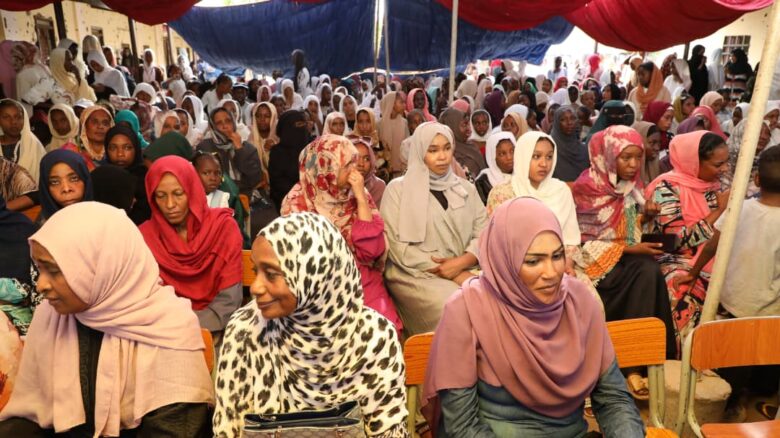
As part of Khartoum State’s efforts to strengthen social protection and improve services for local communities, the General Administration of Community Development and Poverty Reduction at the Ministry of Social Development, in coordination with the United Nations High Commissioner for Refugees (UNHCR), launched the “Mobile Awareness and Protection Centers” program in the Al-Shajara area.
The event was patronized by Sediq Hassan Farini, Acting Minister and Director General of the Ministry of Social Development. In his remarks, he reaffirmed the Ministry’s commitment to supporting local communities and expanding social protection programs.
He announced a package of initiatives, including specialized training courses for women and girls in the area based on their chosen interests. The training will cover awareness-raising, handicrafts, baking, and henna art, and will be conducted within the school.
He also announced the launch of a process to identify and register vulnerable families to benefit from financing schemes and direct cash assistance, starting from the school and extending services to the wider community.
Mona Al-Faki, Director of the General Administration of Social Development in Khartoum Locality and representative of the Executive Director, expressed her appreciation for the strong community engagement and the outstanding performances presented by the schoolgirls. She emphasized that cooperation between government institutions and local communities is essential to serving citizens and promoting sustainable local development.
Meanwhile, Imtinan Osman Khamis, Director of the Community Development and Poverty Reduction Department at the Ministry, explained that Al-Shajara was selected because of its historical significance and active community role. She noted that the Mobile Centers Project is part of the Community Protection and Awareness Project, implemented in partnership with UNHCR, and is designed to serve areas that lack permanent community centers.
The program provides awareness activities, psychosocial support services, identification of vulnerable households, and specialized lectures on psychological recovery from the effects of war, including guidance on supporting children during the recovery phase, as a foundation for future economic empowerment initiatives.
The event attracted a large public audience, with enthusiastic participation from students and local residents. Activities included awareness sessions on mental health and psychosocial support, drama performances addressing social issues, and musical presentations that created a positive and engaging atmosphere.