
Government Endorses National Health System Recovery Strategy 2026–2030
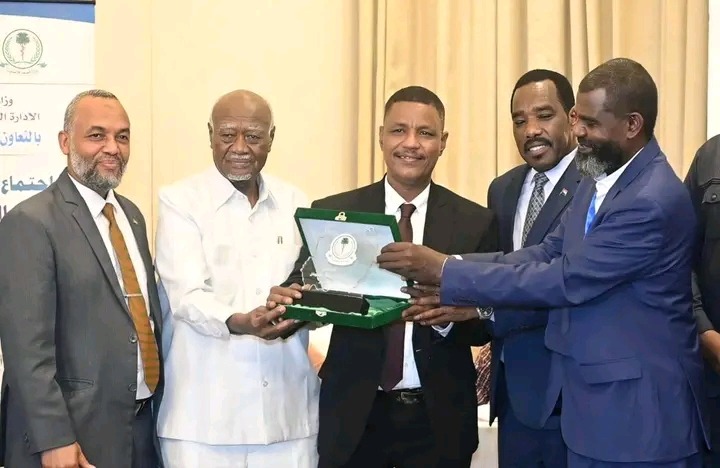
Khartoum –Representing Prime Minister Prof. Kamil Idris, the Minister of Federal Governance and Rural Development, Mohamed Saleh Kortkila, attended the official endorsement ceremony of Sudan’s National Health System Recovery Strategic Plan (2026–2030), prepared by the Federal Ministry of Health. The five-year strategy was approved during a ceremony held at Salam Rotana Hotel in Khartoum, with broad participation from government ministries and development partners.
Kortkila reaffirmed his ministry’s strong commitment to the health sector, describing the strategy as one of Sudan’s most important national development programs. He emphasized the ministry’s coordinating role in promoting sustainable development and strengthening public confidence in state institutions.
Representing the Prime Minister, Kortkila stated that the strategy establishes a comprehensive framework for health governance, particularly in strengthening legislation and institutional coordination. He stressed that his ministry would remain a strong supporter of the health sector through close coordination and direct follow-up to ensure successful implementation of the strategy.
Federal Minister of Health Dr. Haitham Mohamed Ibrahim highlighted that health is integrated into all government policies through cross-sectoral collaboration involving the ministries of finance, culture, agriculture, environment, and information. He praised the constructive role of responsible media in promoting public health awareness and noted that the strategy was developed with the participation of United Nations agencies and international organizations.
He added that the strategy represents a turning point from the challenges of war toward reconstruction, sustainable development, and universal health coverage, with particular attention to vulnerable areas in Darfur and Kordofan.
Minister of Human Resources and Social Development Moatasim Ahmed Saleh described the strategy as a roadmap for building a more equitable and resilient health system capable of reaching every citizen. He stressed that health extends beyond hospitals and depends on education, employment opportunities, and a safe environment, making it a shared national responsibility.
He further noted that the National Health Insurance Fund aims to expand universal health coverage for poor families and internally displaced persons by broadening insurance coverage, improving referral systems, and reducing catastrophic healthcare expenditures while enhancing transparency and quality of care.
He also highlighted the role of the Zakat Chamber and the Savings Bank in addressing economic and social challenges through financial assistance, alongside support for persons with disabilities, older people, and children.
Minister of Digital Transformation and Communications Dr. Ahmed Ghandoor announced that the strategy prioritizes digital health through four key pillars: digital identity, electronic payment systems, digital applications, and online services. He revealed that preparations have been completed to integrate Medical Commission and National Health Insurance services into the “Baldna” digital platform, offering 130 electronic services to support implementation of the strategy.
Minister of State at the Ministry of Finance Mohamed Nour reaffirmed the ministry’s full support for the strategy, emphasizing that integrating health into all government policies would strengthen financial policy reforms and improve sustainable health financing.
Federal Ministry of Health Undersecretary Dr. Ali Babiker explained that the strategy is the outcome of extensive consultations, technical committees, and previous experiences. He described it as a practical framework for building a resilient health system based on long-term reform and universal health coverage.
Governor of North Kordofan Abdel Khaliq Abdel Latif stressed that successful implementation requires genuine coordination among federal, state, and local health authorities, as well as meaningful partnerships with the private health sector and civil society organizations. He emphasized that institutional collaboration, clearly defined implementation programs, and unified execution mechanisms are essential to achieving the strategy’s objectives and rebuilding Sudan’s health system after the war.