
A Whisper in the Ear!
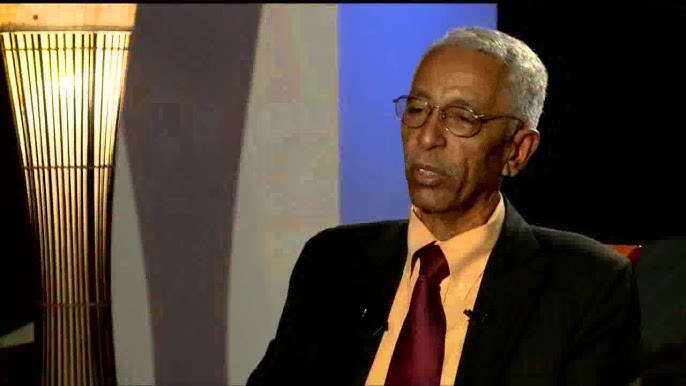
Dr. Al-Khidr Haroun
Clinging to hope and seeking consolation in optimism—especially amid setbacks, hardships, and looming death—is one of the necessities of living a life that the Creator described as a life of toil. That toil means enduring hardships and difficulties, and whoever endures and stands firm is the shrewd victor. This does not include the idle person who hopes without acting, who deceives himself with empty wishes drowned in resounding slogans, echoed by the power of vocal cords, or those that fill pages of paper, or roar from computer keyboards on screens—smartphone, laptop, and desktop screens. Even if all of this were combined, it would never defeat invading armies as they kill, burn, and rape—for the sword speaks more truth than books!
Clouds gathered over Sudan right after its independence, and shortly before that, in August 1955, in the massacres of Nzara, Meridi, and Torit, where the precious blood of unarmed civilians from our people was shed. We heard of it as children back then, not yet sent to Quranic schools or regular schools, hearing for the first time of a place called “the South.” The terror of death remained tied to that name for many years.
Then the years passed, and the 1960s arrived, bringing the liberation of Third World nations into a sweeping euphoria and hope for a flourishing green future. A breath of that reached the African continent, and we sang along with Mongo Zambezi: “Mongo, say, long live the one who unites us.” Our elders did not grasp the need to examine with a critical eye that malicious document—the “Closed Districts” policy. Had its poison faded with the colonizer’s departure, or did it still linger, plotting against Sudan? The venomous serpent (Anyanya) answered with deeds, not words, riding in the wake of the Israeli Mossad, betraying and bombing innocent, unarmed people—just as the Janjaweed militia does today—spilling the blood of Sudanese from both communities and reopening a painful wound that kept bleeding.
Then came October 1964 with its glad tidings, under the noble slogan: “The solution to the Southern problem lies in solving the Northern problem,” meaning the closing of the chapter of totalitarianism and a direct move toward democracy. Democracy arrived, and the revolutionary government appointed, for the first time, a sovereign minister from the South—Mr. Clement Mboro—as Minister of the Interior, marking the start of a new chapter of emotional unity and rising above past bitterness. But the malicious document—the Closed Districts law—remained, waiting for its chance to overturn the table. That chance came when Minister Clement Mboro’s plane was delayed and rumors spread that it had crashed. Southerners in Khartoum erupted in rage and attacked their non-Southern brethren, killing them, and in response, war drums (the “nihas”) were beaten, calling for killing in kind. History recorded this as the “Black Sunday” events. Blood flowed from both sides. The malicious document succeeded and retreated to wait once more.
This time, political forces looked at the document seriously and with determination, convening the Round Table Conference in March 1965 to establish a just basis for relations between North and South within a framework of unity, with everyone participating—even rebel leaders in exile, such as Aggrey Jaden and William Deng, along with the SANU party and the Southern Front party, were guaranteed safe passage to attend and leave. Yet the conference’s outcomes remained mere ink on paper, drifting through the corridors of political parties, until military totalitarianism returned from Karari and Khor Omar under the leadership of Jaafar Nimeiry on May 25, 1969. The new regime adopted the outcomes of the 1972 Round Table Conference, as noted by Mansour Khalid, and enshrined them in the 1973 constitution. These were implemented by granting the South regional self-government with its own parliament and government for a ten-year term, which brought peace and halted the war. The prominent Southern judge and politician Abel Alier said that although this fell short of the demand for federalism, it was enough to keep Sudan united.
This did not please the old malicious document, so disputes erupted among the tribes of the South, since strict adherence to mechanical majority rule—without regard for other considerations—gave the Dinka tribe control of the South’s government, marginalizing other tribes, especially the Equatorians who had led the Anyanya rebellion. Nimeiry then divided the South into three regions, sparking a new rebellion led first by Kerubino Kwanyin and then by John Garang de Mabior. At the time, Ethiopia’s Derg regime was staunchly Marxist and was fighting Eritrean rebels seeking to restore their nation’s independence, so Garang had no room to speak of Southern secession. He instead adopted a Marxist-Leninist manifesto for his separatist movement—note that it was a manifesto not for separating the South, but ostensibly for uniting all of Sudan under the banners of scientific socialism. He found his cause in the new Marxism that portrayed the Third World as a source of raw materials, a periphery feeding and enriching the industrial First World through surplus value. The program succeeded in drawing Sudan’s leftist intellectuals into a movement whose fighters, for the most part, fought for nothing but Southern secession.
When communism collapsed resoundingly across the world, followed by the fall of Ethiopia’s Derg regime, Garang turned back to the old document—the specter of “liberating” the South from an invasion by the Muslim Arab North, the old slave trader. Western circles that had authored that very document in Europe and America seized upon this narrative—figures like Baroness Cox and John Eibner, the Holocaust center, Reverend Franklin Graham, the Norwegian Church organization, and even the Red Cross, which was documented in 1996 transporting Garang’s forces in cooperation with Médecins Sans Frontières! Do you not see them coordinating devastating positions against this Sudan even today?
When General Nimeiry’s regime fell, the political left played the largest role in leading the demonstrations that toppled him, rejoicing at the promise of a “New Sudan.” Yet forgetting the lurking cursed document, Garang refused to come and help build the New Sudan, describing what had happened as merely “a second May [1969]”! Because the ultimate goal was never a stable, united Sudan—the Closed Districts document was never meant to forge a unified melting pot called Sudan, and the evidence for this is abundant and unmistakable. The missionary John Spencer Trimingham, an official of the British Church Missionary Society (CMS) that arrived with the colonizers to Christianize Sudan, once said that had the (colonial) government not banned the teaching of Arabic in South Sudan at the 1928 Rejaf Conference and replaced it with English, nothing would have stood in the way of Islam’s spread. He also said that the markets of Wau and Malakal in the South had once resembled those of the North before colonization, but had since come to resemble markets in Uganda. And he said a third time that the areas of western Bahr el Ghazal—the Fertit regions—had been on the verge of becoming Muslim due to the activity of Jallaba traders, but that danger had since been eliminated through intensive church activity and the removal of those traders from the region. In this way, natural cultural and social exchange between the two halves of the country—through which each side would naturally adopt what appealed to it from the other—was deliberately prevented by that very document, not to protect the culture of those regions as claimed, but to impose colonial culture upon them.
In exile, we met young army officers who had come for training in the years preceding the “Salvation” government, at a time when Garang’s forces had just overrun Kurmuk and Qeissan, and fear gripped the North. Supporters of the rebel army grew bold against Khartoum’s residents, threatening that they would soon be expelled to the Arabian Peninsula or Egypt, and that their homes and property would be seized. We asked those young men whether there was really cause for fear—would Khartoum fall? One of them burst into tears and said: it will not happen, and if it does, it will happen over our dead bodies!
When the Salvation government reached a ceasefire agreement with Garang in 2003, Garang feared the army might break the truce and invade the South again, so he opened a front in Darfur to prevent that—according to a report by the International Crisis Group from October of that year. A US State Department official responsible for Sudan even acknowledged Garang’s involvement there, saying, “But we stopped him!” The dormant strife there was reignited under the slogan “ethnicity over religion,” and the government fell into the trap, and Darfur erupted into war. When Garang died, “Black Sunday” repeated itself in Khartoum, trust collapsed, the old suspicions returned, Sudanese blood flowed once more, and the gap between the two halves widened—leading to secession.
In recent years, the same old scenarios have repeated themselves in Khartoum—fear has doubled, chaos has grown, and blood has flowed in rivers as it did more than a century ago. The skies are gathering with clouds once again, and the unseen conceals something dense and frightening. Consider what has happened and continues to happen through phrases like “Sudan is just geography,” and the remarks of Robert Zoellick, US Deputy Secretary of State under Bush, at the Brookings Institution in 2006 about the marginalization of Sudan’s periphery by the center in Khartoum! Such statements were not made carelessly.
Take heed, O heedless ones, for the matter is grave and what is coming is worse this time. If the valiant army and the fighters within its ranks—the backbone and guarantor of survival—are defeated, then support them with vigilance and discernment, not with blank checks. Question them, press them with questions, and make sure they stay on the right path—for there is no revelation after Muhammad, peace be upon him, who, even as revelation was descending upon him, would say to his companions: “Advise me, O people!”
Strive for participation and transparency in order to preserve your homeland. And know that the pursuit of democracy will come at a steep price, for orders have been given that this region should remain without democracy—it has been stamped out wherever it raised its head—and that this poor region should remain under absolute control, so that it and its resources can be finished off for the happiness, security, and safety of others! It is only fair, as you question the government and the army leadership about the delay in achieving a decisive resolution, and about decisions made without justifications known to the citizen—justifications that are neither wartime secrets nor diplomatic secrets—and about the deepening hunger afflicting ordinary people day after day, and about the absence of security in the cities, and about repeated abuses by fighters and their bullying of people in their own towns among their own kin, and about a currency collapsing by the hour, and about the weak, timid, and hesitant positions of countries on the Security Council that you call sisterly and friendly—except for Russia, which broke from them and pledged defense and protection—and about senior state officials, some of whom have not uttered a single word regarding Abu Dhabi, the source of this death and destruction, which generously supplies the tools of war to the Rapid Support Forces militia.
Would it not have shortened the duration of this brutal aggression had the state consistently pursued this truth as a diplomatic and political strategy? Yes, ask about all of this, for this is a debt owed to the homeland and your inherent right to know. But do not forget to ask yourself, deep within, what you yourself have done to preserve it. Have you taken up a sword, or equipped a fighter? Have you set up a soup kitchen to feed the victims of this aggression, or supported existing ones? Are you contributing to awareness, advocacy, and medical care, and so on? The country will not endure unless each of us gives what we can! Only through steadfastness—however much steadfastness we can muster—will the land remain, will dignity and honor endure, and the evidence before you is plain and undeniable. So rise before it is too late, and things will improve if we hold fast to the land and show readiness to give our blood and our very souls for its sake, undeterred by threats and intimidation.