
A PhD thesis highlights the potential of strategic minerals in Sudan.
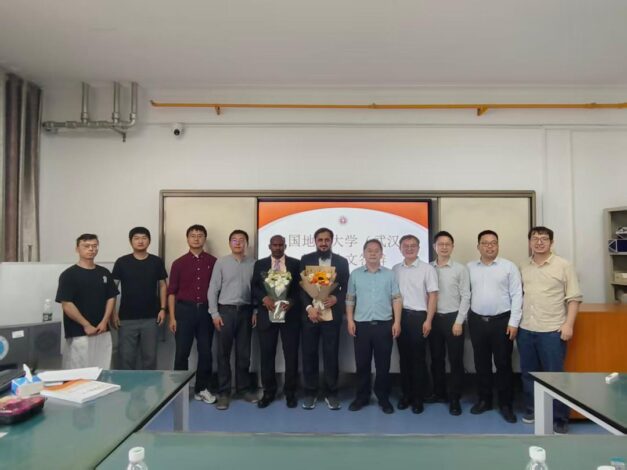
In a significant scientific contribution to geological studies of strategic minerals in Sudan, geologist Dr. Hussein Al-Bashir defended his PhD at the China University of Geosciences in Wuhan. His dissertation, titled “Petrogenesis and Rare Metal Mineralization Potential of the Sultaniyat and Ras Ed Dom Alkaline Ring Complexes from Bayuda Desert, Sudan,” focuses on the origin and evolution of the Sultaniyat and Ras Ed Dom alkaline ring complexes in the Bayuda Desert and evaluates their potential for rare metal mineralization using geochemical analyses and modern isotopic dating techniques.
The study concludes that these rocks formed during the Permian–Triassic period in an intraplate tectonic setting, linked to lithospheric thinning and mantle upwelling, alongside prolonged fractional crystallization. It also reveals high concentrations of zirconium, niobium, and rare earth elements in aegirine granites and associated veins
The findings identify both complexes as promising targets for rare metal exploration in Sudan, and provide valuable insights into the evolution of alkaline rocks and their relationship to rare mineralization in the Bayuda Desert.