
Khartoum Government Calls for a Shift from Relief to Production
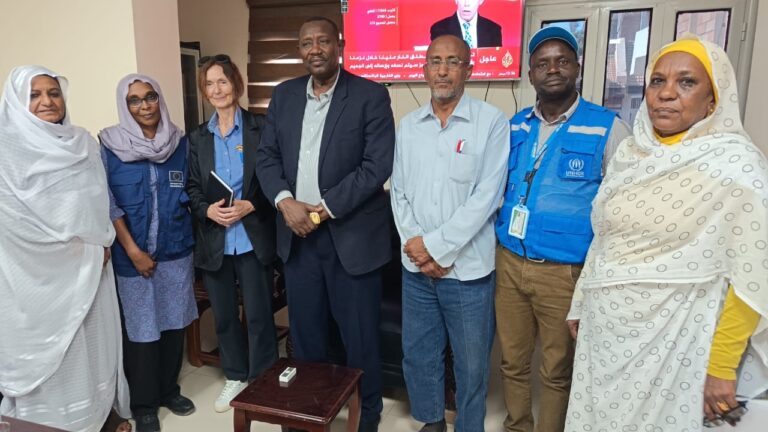
Ms. Elke Liddell, Director of the European Union’s Humanitarian Aid and Civil Protection office in Sudan, affirmed that the EU’s support for the Sudanese cause is ongoing and will not be affected by conflicts in other parts of the world. This came during her meeting with Mr. Siddiq Hassan Ferini, Director General of the Ministry of Social Development in Khartoum State and the Minister-in-Charge, to discuss urgent humanitarian interventions and the needs of the next phase.
For his part, Minister-in-Charge Siddiq Ferini expressed his appreciation for the pivotal role played by the European Union and international organizations in supporting the citizens of Khartoum State since the outbreak of war, praising the success of partnerships that contributed to supporting soup kitchens and providing essential aid.
In a related context, Ferini explained that the approach to dealing with refugees and foreigners has changed after observing the involvement of some groups among them in military operations alongside militias and the targeting of service institutions. This prompted the state to take special regulatory measures regarding these groups to protect national security.
The meeting also addressed pressing humanitarian issues, with Mr. Ferini revealing shocking figures concerning child victims of the war: 6,000 children have suffered injuries resulting in permanent disabilities. He emphasized the urgent need for prosthetic limbs, specialized psychological support, child-friendly spaces, and the rehabilitation of training centers for displaced and orphaned children.
Ferini called on the European Union to contribute to the Ministry’s plan to transform society from aid recipients to productive entrepreneurs by empowering women economically, supporting income-generating projects for families, and rehabilitating community centers for vocational training and handicrafts.
He also stressed the importance of intensifying awareness campaigns about the dangers of landmines and explosive remnants of war to ensure the safety of those returning to their areas. For his part, Professor Khalid Abdul Rahim, the State Commissioner for Voluntary and Humanitarian Work, noted that Khartoum is experiencing significant population movement, requiring increased support, as the number of voluntary returnees to the state has ranged between 3 and 3.5 million.
This coincides with the state receiving new waves of displacement from the states of Kordofan and Darfur (dozens of families daily). She pointed out the recent weakness and decline in international support compared to the actual needs on the ground. In conclusion, Elke Lidl explained that civil protection and humanitarian aid remain the top priority for the European Union, with a strong focus on women’s and children’s issues and reproductive health, while also supporting income-generating projects. She emphasized that her visit aimed to hear firsthand the Ministry of Social Development’s vision to ensure effective interventions that meet the priorities of the people of Khartoum State under these exceptional circumstances.