
Dr. Graham: Recovery of 570 Looted Artifacts Affirms the Depth and Global Significance of Sudanese Civilization
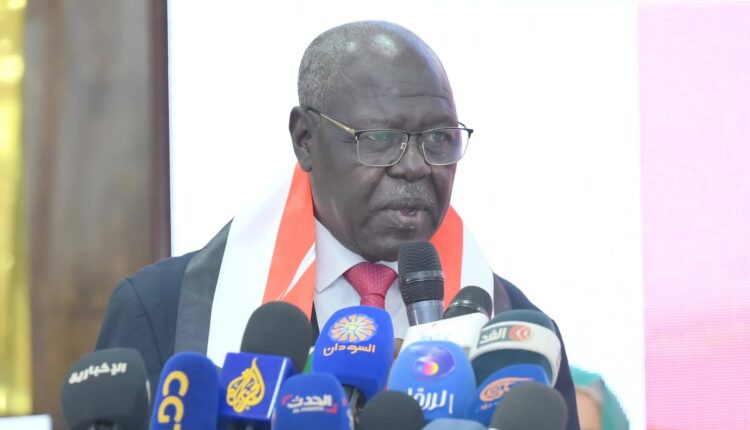
Dr. Graham Abdel Qader, Undersecretary of the Ministry of Culture, Information, and Tourism, affirmed that the recovery of looted Sudanese artifacts represents a significant national achievement reflecting the depth and historical significance of Sudanese civilization. He noted that Sudanese civilization has remained open and influential within its geographical sphere, extending from the Mediterranean basin to the Arabian Peninsula and deep into the African continent.
This statement was made during his address today at the celebration organized by the Ministry in Al-Rabwa Hall in Port Sudan, under the slogan “A Sweet Ending,” marking the recovery of 570 looted Sudanese artifacts. These artifacts span historical periods from prehistory to the modern era, and represent a national effort to protect cultural heritage and preserve the country’s historical identity.
Dr. Graham Abdel Qader stated that Sudanese civilization is deeply rooted in the collective consciousness and constitutes a constantly evolving and enduring memory. It has inspired many other civilizations, making it a focus of attention for international researchers and writers, and its artifacts remain present in libraries and museums worldwide.
The Undersecretary pointed out that even before the events of the April 2023 rebellion, approximately 40 foreign missions were working in the fields of archaeological excavation and studies in Sudan. This reflects Sudan’s scientific and cultural connection with the world, highlighting the contributions of major scientific missions, including the Swiss mission.
He added that many international museums, most notably the Louvre, still house Sudanese artifacts, which confirms Sudan’s human and cultural influence on other civilizations.
In the same context, the Undersecretary of the Ministry revealed the formation of a specialized committee for the protection of culture and antiquities, in coordination with the General Intelligence Service and other national entities. He stated that their efforts have yielded remarkable results.
He explained that the inventory and review processes included the Gezira Museum, from which 68 pieces out of 408 were missing, and the Ethnographic Museum, from which the same number were missing out of 4,600 pieces. In addition, approximately 200 pieces were missing from the Khalifa House Museum, along with other artifacts held by citizens due to social connections.
He noted that the National Museum’s exhibition hall and concrete room were looted, with approximately 4,000 artifacts stolen. However, the remaining pieces have been inventoried, arranged, and are now ready for display again.
Dr. Graham emphasized that the recovery of 570 artifacts in one go is an unprecedented achievement made possible by national solidarity. He called upon the people of Sudan to preserve this cultural treasure.
In closing, he expressed his gratitude to the General Intelligence Service, the armed forces, the General Authority for Antiquities and Museums, heritage workers, and all those who contributed to protecting and preserving Sudanese heritage. He dedicated this achievement to the Sudanese people and all those interested in human heritage.