
Jaber Inaugurates Ibn Sina Hospital
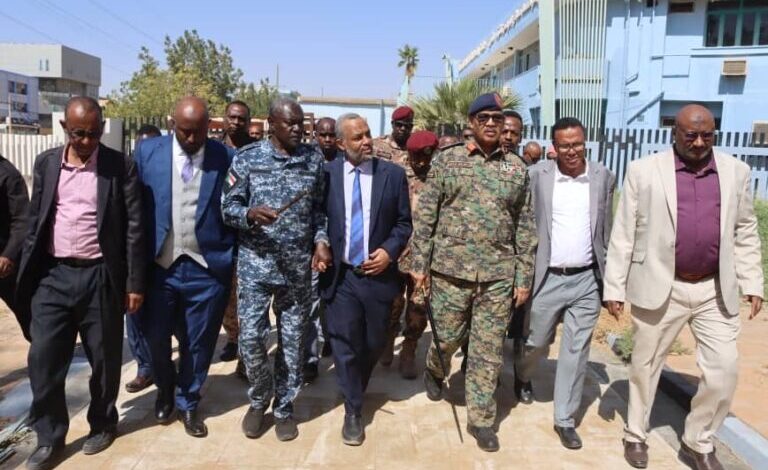
In a new leap forward for reconstruction and specialized healthcare services in Khartoum State following the war, the state witnessed today the opening of Ibn Sina Specialized Hospital, located in the heart of Khartoum. The hospital has resumed operations to receive patients and provide treatment in the fields of gastroenterology, urology, otolaryngology, nephrology, and endoscopy, after the completion of repairs and rehabilitation work on the war-damaged areas.
Lieutenant General Engineer Ibrahim Jaber, member of the Sovereignty Council and head of the Higher Committee for Preparing the Environment for the Return of Citizens to Khartoum State, officially inaugurated Ibn Sina Hospital. The ceremony was graced by the presence of the Federal Minister of Health, the Governor of Khartoum State, the Acting Director General of the Khartoum State Ministry of Health, the Executive Director of Khartoum Locality, a representative of the Security and Intelligence Service in the locality, representatives of the Sudanese Kidney Transplant Association, directors of general departments within Khartoum Health, and directors general of hospitals.
During his address at the inauguration ceremony, Jaber pledged to increase support for the hospital beyond what had been achieved in this phase. This support would include providing the necessary equipment and supplies, reflecting the dedication and commitment he had witnessed from the consultants and staff working at the hospital.
The Sovereignty Council member also announced several significant developments, which he did not specify, that the state would witness before the middle of this year. He then pledged financial support of 30 million Sudanese pounds to the hospital staff.
Dr. Haitham Mohamed Ibrahim, the Federal Minister of Health, emphasized the importance of providing all specialized and advanced healthcare services in Khartoum State. He noted that his ministry had worked to relocate specialized services to another state, but reiterated that “there is no alternative to Khartoum as the capital.”
He expressed his pride in the achievements made in the sector within the state, in cooperation with the Khartoum State Ministry of Health and members of the Health Committee of the Environment Development Committee. He explained that the state had restored more than 90% of primary healthcare and hospital services, pledging to complete the provision of specialized services. He announced the opening of a support initiative titled “Completion of Specialized Services at Ibn Sina Hospital,” undertaken by his ministry and its partners, and donated 20 million Sudanese pounds to the staff.
Furthermore, Ahmed Osman Hamza, the Governor of Khartoum State, emphasized the importance of launching operations at Ibn Sina Hospital during the reconstruction phase, given its status as a specialized hospital serving a significant segment of patients. He called for the completion of all departments, particularly the gastrointestinal bleeding unit, and noted that Ministry of Health employees have outstanding financial entitlements and arrears that require payment. He announced a personal donation of 20 million Sudanese pounds towards this end.
Dr. Fath Al-Rahman Muhammad Al-Amin, Director General of the Khartoum State Ministry of Health, asserted that all hospitals and health centers in the state have been brought into service. He explained that Ibn Sina Hospital is a distinguished institution in terms of its specialization, performing all types of surgeries and employing highly qualified staff. He considered its opening today a true liberation and recovery for the health sector in Khartoum State and another victory achieved by the Sudanese army and supporting forces. He appealed to the Federal Minister of Health and member of the Sovereignty Council to continue providing support to health institutions in Khartoum State. He commended the efforts of the company implementing the hospital’s rehabilitation (TNA) and the engineers at the Ministry of Health, and requested that healthcare professionals currently abroad return home.
He expressed his gratitude to the state government, the Higher Committee for Crisis and Emergency Management, and the Environmental Preparation Committee for their intervention, which positively impacted the recovery of the health sector.
Dr. Mohamed Idris Akasha, Director General of Ibn Sina Hospital, emphasized the administration and staff’s commitment to operating the hospital and overcoming all challenges during its initial phase. He noted that the hospital aims to serve vulnerable patients at minimal cost, providing treatment in the fields of gastroenterology, urology, ENT, kidney transplantation, and traumatic brain injury.
Akasha offered his condolences for the souls of all the martyrs of dignity and the eight hospital staff members who were martyred during the war.