
Al-Burhan Tests National Consensus
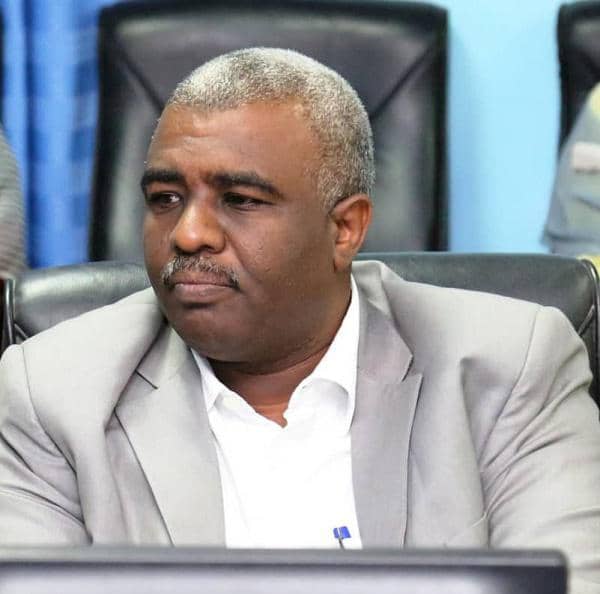
By: Dr. Ibrahim Shiglawi
On the seventieth anniversary of Sudan’s independence, President Abdel Fattah Al-Burhan’s speech from inside the Republican Palace came as a revival of the symbolism of independence. It also sought to reorder the national scene by posing the question of the state: how can military victory be transformed into a national consensus that restores Sudan’s political cohesion and national unity after a war that has exhausted geography, people, and resources.
Al-Burhan focused on three key messages: consolidating popular confidence in the imminence of military resolution, honoring the sacrifices of the armed forces and supporting forces in the “Battle of Dignity,” and opening the door to political forces that “believed in the cause of the nation” to engage in a comprehensive project that lays the foundation for a state of citizenship under the banner of justice.
Al-Burhan’s language carried a carefully calculated balance between confidence in victory and a call for reconciliation. On one hand, he reinforced the narrative of decisive resolution, affirming that the battle was not a defense of power, but of the very idea of the homeland. On the other, he opened the door to political forces that chose to align with the state, or those wishing to return to the space of inclusive national belonging. This combination of firmness and openness reflects an awareness that military victory, however significant, remains incomplete if it is not translated into a political and social contract that addresses the roots of the crisis rather than merely removing its symptoms.
The speech coincided with qualitative field developments in Kordofan, where the armed forces and their supporting units achieved decisive advances in Kazgeil, Al-Riyash, and Habila, reshaping the balance of control in the region and dispelling militia bets on isolation and siege. These victories carried a clear political significance: the state has regained the initiative and is no longer captive to reactive responses. While this significance strengthened the position of authority, it also raised expectations regarding its ability to manage the post-victory phase.
In this context, the call for national consensus appears closer to a practical test—perhaps already agreed upon during visits to Riyadh and Cairo—than to a mere rhetorical initiative. These measures were preceded by enabling all Sudanese to obtain and renew identification documents, signaling the removal of restrictions that had been imposed on certain political forces. The military institution, having borne the cost of confrontation, views reconciliation as a necessity to complete state-building, but rejects its transformation into a platform for recycling chaos or bypassing sacrifices.
As for national political forces, they approach the call with legitimate caution. They see in it an opportunity to return to the civilian path, but they demand clear guarantees that establish a balanced relationship between authority and power, and protect the transition from regression.
The Sudanese street, burdened by years of war, stands as an observer. Speeches alone are no longer sufficient to convince it; politics is now measured by results: stable security, gradually returning services, and a normal life resuming its rhythm. Within this public mood, national consensus becomes a practical demand, testing the state’s ability to restore citizens’ trust through the establishment of security, away from elite-only understandings.
The features of this transformation are reinforced by indicators of the state’s return to its natural center. The regularization of government work in Khartoum, the daily return of thousands of citizens, and the readiness of the Prime Minister to assume his duties at the beginning of next week from the capital, all signal a cautious transition from managing war to managing governance. This return is a practical test of the state’s ability to convert military victory into tangible political and service stability.
Externally, the welcome by the Chairperson of the African Union Commission, Mahmoud Ali Youssouf, of the roadmap presented by the Sudanese government before the UN Security Council constituted advanced regional recognition of the solution framework proposed by Khartoum. The initiative, which includes a comprehensive ceasefire, the assembly of Rapid Support Forces fighters, disarmament under international supervision, the return of displaced persons, security sector reform, and national reconciliation, reflects—according to the Union’s characterization—a deep understanding of the complexities of the crisis, and lays a reliable foundation for sustainable peace that preserves Sudan’s unity and sovereignty.
Yet the fundamental challenge lies not in drafting initiatives as much as in preparing the internal environment to ensure their success. The reconciliation called for by Al-Burhan will not be tested by the intentions of the speech, but by its capacity to accommodate political plurality, achieve transitional justice, provide reparations, and prevent the reproduction of the causes of war. Likewise, military progress in Kordofan and Darfur must be translated into a new national contract that redefines the relationship between the state and society, and between the ruler and the governed.
The overall scene invites an indirect comparison with the first moment of independence in 1956, when leader Ismail Al-Azhari called for setting aside fears and building the state with a cohesive collective spirit. The difference today is that the challenge is far more complex; the battle is no longer against an external colonizer, but against an internal dismantling project with multiple arms and tools. Yet the lesson remains the same: independence is not safeguarded by arms alone, but by the wisdom of politics and the justice of national consensus.
Between Al-Burhan’s speech, the army’s advances, and African Union support, the contours of a new scene are taking shape—one whose title is that the Sudanese state is capable of rising again, if it succeeds in combining the firmness of the sword with the wisdom of the mind. Sudan today stands at a crossroads: a victory speech that opens the door to consensus, and a consensus that will not be complete unless it moves from a rhetorical initiative to a comprehensive national project.