
Minister of Higher Education stresses the need to adhere to quality and academic accreditation as a prerequisite for program approval
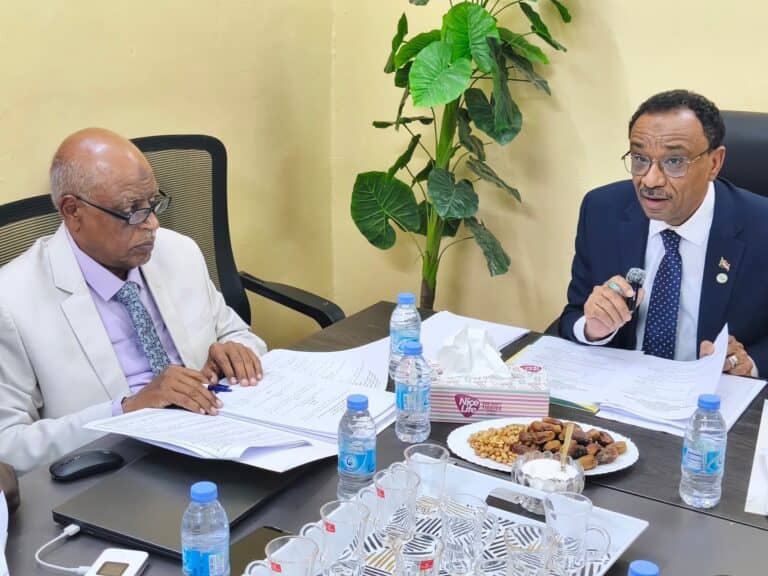
Professor Ahmed Mudawi Musa emphasized the important role played by private, national, and foreign higher education institutions in supporting the higher education system in Sudan. He emphasized the need to adhere to quality and academic accreditation as a prerequisite for program development and approval, enhancing confidence in their outcomes. He explained that we view private, national, and foreign higher education as a genuine partner in achieving the state’s goals.
This came during his chairmanship of the eighth meeting of the Committee for the Regulation of Private, National, and Foreign Higher Education Institutions, held at the Ministry’s temporary headquarters in Port Sudan. The meeting was attended by the Undersecretary of the Ministry, Professor Ali Al-Sheikh Al-Samani, and committee members, both in person and via Zoom. Professor Mudawi pointed out that the higher education sector requires strict organization and continuous evaluation to ensure the desired impact. He added that the Department of Non-Governmental Education attaches great importance to the accreditation of graduate programs, given their direct role in knowledge production and scientific research. The Department works to ensure that these programs are in line with international standards and responsive to Sudan’s development needs.
The meeting reviewed several items on the agenda, approving the proceedings and a follow-up report on the implementation of the decisions of the previous meeting. It also discussed the reports of the technical committees, which concluded with final approval of several graduate programs at existing higher education institutions, after they met the academic and technical standards and regulations approved by the National Council for Higher Education and Scientific Research.
It is worth noting that the Committee for Regulating Private, National, and Foreign Higher Education Institutions comprises a number of experts and specialists in higher education. It is responsible for studying and evaluating the projects submitted by private, national, and foreign higher education institutions according to locally and internationally recognized academic standards. It also monitors the performance and progress of these institutions and provides them with advice and counsel to help them perform better and advance their institutions.