
Medical screening for tuberculosis, AIDS and viral hepatitis for prison inmates
The Citizen/
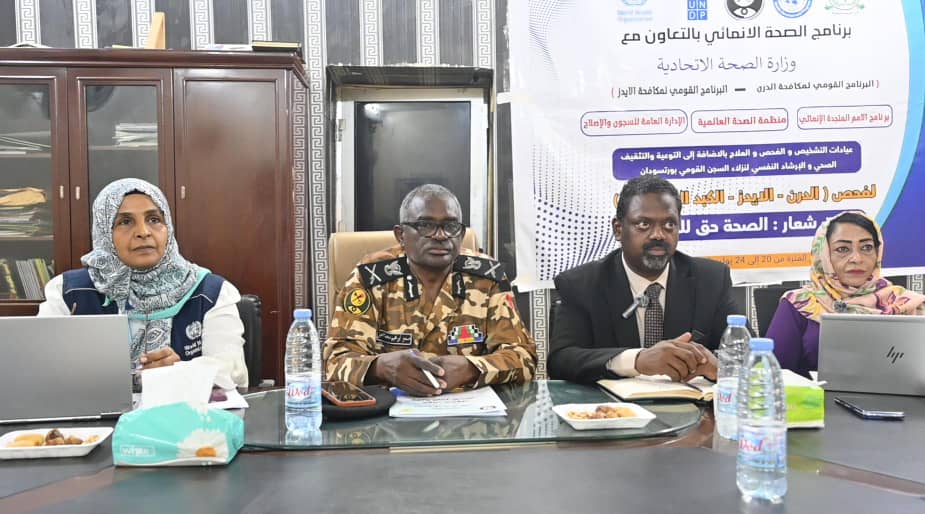
The Federal Ministry of Health, represented by the Department of Communicable Diseases Control (National Tuberculosis Program and the National AIDS Program), in cooperation with the Development Health Program Organization and the General Directorate of Prisons and Corrections, represented by the Red Sea State Prisons Administration, launched a medical screening program to detect tuberculosis, AIDS, and viral hepatitis C for prison inmates.
Director General of Health Red Sea State: Routine screening for viruses among inmates in prisons is important for early detection of diseases and treatment of infected people.
Hanadi Hussein, Director of the World Health Programme (WHO), said: “The programme has been working despite the difficult humanitarian conditions and the worsening challenges that Sudan is going through.
Acting Director of the Department of Communicable Diseases Control, Dr. Mohamed Abdel Moneim Al-Sarraj: The program aims to raise the health awareness of prison inmates about the importance of combating these diseases, early detection of diseases, and linking them to care and treatment centers for the infected.
The Director of the Red Sea State Prisons, Major General Samir Ibrahim, pointed out the full support of the Federal Ministry of Health and organizations wishing to implement health awareness programs for inmates, stressing that they welcome community initiatives from government agencies and international organizations.
For her part, the director of the Development Health Programme, Hanadi Hussein, said that the program is working despite the difficult humanitarian conditions that Sudan is going through in terms of conflicts, displacement and the deterioration of health infrastructure, pointing to the growing role of civil society organizations.
She stressed that the closed and overcrowded prison environment is a fertile ground for the spread of infectious diseases among inmates and staff, and active testing is a key tool for early detection, even in the absence of symptoms, to ensure a safer healthy environment inside prisons, and to contribute to the protection of society when inmates are reintegrated after the end of their sentence. The adoption of an active screening approach also reflects the commitment of correctional institutions to the principles of public health, prevention, and respect for human rights.
The representative of the World Health Organization (WHO) in Sudan, Dr. Sarah Sar Al-Khatam, said that the launch of the screening campaign comes to achieve the goals of comprehensive development, stressing the importance of early detection and providing the necessary medical interventions to treat infected cases.