
Cairo Hosts “Kosti: The Story and History” Book launching
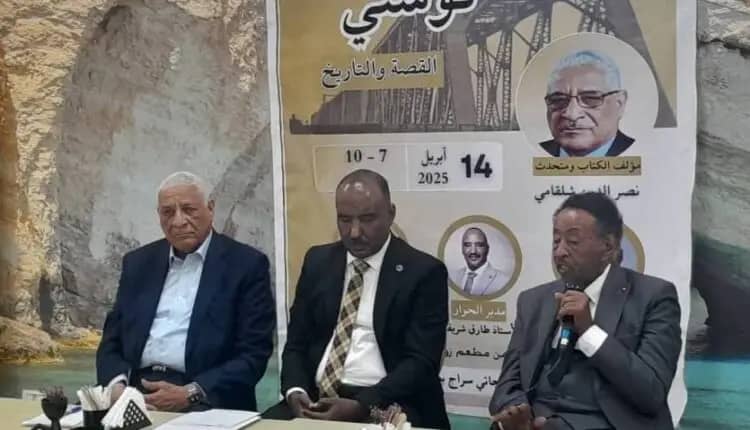
In an atmosphere filled with nostalgia and memories, the Egyptian capital, Cairo, hosted a special cultural evening during which the book “Kosti: The Story and History” by Dr. Nasreldin Shulgamy was launched. The event took place at the “Zoul” restaurant in Nasr City, amidst a remarkable presence of prominent figures in Sudanese intelects, politicians, and artists.
The evening witnessed the attendance of a number of prominent figures, including the distinguished artist Sharhabil Ahmed as the guest of honor; the head of the Umma Party, Mubarak Al-Fadil; the leader of the Justice and Equality Movement, General Ibrahim Al-Maz; the renowned novelist Yahya Fadlallah; Dr. Sara Abu; the head of the Consumer Protection Association, Dr. Yasser Mirghani; Professor Al-Moez Hadra; and a group of people interested in documentation and contemporary Sudanese history.
The discussion was moderated by Professor Tariq Sharif, and the interventions were opened by Professor Ibrahim Bakhit, who praised the book, describing it as a distinguished scholarly work that addresses the origins and development of the city of Kosti in White Nile State, highlighting its most prominent historical landmarks and influential figures.
Professor Bakhit emphasized that the author used a precise scientific approach in collecting and analyzing information, elevating the work to the level of academic dissertations.
Dr. Nasreldin Shulgamy spoke about the motivations behind writing the book, explaining that his birth and upbringing in Kosti was the primary motivation.
He began the book project with an elegy about one of his father’s friends, which later evolved into a series of articles that were widely acclaimed.
Historian Mahjoub Bashari suggested compiling them into a single book, resulting in this important documentary journey.
Shalgamy noted that he met 49 people from the city during the documentation process and interviewed them about Kosti’s history and influential figures.
He added that the book is full of stories and anecdotes that reflect the spirit of the city.
It also devoted chapters to the origins of the “Tum Tum” rhythm, pioneered by Tomat Kosti (Kosti Twins) in the 1940s, and explored the lives of these women who created unforgettable artistic creativity.
Professor Samia Tambal, who initiated the discussion, described the book as written with a nostalgia for the place, expressing the identity of the inhabitants of this city, one of Sudan’s most distinguished, due to its geographical location in the center of the country, linking the east and west via railway and road, and the north and south via river transport.
She added that the book addressed important landmarks in the city and social life that were influential, in addition to life in all its details, such as the establishment of schools, sports, and art. The book reflected peaceful coexistence among the components of society, with all their tribal and religious differences.
The audience’s contributions concluded with praise for the importance of such publications in preserving collective memory, introducing the history of Sudanese cities and their personalities who contributed to shaping their present, and the necessity of documenting these biographies for future generations.