
Cancer Patients .. Stories and Tales with the Taste of Blood (2-2)

Investigation by: Hanan Al-Tayeb
Because of fear…
For her part, (N.M.) narrated her journey with breast cancer, which she had been diagnosed with five years ago, and her fear of diagnosis, believing it was a normal pimple (milk), especially since she was breastfeeding and did not complain of pain or changes.
The diagnosis proved that she had the disease in the third stage and was three centimeters in size.
She did not lose hope of recovery, she said that she began the treatment journey and took time due to the delay in diagnosis with doses, treatments, performing the operation and continuing treatment, with high spirits despite suffering from chemotherapy doses and side effects and sometimes a decrease in immunity, which leads to delaying the dose.
The disease was controlled, advising not to neglect to reduce the treatment period. In the shelter center.
The mother of Mai Hassan, who lost her father in the war, spoke with great pain about their suffering from the displacement journey and the illness of her 20-year-old daughter, saying that she passed away in the shelter center while struggling with illness as a result of the interruption of doses, and attempts to provide treatment costs in the Merowe Center failed due to the war and financial conditions, which made matters worse.
The war, which entered its second year and was diagnosed before the war, made matters worse.
Interruption of treatments.
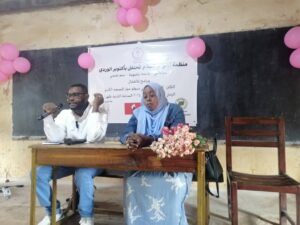
While (A. S.) said, my 25-year-old daughter was diagnosed with breast cancer. We were displaced after the Khartoum war to Atbara State, and treatments were interrupted, and it was difficult to obtain chemotherapy doses and injections (Herceptio) that were not available before the war by the government, and to buy them from the private sector at an exorbitant price of about 700 thousand pounds, and the extent of the suffering was great in providing treatments and conducting examinations, and the interruption of all treatments represented by (Zometa, chemotherapy, injections, etc.) and good food.
Raped!
She said with great pain that between the suffering of displacement and the interruption of treatment, she was raped by the Rapid Support Militia, during the displacement journey in search of treatment, security and safety, and then she passed away due to the deterioration of her health.
(N) appealed to the next government to reconsider cancer treatments, including devices and others, especially since the vast majority of patients are poor.
She spoke about the suffering of cancer patients in Sudan who complain to the ground about the lack of money and the lack of diagnosis and treatment. They have become wanderers. A journey of suffering.
The family of Osman Ahmed did not know what fate they will face when their eldest daughter, who was responsible for the family after the death of their father, according to them, was diagnosed with breast cancer.
They neglected the disease by not examining it as a normal pimple and did not feel pain for about two years. The journey of suffering and panting after treatment and effective treatment methods began, and the patient was swallowing the bitterness of pain.
After suffering, the disease was diagnosed and the result was shocking: a malignant tumor. Chemotherapy and some treatment were prescribed for her, and chemotherapy is only available in Meroe, which is thousands of kilometers away.
Financial constraints, lack of security and safety, and the costs of treatment, travel, living and housing, she said, the real journey of suffering began and she was transferred to the Meroe Center to conduct chemotherapy sessions for an amount exceeding three billion that was collected through donations.
Amidst these fires
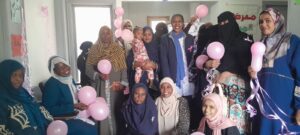
Her family expressed regret for the lack of centers for treating and diagnosing cancer in Atbara and the conflicting results.
She confirmed the extent of the suffering that patients suffer from traveling to the city of Shendi or Meroe for treatment, sometimes to no avail due to the delay in proper diagnosis and financial circumstances, and the citizen became between the fires of war, displacement and disease. She noted that early diagnosis is the first step towards early treatment.
The damned war..
.
For her part, the mother of the 15-year-old girl, Alaa Hassan, narrated with great pain the details of their harsh journey fraught with security risks.
The horrors of war, displacement from one area to another, lack of food, potable water, and shelter, sleeping on the ground and covering herself with the sky, and the lack of a source of income after the war, not to mention my daughter’s suffering from pain and the lack of food and doses except in the only Meroe center in Sudan after the war in Khartoum and Madani. The journey takes days and nights, and the high cost of doses amounting to three billion Sudanese pounds and the long distances.
She said that after arriving in Meroe, my little girl died on the second day.
Only two devices..
.
While a number of patients and their families agreed on the lack of radiation devices in Sudan, which made the war worse, they pointed out that there are only two devices in the Atomic Oncology Hospital in Khartoum and Madani, which are thousands of kilometers away from the states, and the waiting list is long.
This has caused many to miss their appointments to take radiation, sometimes due to the malfunction of the device, as well as the financial circumstances of traveling to Cairo and even Madani.
Patients headed to Madani after the Khartoum war, and the Madani Center was closed due to the war.
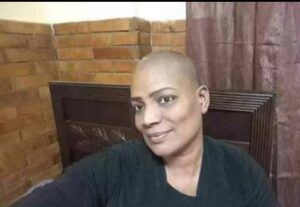
Those whose financial circumstances allowed traveled to Egypt on a risky journey through smuggling. Some died due to the interruption of doses and treatments, and some are fighting the disease on the desert road.
We became helpless, not knowing what to do between the fires of disease, war, displacement and need.
To shelter children with cancer.
Alam El-Din Adam Idris said that the Joanna Amal Rest House for the care of children with cancer, affiliated with (We All Have Values), a voluntary youth organization founded in 2013, was working beautifully by providing full accommodation services for children and facilities, including comfortable housing, food, transportation, and providing treatment for children in three rest houses in Khartoum Madani and the third is a bridge to reach Darfur State, to transport children early to continue their treatment, with a capacity of 40 children and 40 companions in the rest houses.
Capacity.
We continued to face great difficulty when the Oncology Hospital in Khartoum, the only hospital that treated children with cancer, was closed on April 15, 2023, in transporting the children from Khartoum to Madani.
Despite the suffering, they were transferred to Oncology Hospital Madani, the only hospital after the Khartoum war, and the capacity of the We Have Hope Rest House in Madani was increased from 30 children to accommodate 50 children and 50 companions.
The suffering was great during this period due to the lack of medicines and chemicals, and they were obtained at the end of December when Madani was attacked and war broke out, which doubled the suffering because it was the only hospital.
The children were transferred to a safe place in Sennar State and distributed to three
centers, Kosti, Gedaref, and the Social Security Center, Meroe, which became the only center for children with cancer due to the availability of radiation and chemicals.
Supporting the sector
Adam pointed out that there are many challenges and the circumstances of war prevent its implementation. Work is underway to establish We Have Hope Rest House No. 4 in Meroe to provide services to children with cancer, especially since the extent of their suffering is great. He appealed for their support.
Coffee and tea sessions..
Regarding the media and journalistic aspect in raising community awareness.
The journalist and activist in the field of breast cancer awareness,
Mrs. Ikhlas Nimr, spoke about the role she plays in the field of awareness with some parties through awareness campaigns in the streets and roads.
She said that the focus in 2022 was with tea sellers through (tea or coffee session) and its great success.
A large number of women expressed their desire to undergo early examination, but the circumstances of the war in Sudan prevented the implementation of the campaigns.
Nimr indicated that the program was implemented this year in Cairo in the (Build Your Home) area in 6 October and it was successful. She asked girls and women to provide early examination and contacts were made with an Egyptian association to agree to conduct early examination for women in Cairo.
The recovery rate is high.
She mentioned that she encouraged and motivated women to undergo early screening in awareness campaigns during the pink month by going to screening centers, noting that the recovery rate as a result of early detection according to doctors specializing in the field of oncology is between (95-96%), and therefore all awareness programs and activities in October or other times come under the slogan (Examine early and you will be safe).
With awareness and early detection..
Ikhlas confirmed that her role in the awareness aspect was not linked to the awareness month, but rather through her column, Nimriyat, by alerting screening centers, she indicated that she had undergone the screening twice and this year she will undergo the screening with the group of women who requested that the screening be provided, she called for not fearing and despairing, she said the earlier the detection, the earlier the recovery.
A savior for women’s health
For her part, Ms. Amal Taleb, Executive Director of the Women’s Initiatives Group, a voluntary organization, began her speech by saying that health in general is one of the most important goals of sustainable development.
Therefore, the Women’s Initiatives Group has placed the interests of women among its goals and agenda, and has focused greatly on raising awareness of the dangers of breast cancer as one of the greatest threats to women’s health, explaining that early detection is the greatest savior for their health and reduces the death rate.
Through mobile clinics
Taleb explained that the women’s initiatives in the awareness aspect began in 2002, through seminars in places where women are present in workplaces, institutions, neighborhoods and residences, and the group’s work developed through mobile clinics to reach women in remote places through seminars and awareness sessions and discovering many early cases, in addition to the increase in awareness among women, and the turnout for early detection has become a choice, in addition to women encouraging each other to have periodic screening and its importance as a prevention of the disease.
In shelter centers
Amal confirmed that the periodic screening program continues throughout the year and is not linked to the season and intensifying awareness in the pink month, with its effectiveness and various activities in Khartoum and the states.
She pointed to the implementation of October campaigns for the current year in Kassala State despite the war conditions in the country to raise awareness among women, especially in shelter centers.
Within the framework of social responsibility..
She mentioned that the Women’s Initiatives Group was able, with Zain Mobile Phone Company, within the framework of the company’s social responsibility and the group’s goals in the early detection center for breast cancer in Al-Mulazimin neighborhood, Omdurman, by the company establishing the center by providing all the devices that assist in the early detection process, such as the mammogram device and others.
Amal expressed her deep sadness at the theft of the center by the Rapid Support Militia, wishing for the war to stop and peace to prevail and for the initiatives to return to their humanitarian work better than before in partnership with Zain.
The number of patients has doubled.
For her part, Dr. Nada Othman said that the Radiation and Istopes Center in Khartoum used to receive between (250-300) thousand new cases annually in the children’s section of Madani Oncology Hospital, and about 3000 new cases annually from adults.
The number of patients has doubled significantly after the war, especially the children’s segment at Madani Center, because it has become the only center that receives children’s cases from all over Sudan.
She pointed out that there are no statistics in Madani Center and the number of patients has more than tripled after the war, and the lack of most services, especially radiotherapy, which is only available at the Social Security Hospital in Meroe City at an exorbitant price of billions of pounds.
Not to mention the long distance, security and financial conditions, and travel for days, and the patient may die in the street.
Billions of pounds
Dr. Nada narrated the suffering of a child with a cancerous tumor in the kidney that was removed and he was prescribed doses of chemotherapy and radiation and made great progress in chemotherapy, but their financial circumstances prevented them from paying the chemotherapy fees amounting to 3 billion pounds.
They sought help from the Zakat Chamber, the Sudan Organization for Children with Cancer, and the Ministry of Health.
A large part of the amount was paid, with one billion remaining.
60% of the cases are late.
For his part, surgeon Dr. Moawia Daboura stressed the importance of early detection and awareness of the disease through various media outlets.
He relied on the media to raise awareness, and how to limit its spread, stages, and danger in the event of early detection, pointing to the development of science in the field, indicating that 60% of cases come in late stages (third and fourth) according to the progression of the disease. Among the priorities…
Daboura stressed the importance of having specialized centers and providing mammograms and ultrasound devices for breast cancer in all cities and states of Sudan, and the necessity of continuing awareness throughout the year. He called on journalists and media professionals to intensify efforts to raise awareness about breast cancer.
He expressed his hope that peace would prevail in Sudan and that cancer patients would be at the top of the government’s priorities by providing centers and devices to eradicate the disease.
There are reasons.
While Dr. Nour Al-Safa, Obstetrics, Gynecology, Infertility and Ultrasound, stressed the importance of early detection to prevent the spread of the disease and recovery, explaining that its prevalence among women is 99%, and that 1% of men are infected, for every 100 cases among women, one case among men, she indicated that there are no direct causes that lead to infection with the disease, noting that family history and genes play a major role in infection with the disease, in addition to a number of reasons that may lead to infection with the disease, represented by exposure to alternative hormones at menopause, early puberty, and giving birth at a late age in addition to not breastfeeding unnaturally, she stressed the importance of breastfeeding, explaining that it protects against breast cancer, in addition to excessive obesity and unhealthy eating. Monthly and periodic examination…
Dr. Nour called for the necessity of a monthly and periodic examination by a doctor annually through diagnostic images or a mammogram device and to rush to see a doctor when noticing any changes in the breast or the appearance of secretions or a lump in the breast or thickening without pain in many cases, in addition to a change in the size, shape or appearance, or a change in the appearance of the nipple and the skin surrounding the nipple, and the discharge of an abnormal or bloody fluid from the nipple, she warned of the examination even if these symptoms are not accompanied by pain.
In the advanced stages. She explained that most breast lumps are not cancerous and are likely to be treated successfully when they are small and have not spread to nearby lymph nodes.
She indicated that breast cancer can be a combination of symptoms, especially in the advanced stages…
Containing the shock…
For his part, Dr. Al-Nour Suleiman Hassan, a psychology specialist, stressed the importance of providing psychological support to the patient to relieve psychological pressure and contain the shock after diagnosis by providing psychological doses, and their role in removing many psychological aspects of the patient or recovery. He called for the necessity of giving the patient a family atmosphere and staying away from excessive protection and not dealing with him with pity.
He advised those diagnosed with the disease on the importance of maintaining their mental health as part of treatment and being patient and strong-willed, noting that he was not associated with stigma.
Without risk factors..
A report by the World Health Organization revealed that 2.3% of women were infected with breast cancer in 2022, and 670 thousand deaths were recorded worldwide, the infection among women among all age groups after puberty and at late rates in life, and about half of all breast cancer cases occur without specific risk factors other than gender and age.
It is the most common type of cancer in women in 157 countries.
Breast cancer is a disease in which abnormal breast cells grow out of control and form tumors. Left untreated, they can spread throughout the body and become fatal.
Shocking facts and figures…
A report by the management of the Research Center at Radiation and Istopes Hospital in Khartoum before the outbreak of the war revealed the absence of a clear national registry to determine the annual cases of patients, reliance on information received from hospitals, and the absence of a strategy for patients in terms of prevention, early detection, treatment, training and research, and cancer diseases are not among the state’s priorities, in addition to the shortage of doctors and beds and the interruption of doses.
It also revealed the absence of any umbrella under which to make reports to measure the volume of services provided and the shortage and work to fill them.
12 thousand cases annually..
The report of the Research Center Administration stated that the latest statistics in 2017 revealed an increase in the incidence of the disease in the country, with 12 thousand new cases recorded annually, and children constitute 8% of patients and 50% of those with leukemia need immediate treatment. It also revealed a problem in providing services, pointing to the role of civil society organizations in bridging the large gap.
Poor drug supply.
For his part, Dr. Dafa Abu Idris, Director of the National Cancer Center, confirmed the loss of information about the disease due to the war, indicating that the biggest challenge is the poor drug supply and the unavailability of radiation therapy after Khartoum and Madani were taken out of service due to the war.
By 2050…
A report by the World Health Organization’s International Agency for Research on Cancer indicated that about 20 million cancer cases will be diagnosed worldwide in 2022, up from 18 million in 2020, and this number will increase by 77% to 35 million by 2050.
The International Agency for Research on Cancer expects a 142% increase in cancer rates in low-development countries, compared to a 99% increase in medium-development countries between now and 2050.
A statement by the director of the National Cancer Center in Sudan (to Al Jazeera Net) in the middle of this year revealed the tragedy of cancer patients.
He said that no less than 20% of patients died at home or in centers due to the lack of treatment and the displacement journey.
He said that 80% of patients were receiving treatment in Khartoum and Gezira states, which are now out of service due to the war, and patients have become wanderers, and some are still in war zones due to financial conditions or the difficulty of leaving. He also revealed that 30,000 new cases are recorded annually, and it is expected that 80,000 cases will visit the centers.