
Cancer patients… Stories and tales with the taste of blood. (1-2)

Investigation by Hanan Al-Tayeb
Every year, the world celebrates the Pink October Breast Cancer Awareness Month, a global initiative that began in October 2006 to raise awareness and identify the disease, symptoms, diagnosis, treatments, and reduce social stigma, and the need for early detection by going to examination centers. Medical reports confirmed that the recovery rate from the disease reaches between (95% – 96%) in the case of early detection, and 10% of women around the world are infected annually.
Statistics from Madani Oncology Hospital revealed that it receives between (250 – 300) new cases in the children’s department annually. And about 3000 new cases annually from adults. The number of patients has more than tripled after the war. The cost of chemotherapy treatment has risen to three billion pounds in one center, and what is hidden is greater. Despite the Sudanese suffering from displacement and asylum due to the war, the celebration of the Pink October month to raise awareness of the dangers of the disease was present in shelter centers and among communities. Stories and tales of Nahiat..
In this investigation, we narrate stories and tales with the taste of honey, hope and optimism of survivors who recovered from the disease as a result of early diagnosis with the treatment journey by defying all circumstances despite the suffering, and they repeat the phrase ((Check early and you will be safe)). They were a source of hope, inspiration and strength for others who were diagnosed. They wrote their steadfastness and patience in the face of this disease that many describe as (slow death and the thief of joy) and there is no cure for it. They played a major role in societies by raising awareness and encouraging the importance of early detection, commitment to continuous treatment and not despairing.
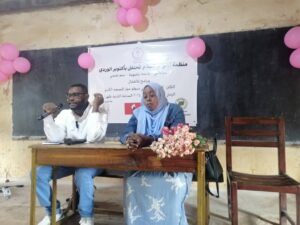
Stories that tear the strings of hearts..
In addition to stories and tales with the taste of blood of cancer patients in Sudan due to the damned war, between the lack of treatment and the high costs of doses and the lack of diagnosis, and the journey of travel for days and nights to reach treatment centers, and sometimes the lack of doses. Then the journey of searching and suffering begins again, and there are those who passed away while fighting the disease inside their homes and some in the streets and roads and in shelters, and some of the infected were raped. And not bearing the costs The doses reached about three billion Sudanese pounds, and the circumstances prevented them from being provided in light of the war, material and living pressures, lack of security and safety, and the lack of a source of income for the head of the family and the loss of the breadwinner, not to mention the costs of housing that reached billions of pounds, living expenses, and others. Here are the investigation records that revealed the joyful, the sad, the painful and the tearful..
With awareness we fight cancer…
Initially, Professor Lamia Mutawakil, a broadcaster and presenter of programs on Sudan Radio and Television, a survivor of breast cancer, told her journey with the disease, saying (With awareness we fight cancer). She alerted everyone to the value and importance of early examination, which plays a major role in recovery, and not to despair and surrender. I continued, I was diagnosed with the disease in 2018, and the shock was great upon diagnosis, especially since the prevailing belief is that there is no cure for the disease. I traveled to Cairo to complete the treatment journey, and despite suffering from chemotherapy, I was completely cured. Part of the breast was removed, as the disease was in its early stages.
Claws attacked me….
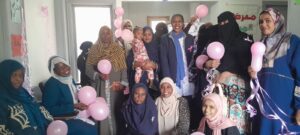
She said after the chemotherapy needle landed in my hand, merciless claws attacked me in every cell of my body, burning everything, and I felt all the fire inside me, I cried silently, and I was possessed by different and mixed feelings of challenge, fear, surrender and an intense desire to resist, confused and exhausted. I noticed that blackness began to appear in all my nails and the soles of my feet and I could no longer distinguish between the flavors of food, as all foods (with the bitterness of colocynth) in every meal. I avoid eating more than two spoons or two pieces for fear of vomiting and my feeling that my soul will leave with it. And my immunity dropped to a frightening degree, I feel like my head is going to explode, and I was exhausted. I was reading on (Google) about the disease, the possibility of recovery, food, treatment and when a cancer patient dies.
Psychological support. .
Lamia says: My treatment journey was in the harsh winter and the nights were long and boring. I used to sleep next to my mother and wonder where I got this disease, as the family has no medical history. I thought that I would return to my country carried (in a death box), and when I stood in front of the mirror, I found myself without eyebrows, eyelashes, or hair. My mother screamed, “I pulled myself together. If I collapse, my mother will collapse, so I must be strong and fight the cold and the disease.” Sentences and phrases came to me and conflicted with me: “Will the disease eat me up?” Because it is the most dangerous, and there are those who lost the round and left the world. But whenever I remember the words of reassurance and psychological support from colleagues, friends, family, and loved ones, with many phrases: “Don’t be afraid, tomorrow you will be fine.” The disease (reward and wellness) “You must be strong because your audience is waiting for you.” The disease was in its early stages and was controlled, and others. I recovered, and returned to Sudan amidst a massive reception at the airport and to my audience through the screen and microwave, and raising awareness of the disease and the importance of early examination.
A dove of hope…
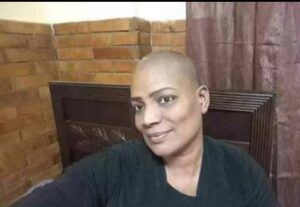
While Noon Othman, 35 years old, narrated her journey with the disease, saying that she discovered the disease early through dialogue sessions known as (coffee) sessions that are held in neighborhoods to raise awareness of many issues, including breast cancer awareness from one of the survivors, she persevered and was patient and defeated the disease through early detection and treatment and not despairing, she became a dove of hope for many people who were diagnosed, noting that the psychological aspect of the patient is half the treatment, in addition to early detection and adherence to the doctor’s instructions and good nutrition.
Not linked to social stigma..
Noon talked about her patience with the pain of chemotherapy and its effects on the body, hair and others, she found support and assistance from her husband, family and friends. Noting that the disease is not linked to social stigma or the patient’s genes (family history), but it plays a role, she indicated that there is no medical history in the family. Not all tumors are malignant…
For her part, aunt Fatima Omar, 60 years old, narrated her experience with the disease and her recovery. She said, “I was diagnosed with the disease in 2005, with a lump in my breast that I discovered by chance. The diagnosis confirmed that I had the disease, and my children did not tell me that I had cancer at first, fearing for my psychological state. When it was decided to remove the breast, I was notified and I did not feel any fear. Rather, I reassured my family, and the pity, fear and belittlement on their part were great. My patience and reassurance of everything was by the will of God. The psychological aspect played a role in completing my recovery.
About 19 years..
She indicated that the operation was performed in Cairo and that treatment would continue in Sudan, with periodic examinations every six months and that I would live my life normally and naturally. She advised cancer patients to be patient, not to despair and to have early detection if they noticed or felt any symptoms or signs, and that not all tumors are malignant. I urged people to quickly see a doctor so that it would not turn into a malignant disease, and I started sharing my experience in the community and during awareness month.