
Prime Minister, Cabinet Members, and Representatives of Political Forces Receive African Union Ambassadors in Khartoum
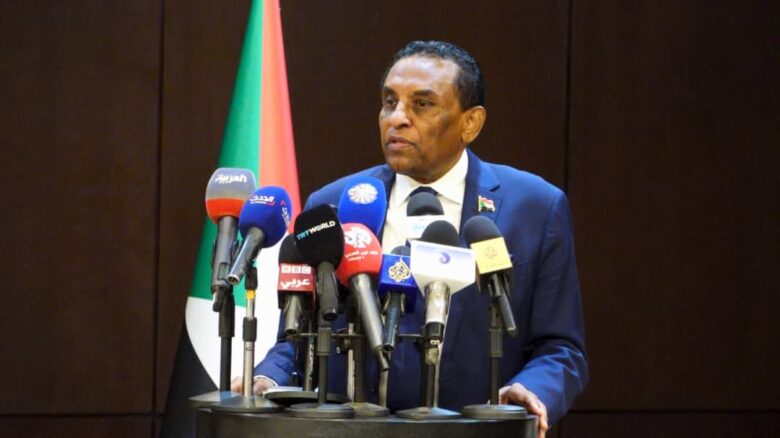
Prime Minister Dr. Kamil Idris received a delegation of members of the African Union Peace and Security Council, comprised of ambassadors from member states, at the Cabinet headquarters in Khartoum today (Sunday). The delegation was headed by Ambassador Mohamed Khaled, the Algerian Ambassador and Chair of the African Union Peace and Security Council for the month of August. Ministers and members of the government, as well as representatives of political and civil society groups, were also present.
The Prime Minister briefed the African delegation on the latest developments in the country, particularly in light of the ongoing aggression by the rebel Rapid Support Forces militia and its backers. He discussed the extent of the destruction and devastation caused by the rebel militia, according to the Sudan News Agency.
The Prime Minister emphasized that the delegation’s visit sends a strong message affirming the African Union’s continued engagement with Sudan. He stressed that this engagement must be based on mutual respect among member states, noting that Sudan is a founding member of the Union.
He reviewed Sudan’s historical efforts in building the African Union and supporting continental unity and solidarity, noting that Sudan hosted a number of African national liberation movements, most notably Nelson Mandela, since the early days of African solidarity awareness.
Dr. Kamil Idris indicated that the delegation would witness firsthand the extent of the violations, crimes, and destruction perpetrated by the militia against Sudan, including the destruction of infrastructure, service facilities, and state institutions.
He reviewed the Sudanese government’s peace initiative, presented to the UN Security Council in December 2015, which is based on the withdrawal of the Rapid Support Forces militia from the areas it occupied and its participation in integration and demobilization procedures leading to an end to the war. He explained that the initiative has received a positive response from regional and international organizations and global religious entities.
The Prime Minister inquired about the role played by the African Union in the Sudanese crisis, emphasizing Sudan’s expectation of the Union’s support and backing for steps to designate the militia as a terrorist organization due to its criminal conduct.
Idris highlighted the red lines that cannot be crossed, namely the unequal treatment of the Sudanese Armed Forces and the rebel militias, and the need for non-interference in the country’s affairs. He stressed that the Sudanese people alone have the right to determine how their country is governed.
The Prime Minister affirmed that the Armed Forces are currently advancing in the Greater Kordofan region and will move on to the Greater Darfur region until the entire country is liberated. He noted that the situation in Sudan requires the solidarity of the African Union, as it could spread to and affect all African countries.
He announced that the Sudanese-Sudanese dialogue, owned by all Sudanese people, will begin soon. He indicated that this dialogue will lead to comprehensive national recovery, complete national reconciliation, and a comprehensive constitutional framework. He added that the dialogue will conclude with free and fair elections in which the people will choose a new leadership to guide the nation.