
Sharp divisions in Nairobi are shaking the “Broad Front,” and the conflict over secularism is escalating.
Report – The Citizen
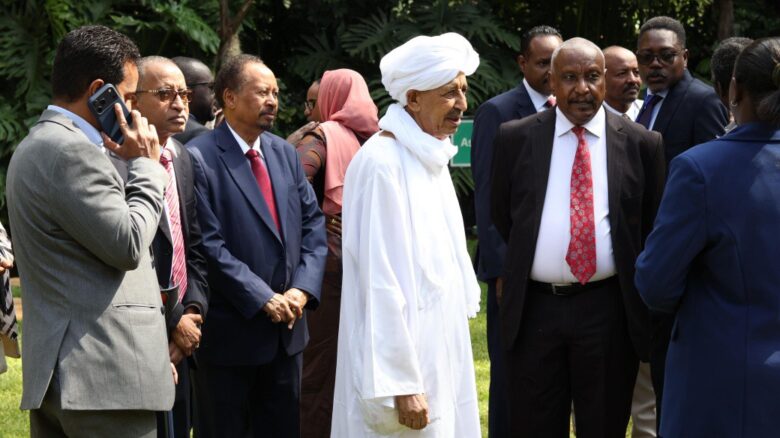
Reliable sources within the meetings in the Kenyan capital, Nairobi, reported that the intensity of disagreements and divisions has reached unprecedented levels among the delegations of the Forces of Freedom and Change and their close allies, who have been mobilized by international powers in an attempt to engineer a new alliance under the name “Broad Front.”
The sources confirmed that behind the scenes, there is a state of extreme tension as a result of an attempt to impose an external agenda to merge disparate forces and pass the “Broad Civil Front” project in a secretive manner, to be a unified opposition front against the government, and to circumvent the fragmentation of these components by adhering to the minimum slogans, foremost among them “civil state.”
Sources revealed a surprising development: a fierce ideological clash erupted within the discussion rooms regarding the explicit wording of the “secularism of the state” clause in the final document. Leaks disclosed intense pressure exerted on leaders of armed movements, particularly Abdul Wahid Mohamed Nour, to accept ambiguous language that conveyed the meaning of secularism without explicitly naming it, in order to avoid the withdrawal of the Umma Party and other traditional factions.
However, the insistence of some within the alliance on adopting “explicit secularism” led some parties to renege on the understandings, resulting in heated exchanges and mutual accusations of foreign subservience that disrupted the proceedings.
In an attempt to salvage the situation,
the international circles sponsoring the meeting are trying to circumvent the deep ideological differences by focusing on passing a predetermined, key recommendation: classifying “Islamists” as a terrorist organization. This is presented as the sole common ground uniting the participants. However, sources within the closed-door meetings suggested that this excessive division and simmering conflict over leadership structure and the distribution of quotas and positions could lead to the complete paralysis of the platform or force sponsors to draft a weak statement devoid of any real political commitments.