
Army Destroys Largest RSF Supply Lines on Western Borders
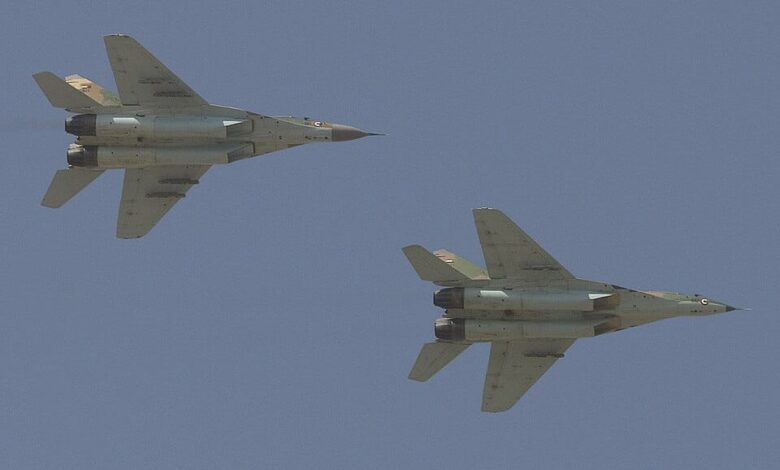
Sudanese military sources revealed that a series of preemptive airstrikes targeted Rapid Support Forces (RSF) supply lines on the Sudanese borders with Chad and Libya, confirming the destruction of two key sites that served as staging points for delivering military and logistical support into Darfur.
The sources added that the strikes, numbering approximately 21 operations, targeted supply convoys traveling through the Libyan-Chadian-Sudanese border triangle, which the armed forces consider a constant threat to their security. While withholding details about the nature of the supplies, they indicated that they included jamming equipment and drones, confirming that the two largest support sites on the western border were completely destroyed.
The Sudanese government accuses Chad of providing logistical support to the Rapid Support Forces, while fingers are being pointed at groups linked to General Khalifa Haftar in Libya for transporting supplies through cross-border networks.
Sources say that Sudanese air defense and air force personnel are closely monitoring the northwestern and western borders in an attempt to cut off supply routes.
Military experts believe that the dynamics of military supply now rely on strategic routes that exploit security gaps, linking distribution centers in Libya with receiving points inside Sudan.
They point out that some of these supplies are transported through arms and fuel smuggling networks run by semi-autonomous groups resembling “security contractors,” who impose informal taxes, provide escorts for trucks, and offer safe passage for the evacuation of the wounded or retreating forces.
Brigadier General (Rtd) Mohamed Abdel Jalil described this reality as “blurring the lines between official work and smuggling,” noting that the Sudanese Air Force’s focus on the border with Chad has prompted the Rapid Support Forces to seek new entry points through Libya, reflecting a shift in military supply routes and further complicating the security landscape in western Sudan.