
Bara and An-Nuhud: Decisive Battles Shaping Victory in Kordofan and Darfur
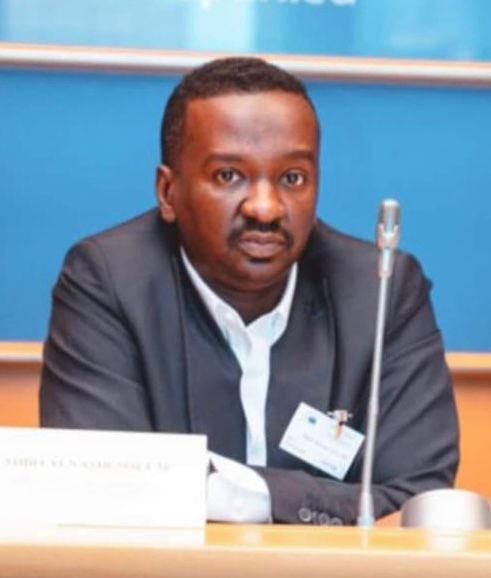
By: Dr. Abdelnasser Solum Hamed
The battles unfolding in Kordofan are no longer peripheral clashes on Sudan’s margins; they have become decisive struggles shaping the fate of the entire war. Between Bara, whose recapture broke the siege of El-Obeid and reopened the road to Khartoum, and An-Nuhud, the strategic gateway to Darfur, lies the next chapter: either a decisive victory restoring state authority or a grinding war of attrition draining both the army and the nation.
The recapture of Bara in September 2025 was far more than a local event. Located about 60 kilometers from El-Obeid, the town had long served as a logistical hub for supply lines between Khartoum and western Sudan. The Rapid Support Forces (RSF) poured in thousands of fighters, reinforced by mercenaries from Chad, Niger, and even Colombia. They relied on guerrilla tactics, ambushes, and hit-and-run raids with pickup trucks. Yet the Sudanese Armed Forces turned the tide through a coordinated operation: infantry and armored units advanced under drone surveillance and precise airstrikes, shattering RSF defenses and restoring government control.
The immediate effect was logistical. With Bara back under government control, the lifeline between Khartoum and El-Obeid reopened, enabling the movement of ammunition, supplies, and medical evacuation. For months, this artery had been vulnerable, leaving El-Obeid nearly cut off. Its restoration gave the army renewed mobility. Still, threats persist: Jabra al-Sheikh remains a potential flank for RSF infiltration. To counter this, the army is tightening a security cordon to safeguard the route and consolidating its recent gains.
El-Obeid, some 360 kilometers from Khartoum, has regained its position as the operational “center of gravity.” As the capital of North Kordofan and a vital crossroads linking east, west, and south, its earlier siege threatened to paralyze Sudan’s core. Breaking that siege restored El-Obeid as a logistical hub and staging ground for redeploying brigades. Today it stands as the beating heart of the army’s campaign and the launchpad for the battles to come.
An-Nuhud, however, is the true test. Just 110 kilometers west of El-Obeid, it is the hinge on which the war could swing into Darfur. The RSF understands this well. It has massed over 6,000 fighters around the town, bolstered by foreign mercenaries, building layered defenses to slow the army’s advance. Yet the stakes are clear: if the army secures An-Nuhud, the road to El-Fasher, Nyala, and Zalingei — the core of Darfur — opens wide.
The army’s approach reflects hard lessons learned. Drone reconnaissance and precision strikes target RSF convoys. Supply lines are harassed and severed. Simultaneous ground assaults stretch enemy defenses. The objective is not simply holding ground but breaking the RSF’s cohesion, denying it the element of surprise that once gave it the edge.
Beyond An-Nuhud, other towns carry equal weight. Abu Zabad is the pivot of West Kordofan: its capture would neutralize the region, denying the RSF a fallback. Al-Dibaybat serves as the gateway to Dilling and the vital link between the south and the center. Securing it would reopen the route between Sen-Kaduqli and El-Obeid, knitting together a unified supply network and enabling flexible maneuvers across multiple fronts.
Each city carries operational value: Bara broke the siege, El-Obeid is the operational hub, An-Nuhud is the hinge toward Darfur, Abu Zabad neutralizes the west, and Al-Dibaybat bridges the south. Step by step, the army strengthens its grip; delays only give the RSF breathing space.
Yet this war is not geographic alone. It is psychological and social. In Bara and El-Obeid, civilians welcomed the army with chants and celebrations — moments that restored the state’s legitimacy and lifted morale. The RSF, by contrast, lost its myth of invincibility, damaging recruitment and loyalty. Media images of cheering crowds acted like artillery in the information war, striking at the RSF’s narrative and recasting the conflict as one of state restoration.
The implications are regional. Libya and Chad fear the closure of smuggling routes that underpin informal economies. Egypt and Ethiopia view the battles through the lens of Red Sea and Nile Basin stability. The UAE, accused of funneling support to the RSF, faces shrinking influence as the tide turns. International powers now see Kordofan as the card that could shape Sudan’s eventual settlement.
History offers reminders. In the late 19th century, Kordofan was the springboard of the Mahdist revolution’s march on Khartoum. In the 1980s, battles in Rahad and Kadugli shaped the course of civil war. Once again, control of Kordofan appears decisive: whoever holds it, holds both the center and the west.
Challenges remain. The army must secure Jabra al-Sheikh, strike RSF concentrations near An-Nuhud, and capture Abu Zabad and Al-Dibaybat to guarantee the route to Dilling. The RSF will continue asymmetric tactics — ambushes, cut supply lines, and exploiting geography: long exposed roads in the north, dense savanna in the south. But the army’s growing use of drones, aerial surveillance, and multi-axis deployments has sharply eroded RSF advantages, exposing vulnerabilities with each passing week.
Looking ahead, three scenarios stand out. In the short term, the recapture of An-Nuhud would push the war into Darfur. In the medium term, the liberation of Abu Zabad and Al-Dibaybat would consolidate army control over West and South Kordofan, fusing the fronts into one operational theater. In the long term, entering Darfur from a position of dominance would reshape negotiations, leaving the RSF cornered and weakened.
In conclusion, Sudan stands at a historic crossroads. The reality on the ground points unmistakably to the army’s advance — steady, forceful, and growing in momentum. With Bara liberated and El-Obeid secured, the battles for An-Nuhud, Abu Zabad, and Al-Dibaybat are drawing near. Every gain chips away at the RSF’s power and weakens its endurance. Sustained operational pressure, expanding logistical superiority, and effective tactical advances make the full liberation of Kordofan not a question of “if,” but of “when.” That moment will open the road to Darfur, where the decisive chapters of this war will be written. The army is not merely defending the homeland; it is shaping, through sacrifice and determination, the future of a Sudan free from chaos and militias.
⸻
✍️ By Dr. Abdelnasser Solum Hamed
Senior Researcher & Director of the East Africa and Sudan Program, FOX – Sweden
Specialist in Crisis Management and Counter-Terrorism