
The Rapid Support Forces in Their Last Gasp
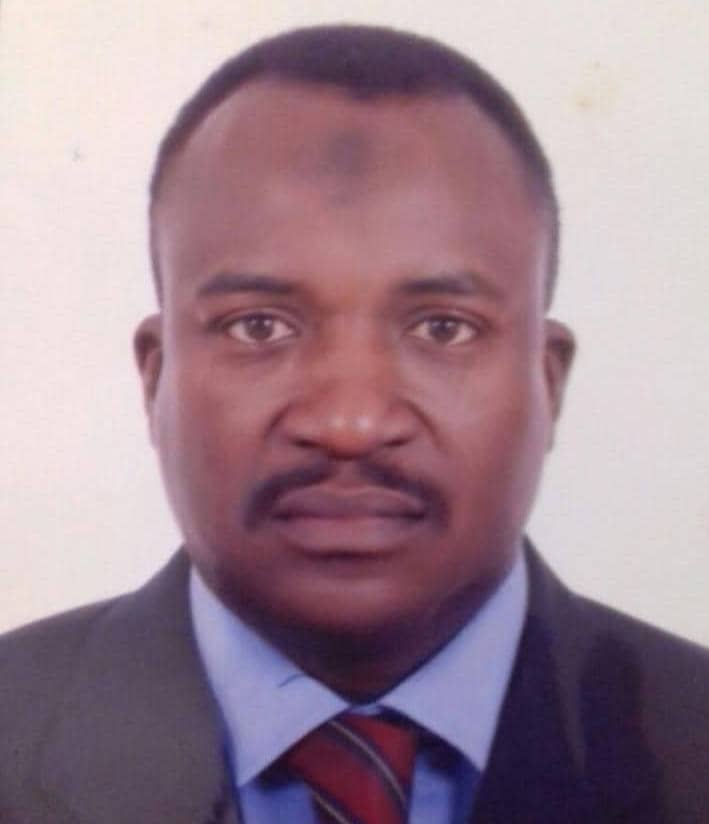
By: Al-Rekabi Hassan Yaqoub
Nearly 28 months have passed since the Rapid Support Forces fired the first shot at seizing power in Sudan. This was against the backdrop of a dispute between the army leadership and the political forces supporting it, on the one hand, and the militia leadership and its political ally, known at the time as the “Forces of Freedom and Change (FFC), on the other. The FEC demanded that the army leadership and other political forces sign the agreement without making any amendments, as it was an absolute and necessary matter. The FFC explicitly and clearly indicated that the alternative was war.
The Rapid Support Forces militia and its political wing followed up their rhetoric with action when the army leadership and civilian forces opposed to the militia refused to sign the framework agreement. They carried out their threat of war at dawn on April 15, 2023. The militia attacked the army’s general command headquarters, primarily targeting the headquarters of army commander Abdul Fattah al-Burhan to arrest or kill him, according to statements made at the time by the commander of the Rapid Support Forces militia, Hemedti.
It is no secret, as the war entered its third year last April, that it was a coup attempt by the Rapid Support Forces militia to seize power by force of arms and then implement a multi-dimensional political project, including sub-political projects aimed at achieving several goals, most notably: a comprehensive demographic change in Sudan by displacing the original historical ethnic components and replacing them with alternative ethnic components from outside Sudan’s geographical borders. These components are, in fact, an extension of the internal ethnic components that form the fabric and foundation of the Rapid Support Forces militia, thereby subjecting the entire Sudanese state to the hegemony and control of these components.
Another, more important goal, which represents a fundamental pillar of the Rapid Support Forces militia’s project to rule Sudan, is its economic objective: to control Sudan’s abundant natural mineral, agricultural, and animal resources, in addition to its privileged seaport on the Red Sea, which extends approximately 750 kilometers in a strategic geopolitical location of great regional and international importance.
This location is of particular importance to the agenda of the regional powers supporting the militia and its political project, and can be described as one of these powers’ most important ambitions in Sudan.
A third goal is dual in nature. It is both a goal and a means by which the Rapid Support Forces militia and its political wing consolidate the pillars and foundations of their project to rule Sudan. This goal is to control the routes and outlets of illegal immigration to Europe, human trafficking, and smuggling of all kinds.
This control is both a goal that enables them to control the borders and a means to strengthen relations with European Union countries, for whom illegal immigration represents a major national security issue.
Strengthening cooperation in this area with the European Union provides legitimacy and recognition to the new state, thus largely erasing the negative repercussions that have plagued the relationship between the two sides due to the crimes committed by the Rapid Support Forces militia in Darfur more than two decades ago.
These were the most important features, objectives, and characteristics of the RSF state’s project to rule Sudan, which they believed could be established through war and armed force.
However, as the entire world watched, the Rapid Support Forces militia failed to seize power through military force, despite having prepared the necessary equipment and resources, and having planned for it meticulously, the failure was the outcome, and the result has become a tangible reality that bears no denial.
After the militia had controlled the capital, Khartoum, the Gezira states, and large parts of Sennar and White Nile states, approaching the borders of Gedaref state in eastern Sudan and the borders of River Nile and Northern states in northern Sudan, it retreated due to successive military campaigns launched against it by the Sudanese army, its supporting forces, and the popular resistance. These forces were able to liberate all of these areas, forcing the Rapid Support Forces militia to flee to Darfur and West Kordofan.
Amid these army campaigns, the militia lost many of its troops and equipment and suffered major defeats. Its solid force, represented by its professional and trained forces, was shattered. To compensate for this loss, it resorted to recruiting mercenary fighters from several neighboring and non-neighboring countries. The militia also resorted to forcibly recruiting children and young men, quickly sending them to the battlefields.
As a result of this and other reasons related to disputes over financial dues for soldiers and officers, the militia’s scarcity of financial resources, the lack of medical and therapeutic care for the wounded and injured, discrimination among the militia’s various components, the militia’s brutal treatment of civilians in the areas it controls, the siege it imposes on El Fasher, its repeated attacks on displaced persons camps, the shelling of neighborhoods and villages in North Darfur, and its refusal to cooperate with international humanitarian organizations to open routes for the delivery of aid and food to besieged civilians, voices of discontent and protest have escalated from within these communities. Consequently, the militia has become a heavy burden and a source of suffering for the citizens and people of Darfur.
Facing this dire situation, coupled with the massive preparations of the army and its supporting forces for the battle to lift the siege of El Fasher and liberate the remaining cities of Darfur, which the army considers “the mother of all battles,” and the conclusion of its successful military campaigns against the militia, this situation has placed the Rapid Support Forces (RSF) on the line, facing extremely difficult choices within a short timeframe.
Either it stands firm and fights the battle with the remnants of forces fleeing the battlefields and languishing in their last strongholds, laden with wounds, defeats, and discord, and with low morale, against professionally equipped forces, fully equipped for battle with all military formations, including air power. Consequently, the likely outcome is defeat . This is the first option, a reckless, even suicidal, choice.
The second option facing the Rapid Support Forces is to surrender in order to preserve what remains of its forces and avoid a bleak, inevitable fate. However, this option spells the end for it, destroys its future, and places it under the scrutiny of domestic and international law due to its crimes and violations throughout the war.
The third option is political in nature, and is no less difficult and bitter than the previous two. Although it represents a theoretical way out for the militia from its predicament and dire situation, it is essentially impossible. Nevertheless, it remains the only window of hope, the faint, barely visible light at the end of the tunnel of the militia’s crisis. This option involves forming an alliance with its opponents, the Darfuri forces that have historically been hostile to it and are fighting alongside the army.
This option is fraught with significant, numerous, and thorny obstacles. The heinous crimes committed by the Rapid Support Forces militia against these forces and their societal and civil bases cannot be easily forgiven or forgotten. Accepting such an option by these forces represents a major loss and an unjustified surrender at a time when they are at the height of their power, on the verge of achieving a major victory over an adversary at its weakest, and within a stone’s throw of certain defeat.
However, this last option is now under consideration by regional parties that have supported the Rapid Support Forces militia, as well as international parties that do not want the Sudanese army to end the war in its favor with a remarkable victory and professional performance, which has been praised by President Trump himself. The regional powers supporting the militia view such a victory as a defeat for them, an end to their ambitions in Sudan, and their complete removal from the equation.
On the other hand, international powers, specifically Western powers, although they are allies of the regional powers aligned with the militia and share common interests with them, are under moral, humanitarian, ideological, and political pressures related to their strategies and security interests in the Middle East and Africa. These pressures make them unwilling to go along with their regional allies and continue to perpetuate the Sudanese crisis.
In addition, Western policy toward the Arab region has been and continues to be based on supporting, assisting, and empowering what they consider to be vulnerable minorities within the countries of this region. It is axiomatic of this Western policy, in the event of internal conflict in these countries, to support the party they consider to represent the minority. This serves to strengthen the foundations of what they consider to be preserving their national security within its overall framework.
Given this well-known fact, and applying it to the situation in Sudan in general, and Darfur in particular, we find it likely that Western powers will favor those they consider minorities, whom they must support and aid.
Based on the aforementioned considerations and assumptions, in addition to the militia’s military failure on the ground and its repeated defeats, the political failure of its political wing, currently called the Steadfastness coalition (Sumud), and most recently its inability to attract international and regional recognition and support for its recently announced parallel government, the fate of the Rapid Support Forces militia and its political wing will be annihilation and dissolution in the near future.