
Sudan Moves from Climate Ambition to Implementation of Nationally Determined Contributions

Khartoum – Haffiya Elyas
The Higher Council for Environment and Natural Resources has stressed the importance of moving Sudan’s Nationally Determined Contributions (NDCs) on climate change from the stage of pledges and policies to practical implementation, in a manner that responds to the country’s environmental, economic and humanitarian challenges and strengthens its capacity to recover and build resilience to climate change impacts.
The statement was made during the concluding workshop of a project supporting the assessment and review of Sudan’s Nationally Determined Contributions and the development of a roadmap for their revision. The workshop was organised by the Higher Council for Environment and Natural Resources in cooperation with the United Nations Development Programme (UNDP) at the UNDP premises on October 28–29, with the participation of relevant institutions and stakeholders.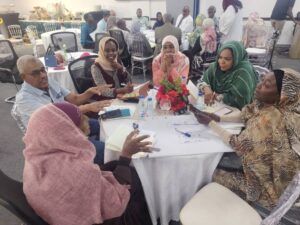
Reviewing Climate Commitments
The workshop discussed the review of Sudan’s Nationally Determined Contributions (NDC 3.0), describing it as an opportunity to realign the country’s climate commitments with the realities of the prolonged conflict, increasing vulnerability to climate change, institutional disruptions, and urgent recovery and development needs.
The project focused on four main areas: taking stock of and assessing the implementation of NDCs; evaluating infrastructure and institutional challenges; assessing the impacts of the conflict and identifying future priorities; and developing a roadmap for reviewing and strengthening the country’s national contributions.
These areas provided an evidence-based foundation for assessing the implementation of previous commitments, identifying institutional constraints and transparency-related challenges, evaluating the impacts of the conflict, and charting a realistic, ambitious and financeable pathway towards climate resilience, sustainable recovery and low-carbon development.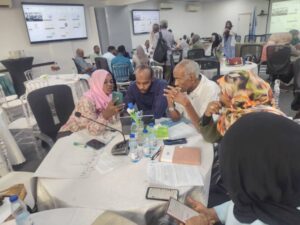
The project aims to transform NDCs from a policy framework centred on commitments into a practical, measurable and investment-attracting implementation tool, grounded in national ownership and aligned with the Paris Agreement on climate change and Sudan’s recovery priorities.
Challenges Facing the Implementation of Adaptation Measures
An assessment of NDC implementation during the 2021–2026 period showed that progress in adaptation sectors had been partial and largely dependent on externally funded projects.
Despite significant interventions in agriculture, water resources, livestock, rangelands, coastal ecosystems, renewable energy, forestry, natural resource management and public health, their effectiveness and sustainability were undermined by funding shortages, weak institutional coordination, limited technical capacities, and inadequate monitoring and evaluation systems.
The conflict that erupted in April 2023 further severely disrupted project implementation through infrastructure destruction, declining public services and restricted access to project sites.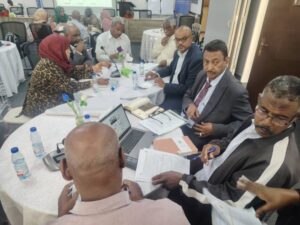
Priority interventions included rehabilitating water supply and irrigation systems to strengthen climate resilience; expanding climate-smart agriculture and food security initiatives; restoring livestock and rangelands; strengthening public health, sanitation and hygiene systems; promoting integrated coastal zone management; and improving climate information, early warning systems and disaster risk management.
Renewable Energy and Forestry among Mitigation Priorities
Regarding climate change mitigation measures, the inventory findings highlighted progress in policy development and technical and institutional capacity-building. However, implementation remained below the targets set out in Sudan’s 2021 Nationally Determined Contribution.
The war further delayed projects, disrupted services and made it difficult to monitor results. Mitigation priorities for the coming period will focus on expanding renewable energy, promoting sustainable land and forest management, and improving waste management.
Majda Ahmed: Success Depends on Translating Recommendations into Action Plans
At the conclusion of the workshop, Majda Ahmed Mohamed, Acting Secretary-General of the Higher Council for Environment and Natural Resources, said the success of the NDCs depended on translating the workshop’s outcomes into clear action plans, with defined activities, responsibilities and implementation timelines.
She expressed hope that the efforts would contribute to developing ambitious yet realistic national contributions that would help build a Sudan better equipped to confront climate change and manage its natural resources more sustainably.
Shanti Kranjit: Partnerships Key to Strengthening Climate Action
For her part, Shanti Kranjit, Head of the Climate, Energy and Environment Unit at the United Nations Development Programme, emphasised the importance of strengthening partnerships and coordination between national institutions and international partners to support Sudan’s efforts to address climate change challenges.
Kranjit also expressed her appreciation to everyone involved in preparing the document, particularly the Higher Council for Environment and Natural Resources, the project coordinator and the experts, commending their efforts and valuable contributions throughout the process.
She highlighted the need to build on the assessment findings when updating the NDCs and to link climate priorities with actual recovery needs and sustainable development objectives.
Recommendations on Governance, Financing and Climate Action
On the final day, participants were divided into four working groups focusing on financing, migration and displacement, governance and policies, adaptation, and mitigation. The groups produced a set of recommendations aimed at strengthening the implementation of the national contributions.
The recommendations stressed the need to mobilise funding and revise microfinance policies to help communities cope with climate change impacts. They also called for accurate demographic data linked to the timing and patterns of displacement and population movements.
Participants further urged that natural challenges be given greater prominence in adaptation priorities and ecosystem protection, while ensuring that the impacts of projects on local communities are taken into account. They also emphasised incorporating traditional knowledge and legislative considerations into the design and implementation of environmental interventions.
The working groups highlighted the importance of protecting biodiversity, restoring degraded ecosystems, and strengthening the role of protected areas in building climate resilience. Other priorities included diversifying energy sources, protecting coastal mangrove forests, conserving forests and restoring rangelands.
On governance, the recommendations called for strengthening the role of the Higher Council for Environment and Natural Resources as a coordinating body, enhancing its links with state-level authorities, civil society and the private sector, and establishing environmental focal points within relevant ministries and departments.
Integrating Environmental Priorities into National Planning
Meanwhile, Mohamed Saeed, Secretary-General of the National Council for Strategic Planning, underscored the importance of the environment sector and the need to integrate its roles with those of other sectors.
He commended the workshop’s outcomes, noting that they would contribute to supporting the government’s planning process for 2027.
The workshop’s findings highlight the importance of treating the Nationally Determined Contributions (NDC 3.0) as a national framework for recovery and transformation towards climate-resilient development, rather than merely an updated list of international commitments.
This requires striking a balance between ambition and implementation capacity, while linking adaptation and mitigation measures to post-conflict recovery priorities and sustainable development.