
Towards Promoting Commercial Livestock Production
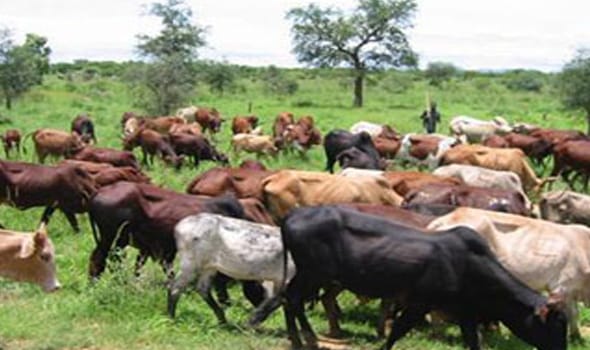
National Committee for the Transition from Traditional to Commercial Livestock Production
The committee is responsible for preparing a comprehensive study and developing a national program to support and empower small producers and integrate them into the livestock production cities system. This will be achieved through the following tasks:
First: Developing the National Strategy
1. Developing a national strategy for integrating small producers into the livestock production cities system, contributing to increased production and productivity, improved income levels, and the achievement of food security.
Second: Establishing a Contractual Partnership Program
2. Developing a contractual partnership model between livestock production cities and small producers, defining rights, obligations, and mechanisms for sharing benefits, thus achieving the principle of a win-win partnership.
Third: Increasing Milk Production
3. Developing a national program to gradually increase dairy cow production in four phases, as follows:
* Phase One: Increasing production from an average of 8 pounds per day to 20 pounds.
* Phase Two: From 20 to 40 pounds.
* Stage Three: From 40 to 60 pounds.
* Stage Four: From 60 to 80 pounds daily.
This will be achieved through the application of best scientific practices in nutrition, management, and genetic improvement.
Fourth: Increasing Meat Production
4. Developing a national program to improve the productivity of beef cattle, gradually increasing carcass weights from an average of 150 kilograms to 500 kilograms across four developmental stages.
Fifth: Developing Sheep Production
5. Developing a national program to improve sheep production, aiming to increase the average carcass weight from 23 kilograms to 50 kilograms through nutrition, genetic improvement, and modern management programs.
Sixth: Genetic Improvement
6. Developing a national genetic improvement program that includes:
* Artificial insemination.
* Embryo transfer.
* Genetic selection.
* Establishing semen and embryo banks.
* Producing improved sires and rams.
* Preserving local breeds of economic value.
Seventh: Developing Feeding Systems
7. Preparing balanced livestock feeding programs, including:
* Feed production.
* Manufacturing concentrated feed.
* Silage production.
* Hay production.
* Production of complete mixed feed (TMR).
* Designing different rations according to age, production, and physiological stage.
Eighth: Developing Breeding Systems
8. Developing programs to improve breeding and housing systems through:
* Establishing modern barns.
* Improving ventilation and shading.
* Providing drinking water.
* Implementing animal comfort systems.
* Using modern management technologies.
Ninth: Herd Management
9. Developing modern herd management systems, including:
* Dividing the herd into production groups.
* Recording production and reproductive data.
* Replacement management.
* Calving management.
* Drying management.
* Special care programs for calves and lambs.
Tenth: Veterinary Services
10. Establishing an integrated system of veterinary services provided by the veterinary hospital within the Animal Production City, including:
* Preventive medicine.
* Vaccination programs.
* Disease control.
* Laboratory diagnostics.
* Reproductive care.
* Emergency services.
* Veterinary extension.
Eleventh: Training and Capacity Building
11. Developing specialized training programs through the Animal Production Academy, including:
* Dairy farm management.
* Fattening farm management.
* Sheep management.
* Nutrition.
* Animal health.
* Artificial intelligence in animal production.
* Farm financial management.
* Marketing.
* Entrepreneurship.
Twelfth: Digital Transformation
12. Designing a national digital platform for small producers, including:
* Breeder registration.
* Animal registration.
* Electronic tracking.
* Production records.
* Veterinary services.
* E-extension.
* E-marketing.
* Early disease warning. Thirteenth: Financing
13. Establishing a sustainable financing model for small producers in coordination with banks and financial institutions, including:
* Islamic finance.
* Microfinance.
* Operational financing.
* Agricultural and livestock insurance.
* Financing guarantees.
Fourteenth: Marketing
14. Developing an integrated system for marketing small producers’ products through livestock production cities, ensuring:
* Purchasing produce at fair prices.
* Processing.
* Packaging.
* Storage.
* Transportation.
* Export.
Fifteenth: Scientific Research
15. Linking the program with universities and research centers to develop ongoing scientific solutions for improving production and productivity.
Sixteenth: Performance Indicators
16. Developing national performance indicators to measure the program’s results, including:
* Average milk production.
* Average carcass weights.
* Fertility rates.
* Mortality rates.
* Production costs.
* Rural household income.
* Number of beneficiaries.
* * Self-sufficiency ratio.
* Export volume.
Seventeenth: Implementation Plan
17. Prepare a ten-year phased implementation plan that includes annual objectives, budgets, performance indicators, and monitoring and evaluation mechanisms.
Eighteenth: Final Report
18. Submit the study, including policies, implementation plans, proposed legislation, funding programs, institutional framework, and estimated budget, within the timeframe specified in the resolution.
From the Editor
We fully support the endeavors of the Committee and call on concerned public and private entities to provide all possible support to make its mission a success.