
Sudan Standards Authority Completes Installation and Trial Operation of Advanced Laboratories in Wadi Halfa
Wadi Halfa /
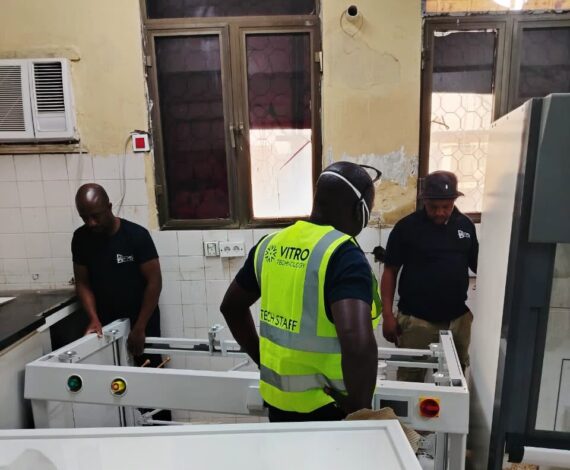
The Sudanese Standards and Metrology Organization (SSMO) announced the successful conclusion of a visit by engineers from Germany’s Vitro Company to its Wadi Halfa sector, following the installation, commissioning, and successful trial operation of the sector’s laboratory facilities in accordance with the approved technical plan.
The initiative is part of the organization’s ongoing efforts to modernize its technical operations and enhance testing and inspection systems to ensure that imports and exports comply with the highest quality standards.
Professor Rahba Saeed Abdullah, Director General of the Sudanese Standards and Metrology Organization, reaffirmed the organization’s commitment to simplifying procedures for all economic stakeholders.
She emphasized that SSMO is moving forward with its strategic policy of decentralizing laboratories by establishing and expanding testing facilities across border crossings and entry points throughout the country.
She explained that this approach aims to accelerate inspection and laboratory testing at ports of entry and exit, facilitating trade, reducing time and costs for exporters and importers, while maintaining strict regulatory oversight to protect consumers and the national economy.
During the visit, the Vitro engineering team installed advanced laboratory equipment, carried out initial operational testing, and verified the efficiency and readiness of the technical systems. These upgrades significantly strengthen the operational capacity of the Wadi Halfa sector, enabling it to provide accurate, reliable, and internationally compliant testing and inspection services.
At the conclusion of the mission, the German engineering team expressed its sincere appreciation to the Wadi Halfa Sector management, led by Chief Engineer Aba Yazid Al-Sheikh, and all staff members for their warm hospitality, outstanding cooperation, and logistical support, which contributed greatly to the successful completion of the technical work.
The team noted that the modernization of the laboratories represents a major step forward in strengthening testing infrastructure in the region and reinforces the organization’s leading role in promoting quality assurance and facilitating the safe and efficient movement of goods and services.