
Federal Ministry of Health and Partners Approve Five-Year National Immunization Strategy
Stronger Immunization...Safer Children...Brighter Future
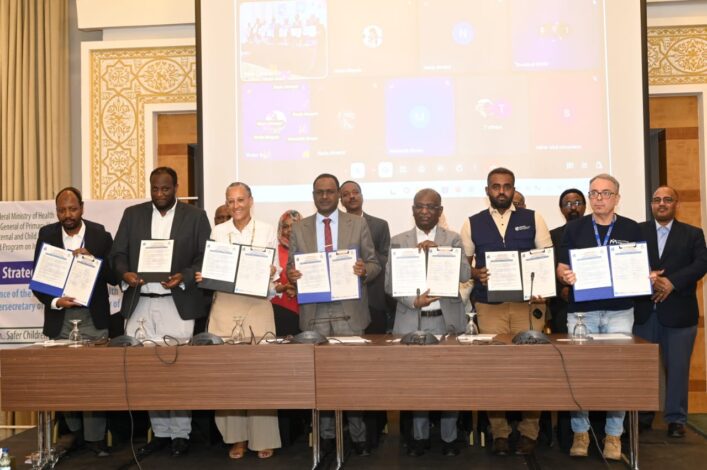
Khartoum / The Citizen
The Federal Ministry of Health, in partnership with international and UN organizations, today approved the National Immunization Strategy for 2026–2030 at Al Salam Rotana Hotel in Khartoum.
In his opening remarks, Federal Ministry of Health Undersecretary Dr. Ali Babiker welcomed the development, approval, and adoption of the strategy, reaffirming the Ministry’s support for it and for all health strategies across various sectors. He stressed the need to move beyond traditional approaches, adopt innovative thinking to achieve the desired impact, develop an implementation matrix, enhance survey mechanisms, strengthen links with academic institutions and scientific research, and explore vaccine manufacturing opportunities.
He also emphasized the importance of involving communities and health insurance systems in immunization efforts amid the current challenges.
The Undersecretary highlighted the need to overcome previous challenges identified in the strategy, particularly in light of the many changes and emerging circumstances facing the health sector.
Director General of Primary Health Care, Dr. Musab Siddig, stated that the National Immunization Strategy is the first strategy to be approved for the departments and programs of Primary Health Care following the National Health Strategy. He noted that several other strategies are ready and awaiting approval, while acknowledging the need for innovative approaches to mobilizing external support.
Director of the Expanded Programme on Immunization (EPI), Mr. Ismail Al-Adani, said that the national immunization strategy has received strong support from the Ministry’s leadership and all departments, alongside valuable contributions from experts.
He explained that the current situation was analyzed with support from the WHO Regional Office, led by immunization expert Dr. Al-Tayeb Ahmed Al-Sayed, through a three-month assessment process that resulted in the development of the five-year strategy for 2026–2030. The assessment also revealed significant funding gaps.
Al-Adani noted that the strategy will be submitted to the Global Alliance for Vaccines and Immunization (Gavi) and other organizations to help address the funding gap, adding: “The Ministry’s leadership is committed to bridging this gap in a way that achieves the well-being and best interests of children.”
Immunization Programme Consultant Dr. Mawahib Suleiman affirmed that strengthening the pillars of the immunization system is among Sudan’s top priorities for the period 2026–2030, aiming to build a more efficient and sustainable immunization system capable of responding to health challenges and ensuring access to vaccines for all targeted populations.
She explained that key priorities include strengthening adherence to national policies, developing operational and emergency response plans, and improving governance and coordination mechanisms among relevant stakeholders to ensure effective implementation of immunization programmes.
Dr. Suleiman highlighted the importance of rehabilitating the cold chain system and developing digital immunization data systems to improve real-time monitoring, enhance planning efficiency, and support evidence-based decision-making. She added that the strategy also focuses on strengthening human resources through better distribution and retention of health workers, establishing clear frameworks for performance evaluation and capacity building, and improving the quality of immunization services nationwide.
She further emphasized the development of coordination platforms and partnerships with supporting organizations to ensure the sustainability of immunization programmes and strengthen efforts to protect children and communities from vaccine-preventable diseases.
Representatives of international partners announced their commitment to continuing support for the implementation of the National Immunization Strategy through strengthening community partnerships and expanding equitable access to immunization services for all segments of society.
The representatives highlighted the role of local communities and national organizations in building a more effective and sustainable immunization system, stressing that investment in local capacities, provision of technical support, improvement of data systems, and enhanced coordination among stakeholders are essential pillars for achieving the strategy’s objectives.
They affirmed that the partnership between the Ministry of Health and its partners will continue to ensure the availability of vaccines and their delivery to all population groups without discrimination, contributing to the protection of public health and supporting social and economic development.
The speakers called on stakeholders and development partners to maintain active engagement and provide the necessary support to ensure the success of the National Immunization Strategy. They praised the vital role played by local communities in advancing health programmes and ensuring their sustainability.
They emphasized that the next phase requires greater cooperation and joint efforts between the government, national and international organizations, and communities to achieve the strategy’s goals and build a strong immunization system capable of responding to current and future health challenges.