
Consultative Workshop on Supporting NDCs Stocktaking and NDCs Revision Roadmap for Sudan
Khartoum / The Citizen
The Secretary-General of the Higher Council for Environment and Natural Resources, Suleiman Al-Bouni, affirmed Sudan’s commitment to its international obligations in addressing climate change despite the exceptional challenges and circumstances the country is facing, which have resulted in wide-ranging humanitarian, economic, and environmental impacts.
He said that climate action remains an integral part of Sudan’s recovery process and sustainable development pathway, while addressing the first consultative workshop of the project on Assessing and Reviewing Nationally Determined Contributions and Developing a Roadmap for Their Update, held on Monday July 30 at the United Nations Development Programme (UNDP) Hall in Khartoum.
Al-Bouni explained that the workshop aims to develop a clear roadmap for updating Sudan’s Nationally Determined Contributions to make them more ambitious in reducing emissions, strengthening resilience, and developing more realistic projects that are feasible for financing and implementation. He emphasized the importance of ensuring broader participation through the active involvement of institutions, youth, women, local communities, and the private sector.
He added that the impacts of climate change, including droughts, floods, and desertification, have negatively affected people’s livelihoods. He noted that a just transition toward clean energy, afforestation programs, and climate-smart agriculture could create job opportunities, enhance food security, and promote clean and sustainable energy solutions.
The Secretary-General expressed hope that the workshop’s outcomes would contribute to establishing an integrated national framework for preparing and implementing Sudan’s Nationally Determined Contributions, providing a scientific and practical foundation to support green recovery plans, strengthen Sudan’s capacity to address climate challenges, and achieve the Sustainable Development Goals.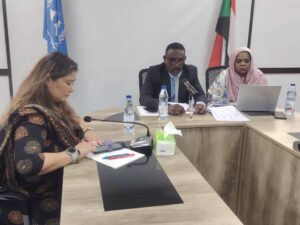
Al-Bouni extended his appreciation to the project’s advisory team and environmental and development partners, praising the continued support of the United Nations Development Programme for Sudan’s national climate agenda.
He stressed the importance of maintaining cooperation with Sudan during this critical phase, which requires concerted national and international efforts to build a more resilient and sustainable future.
The Team Leader and Head of Portfolio for Environment, Energy, and Climate Change at UNDP Sudan , Shanti Karanjit reaffirmed the programme’s commitment to supporting the process of reviewing and assessing Sudan’s Nationally Determined Contributions, identifying key achievements and requirements, evaluating the impacts of the war on implementation, and developing a roadmap for updating the contributions.
Dr. Dalal Al-Haj, Director of the Climate Change Department at the Higher Council for Environment, stated that Sudan joined the Paris Agreement on Climate Change in 2015 and committed to its provisions by preparing its first Nationally Determined Contribution in 2017. The contribution included national priorities in climate change adaptation and mitigation of greenhouse gas emissions.
She pointed out that Sudan completed its second NDC update in 2021 but was unable to undertake the third update scheduled for 2025 due to the ongoing war, which directly affected state institutions, technical capacities, data collection, research preparation, coordination efforts, and implementation of climate-related activities.
Dr. Al-Haj explained that the current project is working, in consultation with national institutions and relevant sectors, to assess progress achieved under previous contributions, evaluate the impact of the war on climate and development priorities, update national data and assumptions, and develop a roadmap that reflects Sudan’s current realities, recovery needs, and reconstruction priorities while remaining aligned with the requirements of the Paris Agreement.
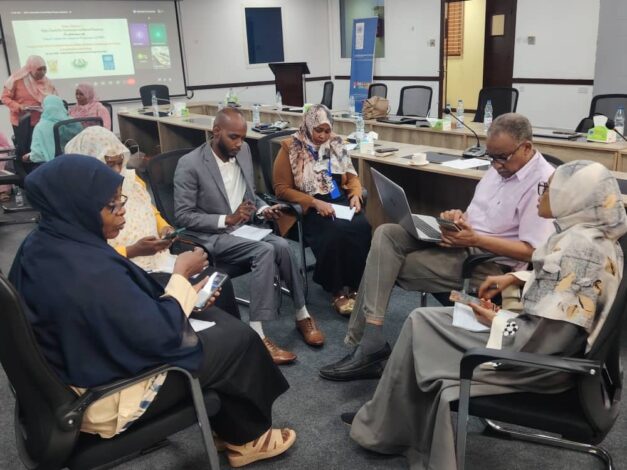
The project’s international consultant and national experts presented general guidelines for preparing Nationally Determined Contributions and the methodology for developing the roadmap. Sectoral working groups also reviewed mitigation and adaptation frameworks, verified proposed actions, assessed their implementation status, and examined their alignment with Sudan’s Nationally Determined Contributions.