
Robotic Talk: Malaysia at a glance
By: Alaa Babiker
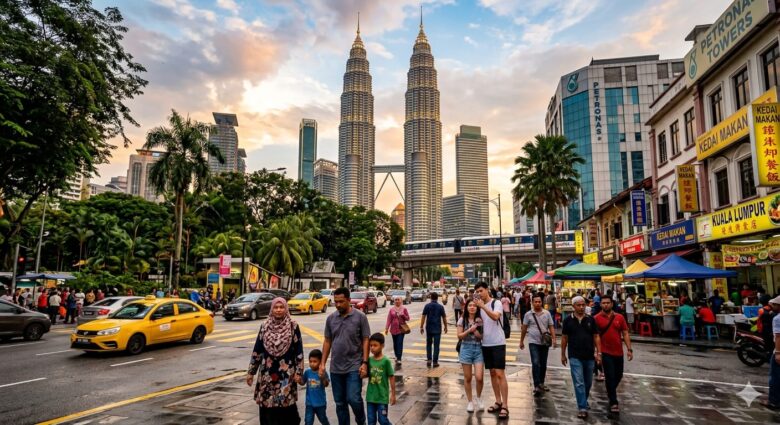
Malaysia has officially claimed the top spot in Southeast Asia’s tourism charts, welcoming a record-breaking 42.2 million international visitors. Driven by relaxed visa policies, expanded flight paths, and the highly publicized Visit Malaysia 2026 campaign, the nation is currently experiencing a historic tourism boom. Seamless entry systems, like the visa-free entries for select nations and streamlined electronic visas (eVisa), allow travelers to instantly immerse themselves in a country famously marketed as “Truly Asia”. From futuristic cityscapes to ancient rainforests, Malaysia offers an unmatched variety of experiences for global travelers.
No trip to Malaysia is complete without experiencing its legendary food culture. Reflecting a unique multicultural demographic of Malay, Chinese, and Indian populations, the local cuisine is a rich tapestry of distinct flavors. Travelers can indulge in affordable, world-class street food across local hawker centers.
Malaysia’s legendary ecotourism landscape is anchored by prehistoric rainforests, massive limestone cavern networks, and highly protected biodiversity reserves. For travelers who want to venture beyond the typical resort paths, the country offers some of the oldest and most diverse wildlife ecosystems on earth.
Malaysia has successfully transitioned from an agriculture- and commodity-based nation into a diversified, upper-middle-income economy. The economic landscape is guided by the federal government’s Ekonomi MADANI framework. This blueprint underpins the Thirteenth Malaysia Plan (2026–2030), focusing on structural reforms to elevate national economic potential while raising the floor for citizens’ living standards.
Malaysia remains an indispensable hub within the global electrical and electronics (E&E) supply chain. The manufacturing sector is experiencing a multi-year investment boom, specifically driven by surging global demand for Artificial Intelligence (AI) components and advanced semiconductors. Private investment approvals reached a record RM427 billion, with major foreign direct investment (FDI) inflows continuing to feed tech infrastructure.
The country is currently in a “golden period” of infrastructure development. Massive capital is flowing into business-related services, highlighted by high-tech data center construction across Selangor and Johor. This structural boom is driving construction sub-sector growth alongside public transport expansions like railway network upgrades.
The services sector contributes over 54% of total GDP. Retail trade, wholesale trade, and financial services continue to expand steadily. Furthermore, momentum is accelerating due to international arrivals ahead of the highly anticipated Visit Malaysia Year 2026 initiative.