
Robotic Talk: Animal Resources; African Countries (1/2)
By: Alaa Babiker
A Valuable Source of Wealth and Sustainability
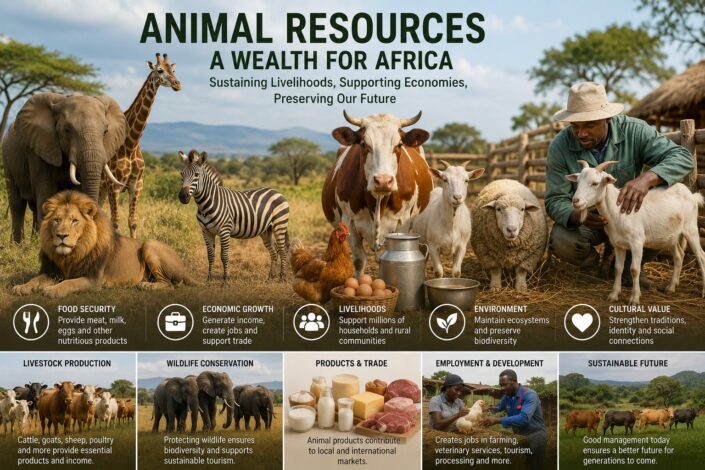
Africa is home to some of the world’s richest and most diverse animal resources. From vast herds of livestock to unique wildlife species, animal resources play a vital role in the economies, cultures, and livelihoods of many African countries. They contribute to food security, employment, trade, tourism, and environmental sustainability, making them one of the continent’s most valuable natural assets.
Livestock as an Economic Foundation
In many African countries, livestock farming is a major component of the economy. Cattle, sheep, goats, camels, and poultry provide meat, milk, eggs, leather, and other products that support millions of households.
Countries in regions such as East Africa and the Sahel have long traditions of pastoralism, where communities rely on livestock as both a source of income and a symbol of wealth. Animal products contribute significantly to local markets and international exports, helping to strengthen national economies.
Food Security and Nutrition
Animal resources are essential for improving food security across the continent. Livestock products provide important nutrients, including protein, vitamins, and minerals that support healthy diets and human development.
Milk, meat, eggs, and fish help combat malnutrition and contribute to better health outcomes, particularly for children and vulnerable populations.
Wildlife and Tourism
Africa is renowned for its extraordinary wildlife. Species such as the African Elephant, Lion, Giraffe, and Zebra attract millions of visitors each year.
Wildlife tourism is a major source of revenue for many countries, creating jobs in conservation, hospitality, transportation, and related industries. National parks and wildlife reserves help preserve biodiversity while supporting sustainable economic growth.
Employment and Rural Development
Animal resources provide employment opportunities throughout the value chain, including farming, veterinary services, transportation, processing, and marketing. Rural communities especially benefit from livestock ownership, which serves as a source of income and financial security.
For many families, livestock acts as a form of savings that can be sold during times of need or invested in education, healthcare, and business activities.