
Amid an atmosphere of caution and mistrust, the Quintet launches its exploratory meetings tomorrow in Addis Ababa
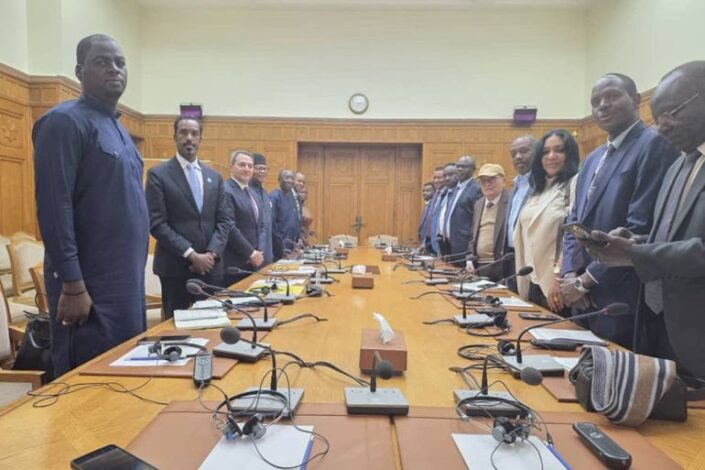
The international Quintet mechanism, comprised of the African Union, IGAD, the League of Arab States, the European Union, and the United Nations, has extended official invitations to participate in the first exploratory meeting regarding the establishment of a Sudanese preparatory committee and the formulation of a common position for a peaceful political transition. The meeting is scheduled to be held in Addis Ababa from June 3 to 5.
A Unified Mechanism:
In his invitation letter to the participants, Dr. Mohamed Ibn Chambas, head of the five-party mechanism, explained that the meeting was a response to consultations held over the past months with a wide range of Sudanese parties. Its aim was to explore the possibility of establishing a unified, Sudanese-led mechanism to contribute to negotiations on transitional arrangements, facilitate a cessation of hostilities, prepare for a comprehensive Sudanese dialogue, and formulate a common position on a peaceful political transition.
Not Final:
The invitation letter indicated that the list of participants in the first meeting was carefully selected to ensure political, geographical, gender, and age representation. It emphasized that participation at this stage was not final or comprehensive, and that the process would remain open and evolving under Sudanese leadership. The letter also explained that participation would expand during the second and third meetings. The second meeting will be held in Addis Ababa on July 8 and 9, with a larger number of Sudanese participants to enhance inclusivity. The dates for subsequent meetings will be determined during the July sessions.
Accommodation and Appeasement:
Before the invited political forces announced their acceptance of the invitation, the “Sumud” alliance threatened to boycott the meetings in protest against what it described as an attempt to derail the political process by inviting parties it deemed undesirable. The alliance demanded clarification from the five-member mechanism regarding this matter. Meanwhile, the national forces supporting the army announced their rejection of the “Ta’sis” entity’s participation in the meetings. The Popular Congress Party, led by Ali al-Hajj, also warned against attempts by some parties to include civilian figures and individuals affiliated with the National Congress Party among the meeting’s participants. In a statement, the party held the mechanism fully responsible for any rift in the unity of the political forces that would hinder progress toward resolving the current crisis. However, all participating parties announced their acceptance of the invitation yesterday, Monday, in a move that appeared to be an attempt by the mechanism to accommodate the various positions and appease all sides.
Passing the Declaration of Principles:
The invitation letter stated that the first day of meetings would be dedicated to gatherings of national political forces and the “Sumud” alliance, while the third day would be open to any other participants who wished to attend.
Informed sources said that following the first two days of meetings, the mechanism would prepare a draft declaration of principles to present to the participants for their signatures. The sources added that the third day’s meeting would bring together the “Sumud” alliance and the “Ta’sis” entity to endorse the “Sumud” declaration of principles in Nairobi. The sources indicated that the mechanism might attempt to pass the “Sumud” declaration of principles through these meetings. The sources also warned the participating national forces against signing any draft presented by the mechanism before consulting with their respective constituencies.
Exploratory Meeting:
Dr. Tijani Sisi, head of the National Movement Forces, stated that the mechanism had extended invitations to political and civil forces, including the National Movement Forces, and that they had responded by sending two representatives, neither of whom was himself. He explained that the Addis Ababa meeting was an exploratory one, aimed at discussing the establishment of a preparatory committee and unifying positions regarding the peaceful transitional political process.
Major Obstacles:
Sisi emphasized that the Sudanese political crisis has become more complex, and that reaching effective solutions requires a more comprehensive vision and broader representation of various parties. He added that foreign interventions and the proliferation of initiatives and platforms have become one of the biggest obstacles to reaching a just settlement to the crisis.
External Interventions:
Sisi pointed out that external parties remain unaware of the nature of the Sudanese crisis and its regional complexities, particularly those related to neighboring countries. He noted that some international circles may be ignoring these facts, yet they continue to exert pressure to reach a settlement that serves their interests. He added, “We will continue to call for the establishment of a mandated regional and international framework to facilitate the political process, with the Sudanese people alone having the right to determine their country’s future, free from external interference.”
Lack of Trust:
Sisi stressed that one of the fundamental challenges that must be overcome before embarking on the political process is building trust among the various political factions. He emphasized that conducting serious and effective dialogues among these factions remains extremely difficult in the current climate of mistrust.