
Minister of Human Development Launches Campaign to Combat Hate Speech and Reject Racism in Wad Madani
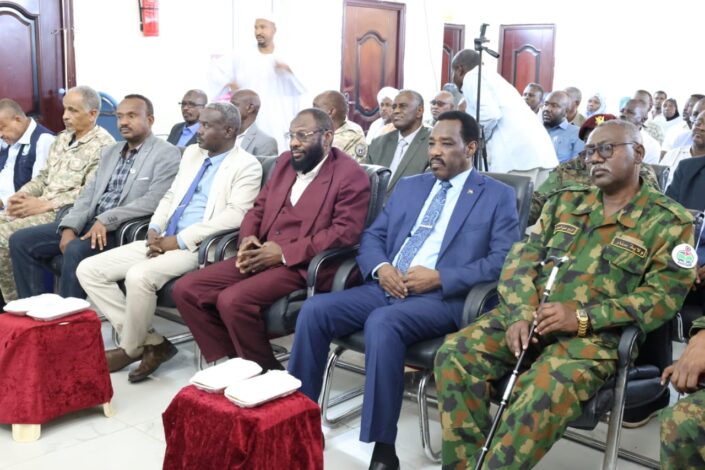
The Minister of Human Development and Social Welfare, Mutasim Ahmed Mohammed Salih, has launched a campaign to combat hate speech and promote the rejection of racism in Wad Madani. The initiative coincides with the Eid mobilization campaign and the distribution of support through the Zakat Chamber and the Social Safety and Poverty Reduction Commission.
The Minister stated that Al Jazirah State represents the heartbeat of Sudan in terms of production, expressing confidence that its citizens, through awareness, will contribute to combating such negative phenomena, especially as hate speech has become increasingly widespread during this period. He revealed a significant increase in direct cash support distributed through the commission, reaching 350,000 beneficiaries compared to 67,000 previously, with expectations to rise to 800,000 citizens by the beginning of next year.
He also noted that the Eid campaign was launched from Al Jazirah State, with the provision of 5,000 sacks of sorghum to be distributed to specific groups, in addition to 8,000 school uniforms, school bags, and sacrificial livestock. This support also extends to military checkpoints. He emphasized that the health insurance program remains a top priority, pointing to the opening of a diagnostic center affiliated with the Workers’ Treatment Fund under the Federal Zakat Chamber.
Meanwhile, the Acting Governor of Al Jazirah State, Mortada Al-Baili, described life in the state as having significantly improved following liberation. He stated that all institutions are working in a coordinated and strategic manner, expressing optimism about further improvements in services and overall conditions. He stressed the importance of transforming families into productive units rather than remaining dependent on aid.
At the same time, the Minister witnessed a free medical day organized by the Fund in Al-Darajah suburb in Wad Madani, highlighting the efforts of the “Government of Hope” to localize medical treatment within Sudan and make healthcare more accessible to citizens.