
How did Ethiopia become a launching pad for death drones targeting Sudanese civilians?
By: Al-Shazaly Hamed Al-Madeh
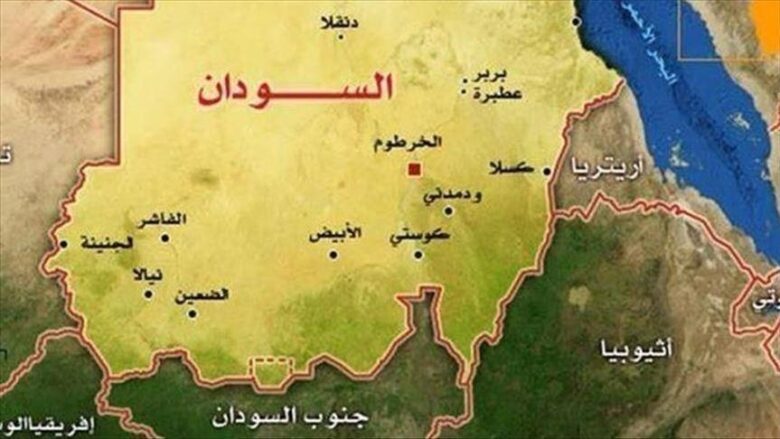
As cries for help rise from the Nuba Mountains, eastern Gezira, and Kordofan due to relentless aerial bombardment, the eyes of international observers and research laboratories are turning towards Sudan’s eastern borders.
Their focus is not on monitoring waves of displacement, but rather on tracking the coordinates of death that originate from military bases within Ethiopian territory.
What is happening in Sudan, as we have repeatedly stated, is not merely an internal conflict, but a cross-border aggression in which Addis Ababa plays the role of host and facilitator for suicide drones that kill Sudanese civilians and destroy civilian infrastructure under a comprehensive logistical and technical umbrella.
First: Assosa and Mendi… The Geography of Conspiracy and Launchpads
International reports issued in April 2026, specifically investigative reports by the Yale Humanities Research Laboratory (Yale HRL) and Middle East Eye, revealed a complex logistical network and specific launchpads, identified by name and location, deep within Ethiopia:
* Assosa Military Base and Airport: This base, belonging to the Ethiopian National Defense Force (ENDF) in the Benishangul-Gumuz region, has been transformed into a fully integrated operations center. On March 29, 2026, satellite imagery detected the construction of aircraft hangars and modern concrete platforms dedicated to operating drones, along with mobile ground data terminals for satellite-guided drone operations.
* Menge Camp: This stands out as one of the most dangerous assembly points. According to international reports, this site includes a secret camp packed with hundreds of tents, where suicide drones are assembled and technically prepared before being launched to target Sudanese civilians.
* Bahir Dar-Mendi Axis: The Bahir Dar base serves as a rear distribution point, receiving shipments of technical support arriving via regional airlifts. These shipments are then transported to the Mendi area, 95 km from Assosa, where trucks carrying advanced jamming and guidance equipment have been observed heading towards the Sudanese border.
Reports confirm that this system is operated by foreign personnel, as the Rapid Support Forces militia lacks aircrew. This suggests the presence of experts and technicians managing operations rooms in Benishangul and overseeing satellite guidance, which explains the precision of the bombing that targeted service facilities far from the front lines.
Secondly: Why is Addis Ababa selling out peaceful neighborliness?
Despite being mired in the crises of the FANO rebellion and the fragmentation of the Tigray region, the question remains: What does Ethiopia gain from the bloodshed of the Sudanese? The answer lies in three strategic axes:
* Financial barter: Billions of dollars in investments and bank deposits received by Abiy Ahmed’s government from the UAE in exchange for turning its territory into a logistical corridor stretching from Somaliland through Ethiopia to the Blue Nile fronts.
* The Grand Ethiopian Renaissance Dam (GERD) file: Decision-makers in Addis Ababa believe that weakening the Sudanese state and dismantling its army will neutralize Sudan as an active player in the water issue and eliminate any strategic hinterland for Cairo in the region.
* Regional hegemony: The dream of an “Ethiopian empire” necessitates a fragmented Sudan run by militias loyal to foreign powers, transforming Sudan from a strong neighbor into a “backyard” for Ethiopian influence.
Third: Sudan’s Options… Between Law and Parallel Deterrence
Faced with this blatant aggression, Sudan possesses a range of strategic options for response, distributed across four main tracks:
* The Legal and Diplomatic Track: Activating the “Complaint of Aggression” at the Security Council, supported by launch coordinates and satellite imagery, to raise the international cost of Ethiopian involvement and demand an African fact-finding committee, while also pursuing criminal charges against foreign personnel for war crimes.
* The Media Track (Shaping Public Opinion): Shifting from mere complaints to a campaign of exposure by producing content in multiple languages linking external funding to Ethiopian territory and Sudanese victims, to demonstrate that Abiy Ahmed’s adventures will deprive Ethiopian citizens of the stability of their neighbors.
* The Option of Reciprocity: This is a more forceful option that includes supporting movements opposed to the Ethiopian regime, such as the FANO, in response to the hosting of protest platforms. Despite its effectiveness, it carries the risk of escalating into a full-blown war or fragmenting the region into a “new Yugoslavia,” potentially creating border chaos that would harm Sudan.
* Economic and logistical strangulation: In coordination with regional powers affected by Ethiopia’s ambitions (such as Egypt, Eritrea, and Somalia), a political blockade should be imposed to make the cost of hosting the militias more expensive than the gains for the Emirati financiers.
The fact that precision drone strikes launched from the Assosa and Mendi platforms have targeted civilians in the Jebel Aulia and eastern Gezira regions is irrefutable evidence that condemns Addis Ababa and makes it a direct partner in the crime. In light of this, the most appropriate option for Sudan today is to escalate legal and media pressure simultaneously with a preemptive military response using advanced air defenses, while maintaining the option of “reciprocity” as a pressure tactic to be used behind closed doors to force Ethiopia to close these death camps. Sudan, which is being betrayed today, will not stand idly by while its sovereignty is violated by bases belonging to its treacherous neighbors.