
Federal Undersecretary of Health Reviews Overall Health Situation in Blue Nile Region
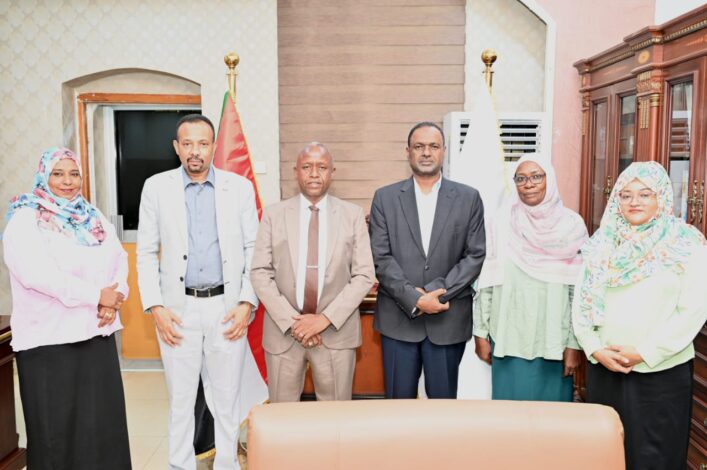
The Federal Undersecretary of the Ministry of Health, Dr. Ali Babiker, reviewed the overall health situation and needs in the Blue Nile Region during a meeting held today at the ministry’s headquarters in Khartoum. He met with the Director General of the Ministry of Health in the Blue Nile Region, Dr. Mustafa Jabrallah, in the presence of several ministry officials.
The Undersecretary confirmed that the situation in the region is improving, noting that the ministry provides monthly emergency support to all states, in addition to support for hospitals. Regarding the outbreak of Hepatitis E, he revealed the formation of two teams to contain the disease in the region, as well as in Al Jazirah and Sennar states. These teams include representatives from the ministry, the World Health Organization, UNICEF, and the Kuwait Patient Assistance Fund. They are scheduled to depart the day after tomorrow (Tuesday) and will prepare two detailed reports to be submitted to the federal ministry to determine the required interventions.
He also directed the development of a comprehensive plan to combat disease vectors in coordination with the Vector Control Department, including defining roles and estimating campaign costs.
Directors of Primary Health Care, Curative Medicine, and the Projects Department pledged to work on providing key requirements, including an oxygen plant and a CT scanner funded by the Federal Ministry of Finance, as well as an MRI machine. They also confirmed the provision of five ambulances as part of support from the King Salman Humanitarian Aid and Relief Center. They further called on the regional ministry to strengthen the health information system and recruit more midwives.
For his part, the Director General of the Ministry of Health in the Blue Nile Region, Dr. Mustafa Jabrallah, presented a number of needs, including an MRI machine, a CT scanner, additional insecticide-treated mosquito nets, more dialysis machines, and the establishment of a second dialysis center, noting that the region currently has only one such center.