
Sudan Launches National Initiative Towards a Malaria-Free Sudan
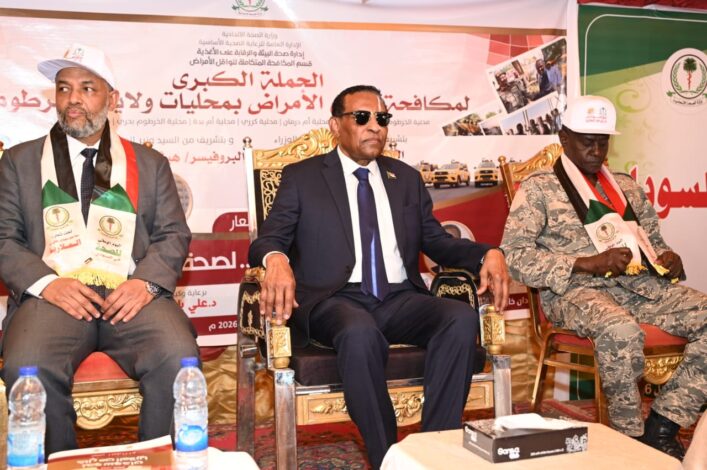
Federal Ministry of Health witnessed the activities of National Health Day, where Prime Minister Kamil Idris affirmed that this day represents a historic milestone in the journey of health in Sudan. He offered condolences for the martyrs of duty, especially the “White Army” (healthcare workers), and praised the unlimited support of the Sovereignty Council for the health sector through the provision of means to combat disease vectors. Idris announced the “Together Towards a Malaria-Free Sudan” initiative, emphasizing that the Sudanese people are the most precious asset of the state, and that eradicating malaria contributes to strengthening the national economy. He expressed his gratitude to the Federal Ministry of Health, international and UN organizations, and especially the World Health Organization for their support of the project.
For his part, Federal Minister of Health Professor Haitham Mohamed Ibrahim described the day as “a landmark day for health,” noting that the initiative is part of the “Government of Hope” projects. He emphasized the formation of a national committee to eradicate malaria through steady steps and clear strategies, with the participation of the private sector and international partners. He affirmed that combating malaria will have a positive impact on the economy and reduce other epidemics, calling on the media and the community to actively participate in the initiative’s success.
In the same context, the Governor of Khartoum, Ahmed Osman Hamza, stressed that eradicating malaria requires concerted efforts. He commended the efforts of the Federal Ministry of Health and Khartoum health workers despite the challenges of war, offering condolences for the martyrs and affirming the state’s commitment to the initiative’s success.
Furthermore, the Undersecretary of the Federal Ministry of Health, Dr. Ali Babiker Sayed Ahmed, pointed to the violations committed against health institutions and medical personnel by the Rapid Support Forces (RSF) militias, also known as the Janjaweed. He affirmed the Ministry’s continued provision of services despite the challenges, expressing gratitude to friendly countries and international organizations for their support, and offering condolences for the martyrs of the medical profession.
With this broad participation from the government, ministries, the private sector, and international partners, speakers affirmed that Sudan is taking practical steps towards achieving its overarching goal: a malaria-free Sudan.
It is worth noting that a document was signed expressing the commitment of the government, represented by the leadership of the Federal Ministry of Health and partner organizations.