
Robotic Talk: The Industrial Power of Countries – Sudan Focus (2/2)
By: Alaa Babiker
Global Competition and Cooperation
Industrial power influences global trade and geopolitics. Countries with strong industries often have greater bargaining power in international markets and play key roles in global supply chains. At the same time, cooperation between nations – through trade agreements and partnerships – supports shared growth and stability.
Globalization has made industries more interconnected, meaning that the success of one country often depends on collaboration with others.
Sudan Focus
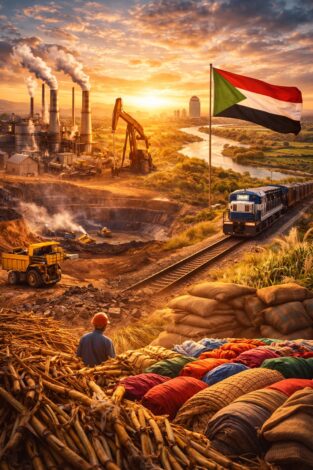
Sudan’s industrial power is still developing but holds significant potential due to its natural resources and strategic location. The country’s industrial sector is largely based on agriculture, which plays a central role in its economy. Agro-processing industries – such as sugar production, eatable oils, and food processing – are among the most established, benefiting from Sudan’s vast arable land and favorable climate.
Sudan is also rich in natural resources, including gold, oil (historically), and minerals, which contribute to its industrial base. Gold mining, in particular, has become a key driver of economic activity in recent years. Additionally, there are emerging industries in cement, textiles, and basic manufacturing, though they remain relatively small in scale compared to global industrial leaders.
However, Sudan’s industrial growth faces several challenges. Political instability, limited infrastructure, energy shortages, and restricted access to international markets have slowed development. These factors have made it difficult for industries to expand and compete globally.
Despite these challenges, Sudan has strong potential for industrial growth. With improved stability, investment in infrastructure, and supportive economic policies, the country could strengthen its manufacturing sector, expand value-added production, and better utilize its natural and agricultural resources.
Sudan’s industrial power is currently modest but promising, with agriculture and natural resources forming its foundation and opportunities for future development if key challenges are addressed.
Challenges and the Future
Despite its importance, industrial power comes with challenges. Environmental concerns, resource depletion, and economic inequality are major issues that countries must address. Sustainable industrial practices, including green technologies and responsible resource management, are becoming increasingly important.
The future of industrial power will likely be shaped by digital transformation, automation, and sustainability. Countries that balance economic growth with environmental responsibility will lead the next era of industrial development.
Industrial power is a cornerstone of national strength and global influence. It drives economic growth, supports innovation, and shapes international relationships. As the world continues to evolve, countries that invest in technology, education, and sustainable practices will be best positioned to thrive.