
Reflections on My Friend Kamil Hakeem
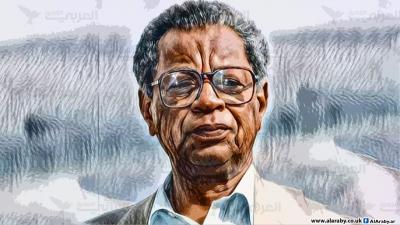
By Tayib Salih
Translated into English by Al-Zaki Abdul Hamid Ahmed
Kamil Hakeem, a man from Dongola, Sudan, was nearing 40 when he arrived in London in the late 1950s. His tall frame was accompanied by limbs that seemed to move independently, as if each had a mind of its own. Despite his awkward gait, Kamil exuded warmth and friendliness, effortlessly connecting with those around him. His laughter would echo through the BBC corridors, often startling the British secretaries.
Before joining the BBC, Kamil worked in Sudan’s railway department but grew disenchanted with the routine.
He acted on a sudden, unplanned impulse, similar to the creative impulses that might strike poets and writers—though he was neither a poet nor a writer.
He tossed his assignments at his supervisor’s face and left without a word; embarking on a journey that took him to Kenya, Zanzibar, Indonesia, and India. After a year of leisure back home, chance brought him to London.
Kamil landed a three-year contract at the BBC, but it soon became apparent that he wasn’t suited for radio work. He struggled to grasp the basics, and his managers let him complete his contract, relegating him to introducing programs with a simple “Ladies and gentlemen, you are now listening to…” One day, Kamil marched into the radio manager’s office, Mr. Waterfield, and asked in Arabic with a Sudanese dialect, “Mr. Waterfield, what’s the matter with you? Everyone’s getting pay raises and promotions, but I’m stuck where I am. Not even a shilling increase? This isn’t fair!”
Kamil’s London life was as straightforward as his personality. He’d commute to work, return home, and spend his evenings cooking and watching TV in his cozy Sudanese-style kitchen, complete with an angareeb (Sudanese traditional bed) and a radio. He’d wear his jalabiya, the traditional Sudanese garment, unfastened, exposing a chest covered with thick hair, and would indulge in his favorite foods.
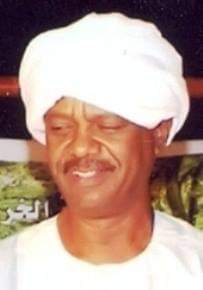
Kamil had married a Sudanese woman sight unseen, with his brother acting on his behalf in the marriage formalities. When she arrived in London with an abundance of luggage filled with Sudanese perfumes and incense, the British officials were perplexed. Kamil reassured them, “These are cosmetics,” and they let her pass.
When we visited – Mr. Salah Ahmed Mohammed Salih, Mr. Abdurrahim al-Rufa’ee, Akram Salih, and I – Kamil would treat us to traditional Sudanese dishes like kisra, waika, and kumooniya, and even raw marara and Kabdah (liver). His kitchen was a sensory experience – the smell of Sudanese spices, tea with mint and cinnamon, and Ahmed al-Mustafa’s songs playing in the background. It was as if we’d been transported to Omdurman.
At that time, I wasn’t a writer, but I’d observe people and life, letting thoughts simmer beneath the surface. My thoughts would get lost in the clouds of smoking and other indulgences I’d acquired, finding solace in the fleeting pleasures of life..
I wondered why Kamil didn’t feel the weight of his circumstances, why he didn’t react to the unfamiliar noises and smells. To him, life was simple – work, home, and routine. He wasn’t an immigrant bird; he was a desert bird, free and untethered.
Kamil would often accompany us on our youthful adventures, laughing and teasing us about our exploits. He’d have an opinion on every girl we met, often humorous and irreverent. When I was smitten with a nurse from Liverpool, he’d say, “What do you see in her?”
When Kamil’s contract ended, he returned to Sudan without hesitation. “This radio job is useless,” he’d say. “I’ve saved enough to help us at home. With Allah’s will, I’ll go home.” He returned to the railways, managing the Gezira railway.
Years later, in Riyadh, I met a young officer who’d trained in the US and spent time in Paris. When I asked him about Paris, he replied, “I didn’t see anything there that I didn’t see in al-Malaz.”
I smiled, thinking of Kamil – his simplicity, his contentment, and his unwavering commitment to his own path..