
The Sudanese Crisis and the Lack of Human Conscience
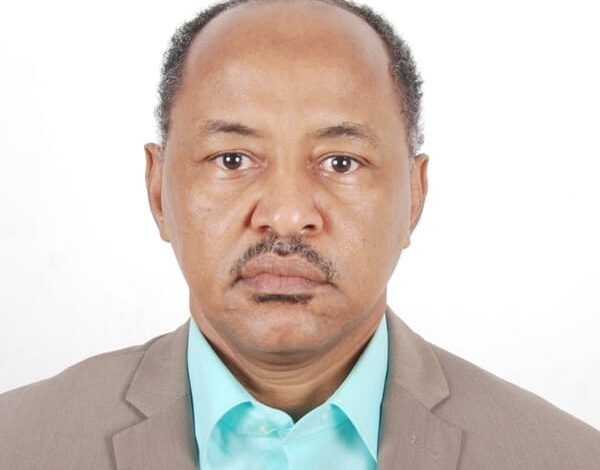
Dr. Mukhtar Bilal Abdelsalam/Ambassador to the Ministry of Foreign Affairs in Sudan
The United Nations Security Council held its monthly meeting on Sudan on February 19, chaired by British Foreign Secretary Yvette Cooper. This meeting followed the findings of an independent UN-mandated investigation, which established that the Rapid Support Forces (RSF) committed war crimes and crimes against humanity in El Fasher.
The report by the Office of the United Nations High Commissioner for Human Rights documents a wave of horrific violence perpetrated by RSF militias during their offensive to seize the besieged city last October. These massive violations constitute war crimes and, in some cases, crimes against humanity. These include mass killings and summary executions, widespread sexual violence, arbitrary arrests, torture, enforced disappearances, and the systematic imposition of ransoms.
The RSF has established an organized system of extortion, forcing families to pay exorbitant sums, ranging from $1,500 to $5,500, for the release of their loved ones, thus turning the lives of detainees into commodities. This is compounded by the targeting of protected persons, such as medical and humanitarian personnel, and the recruitment of children.
Volker Türk, the UN High Commissioner for Human Rights, stated:
“The indiscriminate violations committed by the Rapid Support Forces and their allied Arab militias during the recent attack on El Fasher confirm that persistent impunity fuels cycles of violence.”
He stressed the need for credible and impartial investigations to establish criminal responsibility, including that of commanders and other officials. These investigations must lead to genuine accountability through all available means before independent and impartial Sudanese courts, through universal and extraterritorial jurisdiction, before the International Criminal Court, or via other mechanisms.
In light of this situation, the Security Council reiterated its call to accept the Quadripartite Commission’s plan proposed in September 2025. This plan calls for a three-month humanitarian truce, with a view to a permanent ceasefire, followed by a nine-month inclusive transition process culminating in the formation of an independent civilian government. This position is also supported by Massad Boulos, Senior Advisor to the US President on Arab and African Affairs, who emphasized the need for all perpetrators of violations in Sudan to be held accountable, regardless of their affiliation.
The crucial question today is: Is the world aware of the danger posed by the FSR? And why hasn’t it reacted? Following these unprecedented violations, which confirm the risk these forces represent to citizens’ security and regional stability, clashes between the FSR and the Chadian army continue along the shared border. Yet, the Chadian government avoids mentioning the FSR for fear of repercussions, attributing the attacks to the Sudanese army. It recently closed its borders with Sudan.
Given this level of threat, why does the West refuse to discuss neutralizing the FSR and supporting the Sudanese army in this task? Instead, some accuse the Sudanese army of human rights violations and collaboration with Islamist groups that support it.
Is a simple three-month humanitarian truce enough to deliver aid to affected populations? The reality is that the West sometimes seems to view SRFs (Senegalese Revolutionary Forces) as a model for dismantling the state. According to strategic studies widely disseminated in Europe, fourth-generation wars involve non-state actors seeking to destabilize or reshape governments. These actors have demonstrated superior effectiveness in this type of conflict, often exploiting ethnic and religious tensions to provoke state collapse. Sudan appears to have become a laboratory for this model, which some seek to preserve as a means of exerting pressure that can be used elsewhere in Africa and the world.
This situation is not new. In August 2025, the Sudanese government opened the Adré border crossing with Chad to deliver humanitarian aid. Less than two months later, this corridor was used to deliver military equipment to rebel militias, prompting Finance Minister Jibril Ibrahim to demand the border crossing’s closure, denouncing its exploitation for military purposes.
Similar practices were documented in South Sudan in the 1990s, where some NGOs involved in humanitarian aid acted as conduits for supplying weapons to the Sudan People’s Liberation Army (SPLA), as revealed in Bibiana Dahl’s book, “Norway in Sudan on the Brink” (2014).
Today, the Sudanese government launched a comprehensive peace initiative that includes the disarmament of terrorist militias, holding perpetrators of violations accountable, compensation and reintegration of combatants, and a national dialogue on the country’s fundamental issues, leading to a civilian transition. Yet, this plan remains largely ignored or underestimated by the international community.
Meanwhile, the Sudanese Revolutionary Forces (SRF) continue their attacks. Just two days ago, they attacked the Mostarieha region in North Darfur State, inflicting significant losses. Videos of the attack show sophisticated armored convoys, the likes of which even the best-equipped armies in the region lack.
How can we remain silent in the face of these grave violations? When will the world awaken to abandon its double standards and truly act for peace and security in Sudan?