
In his first appearance from Khartoum, Musa Hilal says: “The battle with the Rapid Support Forces has begun.”
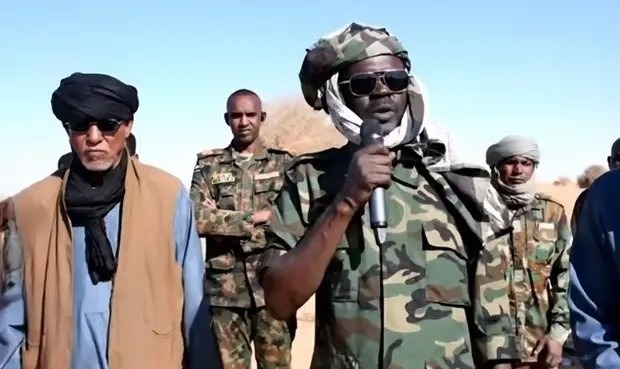
Musa Hilal, leader of the Mahamid tribe and head of the Sudanese Revolutionary Awakening Council, arrived in the capital, Khartoum, in his first public appearance since the military events that took place in the town of Mustariha in North Darfur State in recent weeks.
The Revolutionary Awakening Council announced on Thursday that Hilal had arrived in Khartoum, where he was received by the Governor of Darfur, Minni Arko Minawi, and a number of council leaders, including the Secretary-General of the Council, Dr. Abdul Rahman Hassan Saeed.
Assassination attempt and attack on Mustariha
On February 22, Hilal survived an assassination attempt by a drone, attributed to the Rapid Support Forces, which targeted his guesthouse in the Mustariha area of North Darfur State.
Just one day after the drone attack, the Rapid Support Forces launched a large-scale ground offensive that ended with their capture of the town of Mustariha, considered the historical stronghold of the Mahamid tribe. This led to Musa Hilal’s withdrawal in a complex military operation that ended with his arrival in the Ad-Dabbah locality in the Northern State.
In his first statement after arriving in the capital, Musa Hilal said, “The battle with the Rapid Support Forces has now begun,” indicating the escalating tension between the two sides.
He described the attack on his territory in Darfur as “treacherous,” emphasizing that the next phase would involve regrouping and working to restore stability in Sudan.
Thanks to the Sudan Liberation Movement
Hilal also expressed his gratitude to the Sudan Liberation Movement, led by Minni Arko Minawi, praising the role it played in securing his safe passage out of Darfur and his arrival in areas controlled by the armed forces outside the region.
Escalating Tensions with the Rapid Support Forces
The relationship between Musa Hilal and the Rapid Support Forces has witnessed increasing tension in recent months, especially after Hilal announced his support for the Sudanese army.
The dispute escalated after he was accused of involvement in the killing of advisor Hamid Ali Abu Bakr earlier this year, an accusation he later denied before a tribal committee formed to resolve the crisis.
Hilal also launched a scathing attack on the second-in-command of the Rapid Support Forces, Abdul Rahim Dagalo, accusing him of seeking to dismantle the Mahamid tribe, further inflaming tensions between the two sides.