
Australian Company Sells Stake in Sudanese Gold Project for $260 Million
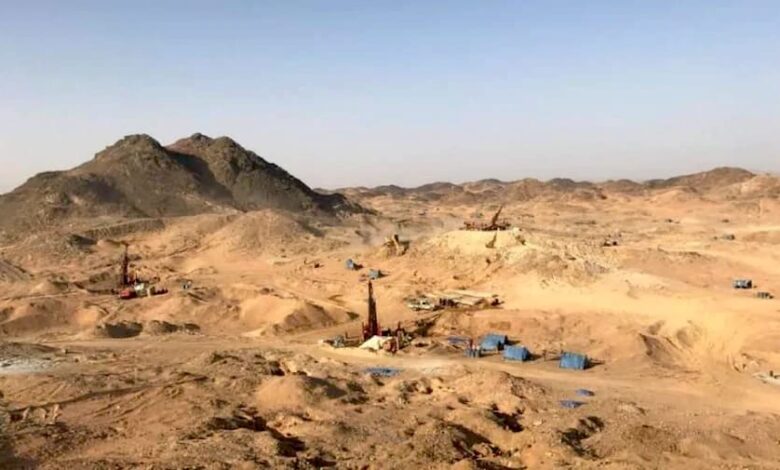
Perseus Mining, an Australian gold mining company, announced yesterday (Monday) its agreement to sell its 70% stake in the Mayas Sands gold project in Sudan to a subsidiary of China’s Zhejiang Legend Investment Group for $260 million.
With this move, Perseus is exiting the project, marking its largest withdrawal from Sudan in nearly four years since entering the country in 2022.
According to the specialized economic agency Ecofin, Perseus will receive an initial payment upon signing the contract, with the remaining amount to be paid upon completion of the deal, expected by April 22.
The company explained that this deal follows a multi-year review of the project, whose development has been stalled since 2023, primarily due to the ongoing war in Sudan.
It is worth noting that Perseus partnered on the project with the Sudanese government and the local company Mias Nob Multi-Activities, which holds the remaining 30% stake.
The project was expected to produce an average of 167,000 ounces of gold annually over the mine’s 13.6-year lifespan. The Chinese group can now proceed with the project, while Perseus focuses on developing its core assets.
The agency quoted CEO Craig Jones as saying, “Perseus confirms that the Mias Nob Multi-Activities project is a high-quality gold project.” A strategic review of the project was conducted as a result of the ongoing armed conflict in Sudan and its impact on Perseus’s ability to develop it at a suitable scale. The sale represents a significant step for Perseus in optimizing its investment portfolio, allowing it to allocate resources to its core assets and growth strategy.
Perseus operates three gold mines in West Africa: Sissingwe and Yaouri in Côte d’Ivoire, and Idikan in Ghana. The company is also developing a fourth mine, Nyanzaga, in Tanzania, which is expected to commence production in 2027.
With this portfolio, Perseus targets average annual gold production of between 515,000 and 535,000 ounces during the period from 2026 to 2030.