
The head of the Sudanese Youth Change and Justice Movement: There is no alternative to the unified national army
Port Sudan/The Citizen
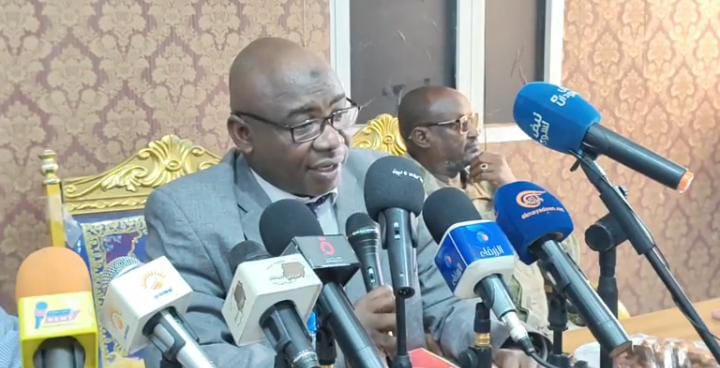
Lieutenant General Dr. Khalid Salis Abbakar, Chairman of the Sudanese Youth Movement for Change and Justice, stressed that the country is going through a critical phase that requires an accurate diagnosis of the political crisis that led to the outbreak of the current war. Speaking about the future vision of the movement, he emphasized that national sovereignty is a red line that cannot be compromised, reiterating the Sudanese people’s categorical rejection of all forms of external interference or attempts to impose guardianship over the national decision.
In a press conference held at the police headquarters in Port Sudan, Dr. Khalid reviewed the history of attempts to resolve the crisis, referring to the “Sudan Peace Project” that was launched from the Nigerian capital, Abuja, and criticizing the imbalance that accompanied previous change processes and peace agreements that did not achieve the desired stability.
Chairman of the Sudanese Youth Movement for Change and Justice stressed the need to establish a single national army that will take responsibility for protecting the land and supply, emphasizing that reforming and unifying the military is the only guarantee to prevent fragmentation. He also sharply criticized regional roles that contribute to supporting rebel militias, describing what is happening as a “grand conspiracy” targeting Sudan’s resources, identity, and history.
Regarding the developments on the ground, Dr. Khalid congratulated the Sudanese people on the successive victories achieved by the armed forces and other regular forces in the “Battle of Dignity,” praying for the souls of the martyrs. He stressed that the people’s cohesion with their national institutions is the practical response to attempts to exploit Sudanese diversity to tear the social fabric.
Dr. Khalid pointed to the positive paradox produced by the current crisis, stressing that the war, despite its bitterness, succeeded in melting the contradictions and united the people of Sudan on the heart of one man in the face of the common danger, stressing that this level of unity and national alignment would not have been achieved under normal circumstances, which represents the main pillar of building the “new Sudan”.
He called for the launch of the “National Cooperation Project” to rebuild what was destroyed by the war. He stressed that this project should focus primarily on supporting and providing relief to the affected Sudanese, and rehabilitating the infrastructure with a pure national vision that puts the interest of the citizen above all considerations.