
The Danger of Simplifying RSF role in Sudan’s War
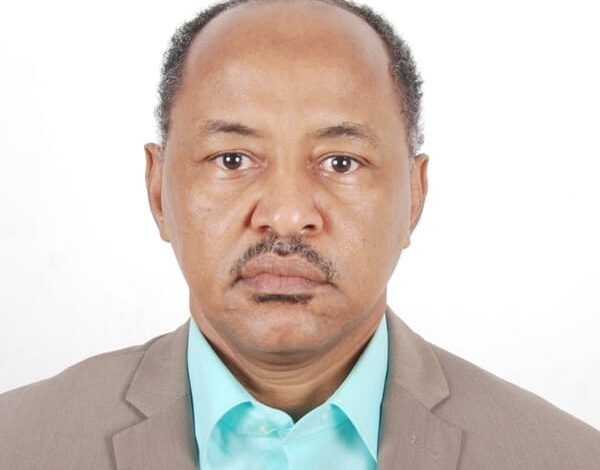
By: Ambassador Mukhtar BILAL, PhD, Chargé’ d’Affaires a.i, Embassy of the Republic of the Sudan in Abidjan
As the return of the Sudanese government to Khartoum appears imminent and the Rapid Support Forces (RSF) suffer heavy losses in Kordofan and other regions, pro-RSF media outlets are actively portraying the war in Sudan as a “forgotten war” that has lasted for over a thousand days, claiming that the international community’s perception and handling of the conflict are flawed.
For instance, on January 8, 2026 the Royal Institute for International Relations (Egmont) of Belgium published an article entitled “The Danger of Simplifying the War in Sudan”. This article addresses the complexity of the conflict in Sudan, striving to highlight the narratives that align with the propaganda of militias and their supporters. This propaganda aims to convince the world that viewing the RSF as an absolute evil and their defeat as the solution to Sudan’s problems is an oversimplification of the issue. A more nuanced perspective is needed, one that accepts RSF, with their imperfections and shortcomings, as a means of resolving the crisis. The author emphasizes that the Sudanese army suffers from structural and systemic problems.
Kristof Titeca equates the armed forces with the rebel RSF. He even asserts that the Sudanese army committed significant human rights violations and atrocities against civilians during the war. He concludes that the RSF is not inherently bad. On the contrary, it is crucial to understand and address the crimes committed by the RSF and to work toward a solution to achieve the desired peace. He argues that the external support the RSF receives is not the core issue, as the fundamental problem is a civil war that ravaged Sudan long before the emergence of the RSF.
The author then clarifies that the perception of the RSF as a threat to the state and its population is widespread only in Khartoum and a few other regions. In contrast, in other regions like Kordofan and Darfur, the army suffers from an equally negative reputation. Consequently, a military solution is merely an illusion, not a real solution. The author concludes that the situation is similar to that of South Sudan, where the army seized control of the cities, and then authority collapsed externally, leading to the division of Sudan and the secession of the South.
The author believes that both the army and the RSF militias lack legitimacy. The solution, therefore, lies in consolidating democracy in the future through various mechanisms. These include fostering a peaceful, civilian-led transition, achieving national reconciliation, and carrying out comprehensive security sector reform. The article concludes with this pessimistic statement: “If Sudan wants any chance of surviving this war united”.
This article was published by the Egmont Institute (Royal Institute for International Relations), a prestigious research institute in Europe and one of the think tanks of the Kingdom of Belgium, considered an arm of the Belgian Ministry of Foreign Affairs. Although it presents itself as an independent think tank on international policy and a forum for independent discussions and conferences, like the Council on Foreign Relations in New York and the Royal Institute of International Affairs (Chatham House) in London, the institute is traditionally headed by a senior diplomat from the Belgian Ministry of Foreign Affairs, and its decisions can be relayed to the rest of the European Union, Brussels being considered the capital of European decision-making power.
It is worth noting that the article’s content largely aligns with the narrative consistently employed by the RSF and their regional sponsor. It deliberately casts doubt on the country’s national army, blaming it for the errors of Sudanese policy, particularly regarding the South Sudan conflict in the past and the current Darfur conflict. In doing so, it downplays the horrific crimes committed by RSF. As a matter of fact citizens were fleeing RSF-controlled areas (areas where serious human rights violations and massacres had been perpetrated) to seek refuge in areas under the control of the Sudanese army (areas of salvation and survival). Ambassador Mohamed Osman Akasha emphasizes that, Sudanese citizens effectively were voting for their legs when fleeing RSF-controlled areas to the areas liberated by the Sudanese Armed Forces. These repeated scenes illustrate the joy of citizens welcoming and celebrating the soldiers of the Sudanese army and the Joint Support Forces. These events took place in Khartoum, Al-Jazirah, South Kordofan, and Darfur.
Comparing the Sudanese army to RSF is tantamount to confusing a national army defending its state and its people with a militia that terrorizes them, both morally and legally unacceptable. Therefore, legitimacy cannot be shared between the national army and the RSF, contrary to what Kristof Titeca suggests. The Sudanese Armed Forces are a constitutionally recognized institution, internationally mandated to protect the sovereignty and unity of Sudan.
According to a report by the UN Secretary-General to the Security Council, the war in Sudan began on April 15, 2023, when the RSF launched a coordinated attack against state institutions, looting public property, seizing airports, and occupying homes in Khartoum. More than nine million people have been displaced since the start of the conflict, most fleeing violence, looting, and sexual assaults perpetrated by the RSF in Darfur, Gezira, Sennar, and Khartoum, according to UNHCR statistics. The Office of the United Nations High Commissioner for Human Rights has documented massacres, torture, and sexual violence perpetrated by RSF fighters in the areas they control.
Therefore, how can we envision a third way that considers the RSF as non-problematic? How can we consider that focusing solely on their elimination and blocking their funding is an oversimplification of the Sudanese problem?
We would like to reaffirm that the Sudanese problem must be properly understood and analyzed, based on accurate data, and that facts, not disinformation, must be presented. This is essential for achieving effective and objective solutions to our just cause.
In fact, the Rapid Support Forces militias persist because they receive supplies, funding, and political protection from abroad. Through arms flows, financial networks, and logistical support, external actors exert influence by proxy.
The war in Sudan represents a nation under attack by a foreign-backed militia. The Sudanese Armed Forces embody the continuity of the state, its flag, and the collective will of the people to defend their homeland. The RSF, on the other hand, represents chaos, foreign interference, and collective suffering. Minimizing the threat posed by the foreign-backed RSF is tantamount to denying reality. Truth must precede peace, because peace without truth legitimizes injustice. Sudan is not at war with itself; it is fighting for its very survival.
Calling for a complete disregard for the actions of theRSF, for dismissing them as unproblematic, and for resolving them on the premise that all parties are guilty, or even for the noble aim of ending the bloodshed and establishing peace, constitutes not only a flawed analysis of the premises, which will inevitably lead to erroneous and disastrous conclusions logic tells us that— false premises lead to false conclusions—but also a profound affront to the dignity of the Sudanese citizen whose money has been looted, whose honor has been trampled, and who has suffered torture, death, and forced displacement at the hands of the RSF. Any solution that fails to respect the values of the rule of law and the accountability of those who have committed crimes against the Sudanese people will be disastrous in the future and will not constitute a lasting solution to the Sudanese crisis.
The Sudanese government recently presented a peace initiative, submitted by Prime Minister Dr. Kamil Idris to the UN Security Council.
The international community should take this initiative seriously and pressure the RSF to accept it. The initiative includes a comprehensive and coherent roadmap. It is feasible for ending the war, based on solid foundations: a ceasefire, the withdrawal of armed groups from all occupied areas, the restoration of state authority, the disarmament of militias, the provision of humanitarian aid, and engagement in a civilian-led and inclusive political process.