
Sudan conveys to the Peace and Security Council its condemnation of Kampala’s reception of the militia leader
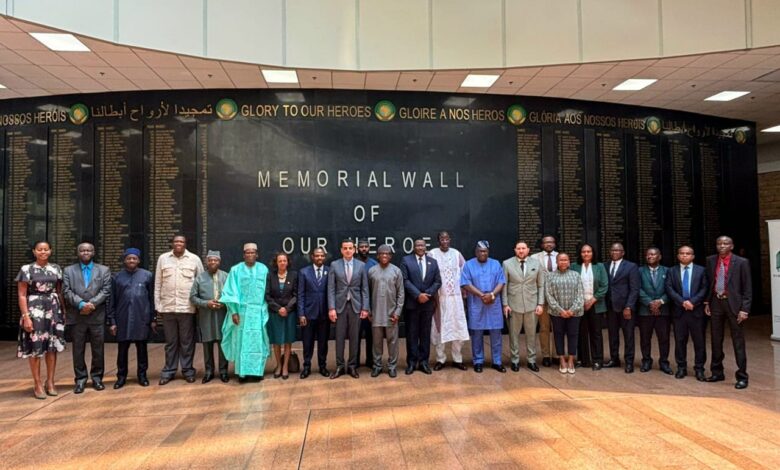
Sudan’s representative to the African Union and its ambassador to the Ethiopian capital, Al-Zein Ibrahim Hussein, addressed the informal consultations of the African Union Peace and Security Council with countries undergoing political transition today (Friday).
The ambassador conveyed the Sudanese government’s appreciation to the Council and to Egypt, which holds the Council’s February presidency, for holding a ministerial consultation session with Sudan on the sidelines of the African Summit. This session was addressed by the Minister of Foreign Affairs and International Cooperation, Ambassador Mohi El-Din Salem.
Ambassador Al-Zein also announced Sudan’s readiness to receive the African Union Peace and Security Council delegation in Khartoum at a time to be agreed upon in coordination between the Council and the Sudanese government.
The Ambassador reviewed the developments in the humanitarian, security, and political situation in Sudan, noting the return of the government and state institutions to the capital, Khartoum, and the delivery of humanitarian aid to the cities of Dilling and Kadugli in South Kordofan after more than two years of siege and isolation.
The Sudanese representative also addressed the recent violations committed by the Rapid Support Forces (RSF) militia, including attacks on Mustariha and Al-Tina, and attacks using strategic and suicide drones in North and South Kordofan states and the Blue Nile region. He called on the African Union Peace and Security Council to designate the RSF as a terrorist group.
The Ambassador conveyed Sudan’s condemnation of Uganda’s reception of the RSF commander and the so-called “founding government,” and its allowing him to address a public gathering in Kampala, despite the Council’s decision not to recognize any parallel entities. He called on member states to abide by the decisions of the Peace and Security Council.
The Ambassador emphasized the illegitimacy of the continued suspension of Sudan’s participation in the activities of the African Union, given that the reasons for the suspension no longer exist following the formation of the civilian-led transitional government of hope.