
Kabbashi Inspects Soba and East Nile and Promises to Complete Services
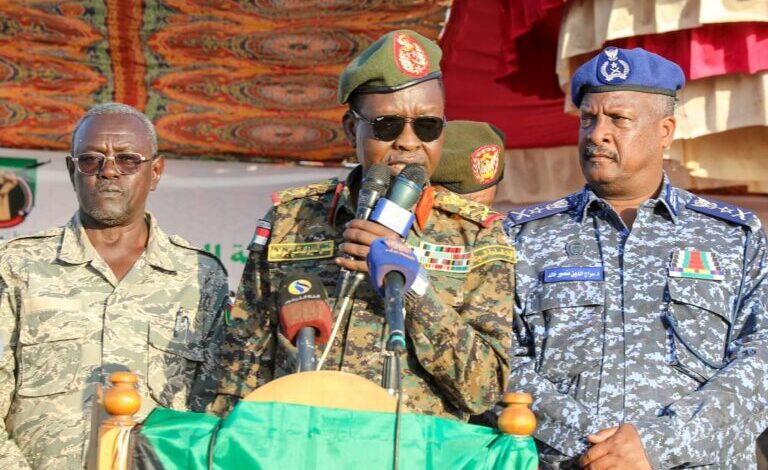
Lieutenant General Shams al-Din Kabbashi, Deputy Commander-in-Chief and member of the Transitional Sovereignty Council, praised the resilience and struggles of the citizens of Soba and East Nile, and their significant role in the “Battle of Dignity,” particularly the Battle of the Soba Bridge.
During his inspection visit to the East Nile region yesterday, in the presence of Khartoum Governor Ahmed Othman Hamza, the State Security Committee, the State Police Director, and the Executive Director of East Nile, he promised to work with the Governor to address the Soba water station problem, considering it vital due to its connection to agriculture and livestock.
Kabbashi directed an increase in the number of electricity transformers in the area to meet the needs of the residents and to immediately begin procedures for establishing civil registry offices in the locality to facilitate the issuance of official documents. He emphasized the government’s commitment to supporting the health and education sectors through coordination between the state and the Sovereignty and Ministerial Councils.
The Governor of Khartoum commended the Armed Forces, the Police, the Intelligence Service, the Popular Resistance, and all supporting factions. He praised the steadfastness of the people of Soba East and their sacrifices in confronting the militias during the Battle of Dignity. He stressed the need for vigilance in combating negative criminal phenomena related to livestock theft, currency counterfeiting, and drug trafficking.
He announced the arrival of a large shipment of 851 transformers, some of which were allocated to the Soba area to address power outages. He pledged to complete the Umm Dom water station project to provide a sustainable Nile water source for the East Nile locality, replacing the complete reliance on wells. He also directed a study on establishing a new hospital in the area to address the shortage in healthcare facilities and alleviate pressure on distant hospitals. He called for the investment of all agricultural land in the Wadi Suba area by its owners, given that the east bank of the Nile is Khartoum’s “breadbasket”.