
I Am Not Neutral!
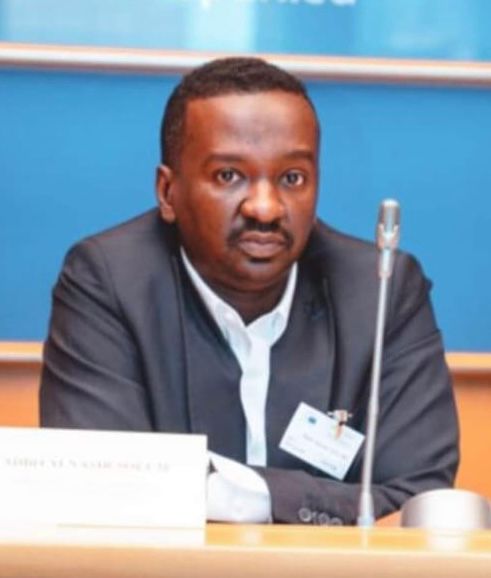
By: Dr. Abdelnasser Selum Hamed
The question I repeatedly faced in meetings with Western diplomats and researchers was not whether the Sudanese army is free of mistakes. That was never the core of the discussion. The real question—often phrased in calm, diplomatic language—was sharper and more direct: Why do you reject neutrality? And why do you insist that supporting the Sudanese army is essential to any prospect of stability in Sudan?
In the Sudanese context, neutrality cannot be treated as a purely moral position or a clean theoretical choice. Neutrality here is a political decision with tangible consequences for civilian lives and for the future of the state itself. The assumption that one can stand at equal distance from all parties collapses when applied to a situation of total state breakdown. In such moments, neutrality is not an innocent posture; it becomes an analytical failure—one that refuses to name reality as it is.
Sudan is not experiencing a routine crisis of governance, nor a conventional political dispute that can be resolved through elite bargains or short-term settlements. This is a moment of existential testing for the state itself. In moments like these, neutrality is not wisdom; it is silent withdrawal—leaving a vacuum that is quickly filled by the logic of brute force. What I defend here is not an institution immune from criticism, but what might be called the minimum condition of the state: the framework that makes politics possible in the first place.
Seen this way, Sudan’s war is not a contest between competing political programs, but between two fundamentally different models of power. On one side stands a fractured yet still existing state, retaining remnants—however damaged—of institutions that could, at least in theory, be reformed and held accountable. On the other stands the logic of non-state rule: war as an economy, violence as governance, and peace as a direct threat to entrenched interests. In such conditions, the language of neutrality fails structurally. It assumes a level political field when, in reality, the field itself is being reshaped by force.
This is why the concept of neutrality cannot simply be imported from Western conflict literature and applied uncritically to Sudan. Neutrality presupposes functioning institutions capable of protecting civilians regardless of who controls territory. It assumes that violence is evenly distributed and that all actors are constrained by political rationality. Sudan today meets none of these assumptions. What is unfolding is a confrontation between a weakened but surviving state structure and a project that dismantles the state into zones of predation—where geography becomes loot and civilians become disposable variables. In such a setting, neutrality ceases to be a moral virtue and becomes a failure to read the moment.
For this reason, the question “Why support the army?” is ultimately less important than another, more difficult question: What is the realistic alternative in the absence of an army? Experiences across the region and beyond show that the collapse of national armies does not open the door to politics; it opens the gates to protracted disorder—where armed groups proliferate, borders dissolve, and violence becomes the only shared language.
This conviction did not emerge from theory alone. It was forged through personal experience—when abstract debate abruptly left conference rooms and entered my own home.
When the war began, I—like many Sudanese in the diaspora—was spending Ramadan in Sudan. Ramadan carries a different weight when lived among family, especially compared to Scandinavian countries where fasting hours can exceed eighteen hours a day. As fighting erupted, my family and I fled to Al-Kadro, clinging to a brief, almost illusory hope that the violence would be short-lived.
In the first days, life appeared deceptively normal: contained anxiety, fragmented news, distant sounds that grew louder and then faded. Then fear arrived in full. Rapid Support Forces entered the neighborhood and positioned themselves in front of the Bank of Khartoum, opposite Al-Rayhana Hospital. At that moment, it became clear that the area was no longer residential—it had become a frontline.
I moved everyone to the first floor—not because it was safer, but because it was the only space where I felt I could keep everyone within reach. I sat in the center, my son behind me, the other children beside him. There was no room for panic. The only imperative was to remain in one place, together.
During those hours, the war was not a distant military event; it lived inside the house itself—in the silence of children, in footsteps on stairwells, in neighbors’ glances loaded with unspoken questions. The city was not behind the front line; it was the front line. Every street was a potential target, every building a point of suspicion, every window a risk. This is the essence of urban warfare: civilians become part of the battlefield without ever choosing to be.
As shelling continued, I moved between our apartment and the neighboring one to check on others. From the bedroom—closest to the street and the direction of the army’s advance—I listened more than I looked, trying to read the rhythm of sound: when it approached, when it retreated. Understanding the pattern offered a fragile illusion of control.
I placed a table and a chair in front of me—not because I believed they would stop bullets, but because when human beings are cornered, they need to do something. I told them calmly, without knowing where the calm came from: If a bullet enters, it will hit the table first, and then it will be my body. It was not bravery. It was a cold calculation of the moment. Only then did I understand that fear is not measured by screams or movement, but by the ability to remain still when the body itself becomes the final barrier.
Then came a heavy Thursday night. The darkness that followed was unlike any before. The fighting lasted more than fourteen continuous hours. From the apartment window, I watched the familiar street slowly transform into an open battlefield. From the direction of Hatab Military Base, the army began advancing—slowly and deliberately—securing ground meter by meter.
At the heart of that advance, I noticed a colonel walking openly down the middle of the street. While we hugged the ground in search of cover, he moved in full uniform, insignia visible, near the Bank of Khartoum, surrounded by soldiers and military vehicles. He did not hide behind a wall or a vehicle. He moved with steady purpose, issuing brief instructions. He was not performing heroism; he was imposing order. His presence was not symbolic—it was operational. A clear message: no panic, no retreat, no abandonment of the street.
With the approach of dawn, the tempo began to shift. The gunfire did not stop all at once; it retreated in stages, as if the street itself were catching its breath after a long night. Then came the knock on the building’s door.
That knock marked the moment when the war fully crossed into our private space—when the conflict was no longer something unfolding outside, but something standing on our threshold.
With the approach of dawn, the tempo shifted slowly. Calm did not arrive all at once; the sound retreated in stages, as if the street itself were catching its breath after a long night. Then came the knock on the building’s door.
In moments like these, a knock is never a minor detail. It is a full event, with its own weight and meaning. I still remember the colonel’s words, spoken with calm courtesy: “With your permission, may we search the apartment? There was gunfire reported from one of the rooftops.”
I replied without hesitation: “Armed forces—welcome.”
I opened the door cautiously. It was the same officer I had seen earlier on the street. He did not storm the apartment, nor did he raise his voice. He asked permission again before entering, accompanied by only a small number of soldiers. Their movement was disciplined and deliberate, as if they fully understood that they were inside a civilian home, not a combat zone. I walked ahead of them, entering each apartment where women were present, asking permission before they followed.
Their attention was focused on the rooftop. The colonel pointed to the unfinished concrete structure adjacent to the building—a location that carries particular risk in urban warfare, where an incomplete structure can quickly become a vantage point for surveillance or sniper fire. They ascended with controlled speed, checked the area carefully, and returned the same way they had entered—quietly, without noise or display.
Outside, the same streets that had been eerily empty only hours earlier began to change. The sound of what could only be described as restrained celebration spread through the area. People emerged cautiously, voices rose, and for brief moments, relief replaced fear. This was happening even as Rapid Support Forces vehicles were still visible at the edge of Al-Kadro. Victory here was not absolute; it was fragile, partial, and aware of its limits.
We sat together for a few minutes. There was little to say. We exchanged brief words and offered what food we had. It was not much, but in that moment it felt necessary—an attempt, however temporary, to restore a relationship disrupted by war: between the civilian home and the armed uniform, between fear and protection.
As we prepared to leave, the colonel spoke plainly, without false reassurance. The road toward the Al-Bashir complex, he said, was unsafe, and he could not guarantee safe passage. He neither concealed the danger nor exaggerated it. He stated it as it was, then moved on to continue his mission in the street.
At that point, we made the decision to leave, regardless of the cost. The building had become the first inhabited structure after the unfinished concrete site—an obvious target should the Rapid Support Forces attempt another assault. We gathered what little we could carry and left everything else behind.
Before departing, I carried the remaining food supplies to the soldiers stationed below our building and near the veterinary complex. I thanked them. That was all the language available. At that moment, I noticed one of the soldiers standing nearby. His arm was wrapped tightly in a piece of cloth, blood clearly visible. In his other hand, he still held his rifle. He did not complain. He did not withdraw. He stood in place.
As we were leaving the neighborhood, one final scene fixed itself in my memory. A group of soldiers, together with civilians from the area, were carrying the body of a Rapid Support Forces fighter. They were taking him to be buried in the open space near the vocational school. There was no shouting, no triumphalism. Just quiet movement and a shared recognition of death—even when it belonged to the enemy.
In that moment, the difference became unmistakable: between force that restrains itself and violence that knows no boundary. To bury the dead with dignity, only hours after fierce fighting, is not a gesture of weakness. It is a measure of discipline. It is what separates those who fight within the idea of a state from those who fight outside it.
It was then that I realized something else as well: my generation had never truly known the Sudanese army. We knew it through political debates, crises, and controversies—but not through moments of existential testing. What I witnessed that night was not propaganda; it was quiet, practiced responsibility.
Whatever opinions we may have held about the armed forces before the war, a single day—only a few hours—was enough to reshape them permanently. And if this is what one day can reveal, then what of those who lived through the battles of the armored corps, who witnessed the retaking of Khartoum and Wad Madani, who saw the resilience of El Fasher and Kordofan, where heroism is not written in speeches but tested through endurance, loss, and steadfastness?
One day, we will return to Khartoum.
And when that day comes, I will visit Hatab Military Base—not as a writer or a researcher, but as a witness. I will go to say thank you to the men who made survival possible, and who made these words possible.
I am not neutral.
I cannot be neutral.
Because what I saw leaves no moral space to stand in the middle.