
Engineering Chaos: How International Mediation Is Rewriting the Sudanese State
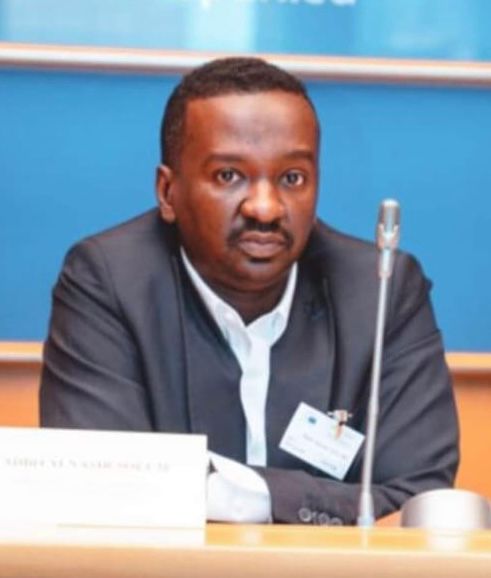
By: Dr. Abdelnasser Selum Hamed
Anyone observing Sudan’s war today quickly realizes that this conflict has moved far beyond the realm of a conventional political dispute or a power struggle that can be contained through diplomatic pressure. Since April 15 — and especially after the fall of El Fasher — Sudan has become a battlefield where the very center of the state is being redefined, not through institutions or constitutional processes, but through raw force. At the same time, international mediators increasingly appear willing to treat this collapse as a “new reality” to be accommodated rather than reversed.
It is against this backdrop that General Abdel Fattah al-Burhan delivered his latest speech. His remarks were not merely a political response to Washington’s envoy, Mossad Pauls; they were a direct warning that the Quartet’s proposal is not a peace roadmap at all, but a blueprint for restructuring the Sudanese state along the lines of wartime balances of power. When Burhan stated, “The paper presented by the Quartet dismantles the armed forces, dissolves the security services, and keeps the militia in place,” he was identifying the essence of the project being pushed: a state whose center is engineered externally rather than built from within.
To understand the magnitude of this shift, El Fasher must be placed at the heart of the analysis. For years, the city stood as the state’s final bastion of sovereignty in Darfur. It endured an eighteen-month siege, according to UN reports and independent research organizations — a siege designed to slowly strangle the city: sealed supply routes, blocked humanitarian access, and all remaining corridors controlled by a single armed faction. After the city fell, documented testimonies from survivors and human rights researchers described widespread atrocities, including executions of unarmed civilians, sexual violence, and systematic looting. While a definitive casualty count remains unavailable due to restricted access, the scale and pattern of abuses indicate that the takeover was not simply a military event, but a deliberate and coercive remaking of the city’s social and political fabric.
According to the available field assessments, El Fasher is now fully under the control of the Rapid Support Forces (RSF), with no meaningful presence of government troops inside the city. This development is not merely a territorial shift; it represents a profound political rupture. Analyses published by institutions such as the Institute for Security Studies and other international research centers interpret the fall of El Fasher as the collapse of the state’s last line of sovereignty in Darfur — a turning point that fundamentally reshaped the trajectory of the war. For some foreign capitals, the new reality on the ground is no longer a distortion to be reversed but a foundation to be built upon in any future political settlement.
The Quartet’s proposal reflects this shift in unmistakable ways. A ceasefire that freezes each side in its current positions amounts to an implicit recognition of RSF control over large parts of Darfur and significant areas of the greater Khartoum region. Allowing humanitarian aid to flow without clear and enforceable security arrangements places the full burden of compliance on the government alone while imposing no real obligations on the force holding territory through coercion.
More striking is the call for the immediate removal of the military from political life before the state regains control of its territory. This is not a neutral reform; it is an engineered vacuum — the deliberate hollowing out of the state’s central authority at the very moment it faces an existential threat. Power vacuums do not produce democracy; they produce fragmentation.
The proposal’s most dangerous element, however, is the demand to dismantle the General Intelligence Service and replace it with a newly formed body. In any state confronting a large-scale insurgency, the intelligence apparatus functions as the connective tissue that links the center to the peripheries. To dismantle this structure during a war is not administrative reform — it is political amputation. Burhan’s comment that the proposal “abolishes the state’s security organs entirely” is therefore not rhetorical exaggeration but an accurate description of the institutional consequences.
The proposal also calls for a “civilian–civilian dialogue” under external supervision — an idea that appears democratic on the surface but becomes deeply problematic in the current context. A dialogue conducted while the state lacks control over key territories does not produce a representative political order; it produces an externally curated elite, selected not by Sudan’s social and political realities, but by the balance of force imposed by the war. This is why Burhan declared, “Neither Hemetti nor Hamdok will be imposed on us… Sudan will not be ruled from abroad.” His statement was not about personalities; it was about sovereignty itself.
Behind these proposals lies a clear geopolitical logic. For certain Western and regional capitals, Sudan is not viewed as a sovereign state but as a strategic corridor: a critical point on the Red Sea, a buffer zone intersecting the interests of Washington, the Gulf, Russia, and China. In such arenas, external actors often prefer a “manageable state” to a strong and independent one. This model has been tried repeatedly — in Iraq, Libya, and Bosnia — and the results have been predictable: weak institutions, fragmented sovereignty, and chronic cycles of violence.
But Sudan does not fit neatly into these templates. Historically and geographically, Sudan is a centralized state whose cohesion relies on the strength of its political center. When the center collapses, the peripheries fracture. When its security institutions weaken, the entire regional architecture begins to unravel. For this reason, any political settlement that does not begin with the restoration of the state’s monopoly over organized force is not a peace agreement; it is merely the postponement of another disaster. And any political transition that begins before the state regains territorial control will produce nothing more than a symbolic authority presiding over a fragmented landscape.
While the state has undoubtedly made mistakes in managing key files before the war, the responsibility for institutional reform is fundamentally different from the responsibility to safeguard the state’s survival. A country cannot reform its institutions while those institutions are being dismantled in the middle of a war. It cannot build a civilian-led political order atop a vacuum of sovereignty. And it cannot conduct a meaningful political dialogue while an armed actor continues to impose its will on entire regions.
This is why the military’s position — as articulated by Burhan — is not simply a defense of “power,” but a defense of the state’s right to exist. No state can rebuild under the threat of a parallel army; no constitution can be drafted when entire cities are under the authority of a non-state force; and no transitional process can succeed while coercion determines the political landscape.
At the heart of Sudan’s crisis today are two competing projects:
• An external project, seeking a Sudan fragmented along lines of managed influence — a weakened center, diluted sovereignty, and a political order shaped in foreign capitals.
• And an internal project, striving to preserve a unified state under a single sovereign authority, with decisions made in Khartoum rather than imposed from abroad.
Between these two visions, Sudan’s future is being written.
States do not collapse solely because they lose battles; they collapse when their center is stripped away, their institutions hollowed out, and their political foundations redesigned from the outside. Sudan’s struggle today is not about forming a transitional cabinet — it is about defining the state itself: Who owns it? Who commands its center? And who has the legitimacy to chart its future?
In Sudan, anyone who forfeits the center forfeits the state.
Dr. Abdelnasser Selum Hamed
Senior Researcher in Crisis Management & Counter-Terrorism
Director, East Africa & Sudan Program — FOx Research, Sweden