
UN website publishes summary of Human Rights Council session on Sudan
The United Nations published, on its official website and across various platforms and in all official languages, a summary of the special session of the Human Rights Council held last Friday concerning the human rights situation in and around El Fasher.
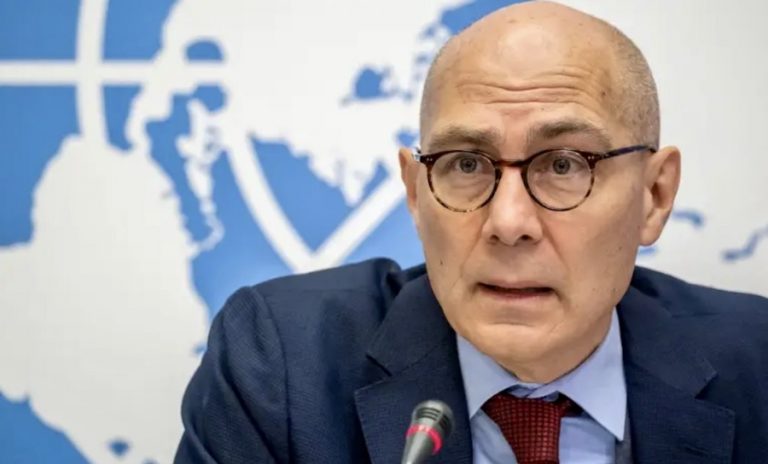
The website reported that the UN High Commissioner for Human Rights, Volker Türk, stated that the atrocities unfolding in El Fasher “were foreseeable and could have been prevented – but they were not,” adding that they constitute “the most serious crimes.”
The High Commissioner said that his office had issued repeated warnings about the situation in the capital of North Darfur over the past year, “so none of us should be surprised by reports that since the Rapid Support Forces took control of El Fasher, there have been mass killings of civilians; targeted executions based on tribal affiliation; sexual violence, including gang rape; kidnappings for ransom; widespread arbitrary arrests; and attacks on health facilities, medical personnel, and humanitarian workers.” And other horrific atrocities.”
The High Commissioner said the pattern of crimes has been documented repeatedly in the conflict in Sudan. He added: “While the bloodstains on the ground in El Fasher have been photographed from space, the stain on the history of the international community remains less visible but no less reprehensible.”
Mr. Turk said the international community has a clear obligation to ensure that civilians in El Fasher receive humanitarian assistance and protection, and to address these atrocities – which represent “a stark display of the cruelty used to subjugate and control an entire population.”
He also stressed the need for concerted efforts to hold all those responsible for violations of international humanitarian law and human rights law in the context of the conflict in Sudan accountable. He noted that his office is gathering evidence of violations and that the International Criminal Court is closely monitoring the situation. He said: “All those involved in this conflict should know: we are watching you, and justice will prevail.”
“A crime scene”:
For her part, Mona Rishmawi, a member of the Independent International Fact-Finding Mission in Sudan, said that a large part of El Fasher has now become “A crime scene,” she added, noting that a thorough investigation is needed to get the full picture, “but what we already know is devastating.”
She continued: “Survivors described bodies piled up in the streets and in trenches dug in and around the city, and their accounts are corroborated by documented digital evidence that reinforces the scale and severity of these crimes.”
She said that despite repeated warnings, “the worst-case scenario has now come to pass,” adding that the crimes committed are not hidden, but rather “filmed, circulated, and even glorified.”
Ms. Rashmawi added that the fact-finding mission is currently investigating similar atrocities in Kordofan, where civilians are besieged, aid is blocked, and famine is emerging, “threatening another El Fasher.”
She added: “The unfolding horrors are a direct result of decades of impunity. They can, and must, be stopped now. Those who support, finance, and arm this brutal machine have both the power and the duty to stop it. States with influence bear a special responsibility.” “Justice must be served for the individuals and entities behind these crimes.”
Ms. Rashmawi emphasized that the Sudanese people have suffered unspeakable hardship during this ongoing conflict, adding, “What they need now, and what international law requires, is an end to the bloodshed, immediate protection, and a credible path to justice.”
Call to Redouble Efforts to Silence the Guns in Sudan:
Adama Dieng, the African Union’s Special Envoy on the Prevention of Genocide and Mass Atrocities, said the African Union called on the international community to redouble its efforts to silence the guns in Sudan through inclusive dialogue and effective diplomatic engagement.
He called for an immediate halt to the flow of weapons and fighters into Sudan, which he said directly contributes to the systematic targeting of specific identity groups and exacerbates the already dire situation in the country. He added that this session represents a turning point and a powerful call for humanitarian solidarity and shared responsibility.
Human Rights Council Adopts Resolution on El Fasher:
The Human Rights Council adopted a resolution on the human rights situation in and around El Fasher, in the context of the ongoing conflict. In Sudan. In the resolution adopted without a vote, the Council strongly condemned the escalating violence and reported atrocities committed by the Rapid Support Forces and associated and cooperating forces in and around El Fasher, following their attack on the city. These included widespread atrocities such as ethnically motivated killings, torture, summary executions, forced recruitment, and arbitrary detention of civilians, as well as the widespread use of rape and other forms of sexual and gender-based violence as a weapon of war.
The resolution requested the Independent International Fact-Finding Mission on Sudan to conduct an urgent investigation, in accordance with its mandate, into the recent violations and abuses of international human rights law and international humanitarian law allegedly committed in and around El Fasher.
The resolution also requested the Fact-Finding Mission to identify, where possible, all those responsible for alleged violations and abuses of international human rights law in and around El Fasher, and to support efforts to ensure accountability for the perpetrators of these alleged violations and abuses.