
The Beginning of Reconstruction: A Glimmer of Hope
By: Staff Reporter
Sudan is experiencing one of its worst economic and political crises, which has plunged the country into unprecedented levels of poverty, unemployment, currency collapse, and deterioration of public services due to the war erupted by Rapid Support Militia in April 2023.
Despite the difficulties facing the Sudanese government in areas under the control of the Sudanese army, it has begun implementing reconstruction plans, even if these plans are incomplete and do not encompass all the sectors needed by the population who have suffered displacement since the outbreak of war.
The Sudanese government’s plan includes implementing infrastructure projects in several Sudanese states, increasing the area of cultivated land for the upcoming winter season, and implementing small-scale productive projects to combat poverty.
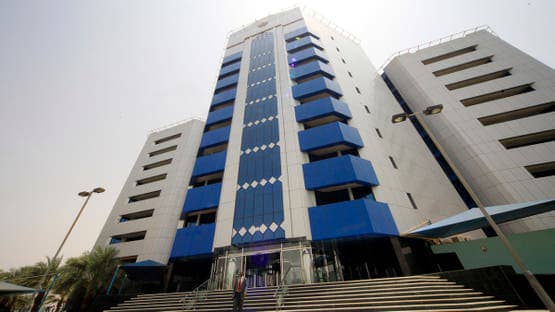
In the financial and monetary sector, the Central Bank of Sudan has begun implementing measures to control the unprecedented decline in the value of the Sudanese pound against foreign currencies. These measures include restructuring the banking sector, issuing new currency notes, and curbing the circulation of counterfeit currency.
Efforts are also underway to regulate the gold sector, which is considered the main source of hard currency in Sudan, amidst widespread smuggling and illegal mining of the precious metal.
International Support for Reconstruction
The Sudanese government has turned to Turkey to initiate a phase of cooperation in implementing reconstruction projects in Sudanese cities, particularly the capital, Khartoum.
The Sudanese Minister of State for Finance, Mohamed Nour Abdeldaim, met with the Governor of Ankara, Vasip Şahin, to discuss leveraging Turkish expertise in urban planning, waste management, renewable energy, and the maintenance of infrastructure and government buildings. This collaboration is part of national efforts to rebuild and prepare cities for the return of residents.
The cooperation extends to areas such as debris removal, electrical transformers and solar energy, urban planning, and the rehabilitation of bridges and public facilities damaged by the war.
The Sudanese government also discussed with a delegation from the United Nations Technology Bank the rehabilitation of government institutions, the development of digital infrastructure, and the enhancement of Sudan’s technological capabilities during the reconstruction phase. They also explored the possibility of supporting vital infrastructure projects in Khartoum State.
The capital, Khartoum, is receiving significant government attention as residents continue to return despite the widespread destruction caused by the war, which affected hospitals, water stations, and other vital infrastructure projects.
Omdurman National Bank announced the launch of a major financing plan targeting several development projects with a direct impact on the lives of citizens in Sennar State, Sudan.
The bank stated that the financing plan aims to implement vital projects to promote development, including agricultural projects to increase production and achieve food security, alternative and renewable energy initiatives to ensure the sustainability of energy supplies, and the implementation of internal road projects to improve the transportation network and infrastructure.
Supporting the Sudanese Currency
The Central Bank of Sudan has decided to issue new denominations of banknotes in an attempt to control the decline in the value of the Sudanese pound and the spread of counterfeit currency in Sudanese markets.
A new 2,000-pound note has been issued, in accordance with the provisions of the Bank’s law and based on its powers to protect the national currency and stabilize its exchange rate, in addition to a new 500-pound note.
In mid-October, Head of the Transitional Sovereignty Council of Sudan, Abdul Fattah al-Burhan, issued a decree dismissing Barai al-Siddiq Ali Ahmed from his position as Governor of the Central Bank of Sudan and appointing Amina Mirghani Hassan al-Tom as the new Governor.
The decision came amidst a major crisis in the Sudanese economy, which has affected the country’s banking sector, leading to a sharp decline in the value of the Sudanese pound against foreign currencies.
The Sudanese pound has plummeted to 3,800 pounds to the dollar on the parallel market, compared to around 560 pounds before the war erupted in April 2023.
Sudanese markets are suffering from a severe shortage of US dollars, leading to record-high prices for essential imports such as food, fuel, and medicine.
The Central Bank of Sudan’s influence is limited given the collapse of much of the financial system, with most Sudanese relying on the parallel currency market.
Regulating the Gold Sector
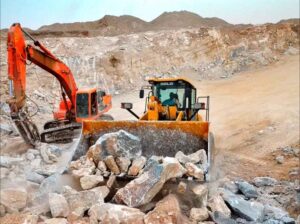
The gold sector in Sudan has witnessed a significant decline in recent years, with the proliferation of illegal mining and a decrease in the number of companies operating in the official market. This has deprived Sudan of substantial financial resources, especially given the record-high prices of gold on global markets.
Mohammed Tahir, Director of the Sudanese Mineral Resources Company, stated that preliminary results from a review of existing partnerships with mining companies indicate that only 13 companies out of more than 100 registered in the sector are actually producing gold in Sudan.
Taher emphasized that the traditional mining sector has faced significant challenges since the outbreak of war, as various entities have entered the sector in an unregulated manner, leading to the establishment of factories and mining projects without adherence to legal and environmental regulations.
He added that these practices have negatively impacted the national economy and the environment in several Sudanese states, noting that some workers have exploited the guise of traditional mining to engage in activities unrelated to the field.
He added that the next phase will witness serious steps to reorganize the sector and regulate performance to ensure the sustainability of mineral resources and maximize their revenues for the benefit of the state treasury.
Sudan aims to reach a gold production of 80 tons by the end of this year, with expected revenues of approximately $3 billion.
Taher stated that Sudan’s gold production in 2024 exceeded 64 tons, while production in the first half of 2025 reached more than 37 tons, reflecting a steady increase in the pace of production.
He pointed out that 2024 witnessed a significant boom in the mining sector despite the ongoing war in the country. He attributed this to the fact that the states hosting the main mining activity are relatively safe, and that much capital, which had lost its operations in other areas, has been directed towards investment in the mining sector, particularly by major national companies.
Combating Poverty in Sudan
Poverty rates in Sudan have risen to record levels, jumping from 21% to 71%, according to statements by the Sudanese Minister of Human Resources and Social Welfare, Mutasim Adam.
Adam stated that approximately 23 million Sudanese citizens are currently living below the poverty line as a result of the ongoing war and the ensuing crippling economic crises.
Despite this, the government has begun implementing a plan to expand productive projects in an attempt to control the rising poverty rates and provide new job opportunities for families who have suffered for years from displacement and forced migration.
Adam said that productive projects will be implemented with the support of government institutions, including the Zakat Bureau and the Poverty Reduction Commission, to move citizens out of poverty and into a productive role.
He added, “We are working to coordinate efforts with national and international institutions to mitigate the crisis, focusing on the most vulnerable groups, given the social and economic challenges facing Sudan.”
This comes as public services gradually resume in several Sudanese states, including the capital, Khartoum. Many major neighborhoods have seen shops reopen and electricity service restored after a period of outages, in addition to stable fuel and cooking gas supplies at service outlets.
Expansion in the Agricultural Sector
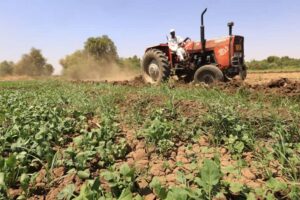
The Sudanese government has begun implementing a plan to increase agricultural land during the winter season. Ibrahim Mustafa, the governor of the Gezira Scheme in Sudan, announced a plan to cultivate 400,000 acres of wheat with direct funding from the Federal Ministry of Finance through the Sudanese Agricultural Bank.
The Gezira Scheme is located in the central region between the Blue and White Niles and is one of the largest agricultural projects in the world, covering an area of 2.2 million acres.
The governor urged farmers to visit the Agricultural Bank to receive the necessary production inputs, emphasizing that all financial and administrative arrangements have been finalized to ensure the agricultural season begins on schedule.
These steps are part of efforts to enhance food security and increase wheat production, a strategic crop in Sudan.