
Sudan: Maps of Influence and the Imperatives of Peace
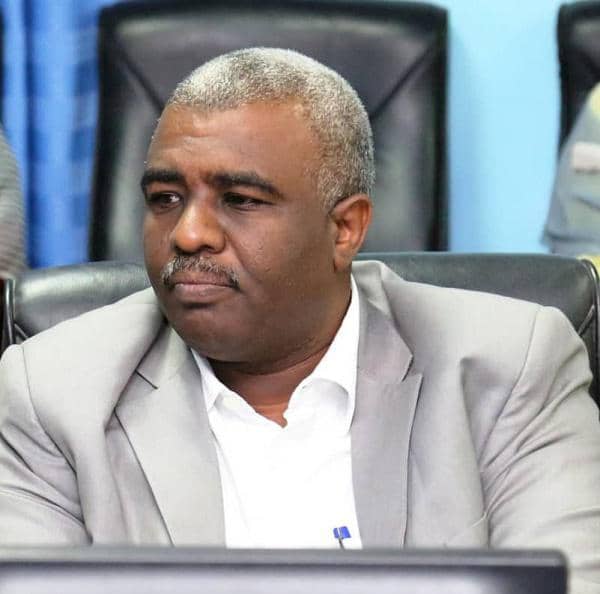
By Dr. Ibrahim Shaglawi
In recent weeks, the Sudanese crisis has witnessed intensive political activity, reflecting the entry of the issue into a new phase spearheaded by the Kingdom of Saudi Arabia. Meanwhile, the United States has begun to pick up signals of this movement and reshapes its approach to the war, particularly after the worsening humanitarian catastrophe in El Fasher and growing pressure from Congress and Western media to take a clear stance on militia violations.
Following a meeting between U.S. Secretary of State Marco Rubio and his Saudi counterpart on the sidelines of the G7 summit – which explicitly condemned the militia and called for an end to the war – Rubio issued noteworthy statements on the Sudanese crisis, highlighting three core points: drying up the militia’s sources of arms, exploring the designation of the Rapid Support Forces (RSF) as a “terrorist organization,” and activating regional coordination to halt violence and protect civilians.
Rubio made it clear that the militia is being armed through countries “that allow their territories to be used for weapons transfers,” in a direct reference to the UAE, Chad, and Haftar’s Libya. Observers considered this the first explicit American acknowledgment of the existence of cross-border arms networks prolonging the war.
These statements gain importance as they come one week before the anticipated visit of the Saudi Crown Prince to Washington, where the Sudan file is expected to top the agenda, along with issues of defense, energy, and artificial intelligence.
This convergence between Saudi action and American response indicates that the Sudanese file has become a consistent part of the Riyadh–Washington dialogue. Washington has begun gradually shifting its rhetoric.
Rubio affirmed that the Rapid Support Forces “agree and then never commit,” holding them responsible for breaking previous agreements and humanitarian accords. Observers suggest he was hinting at an unannounced agreement brokered by Washington to prevent the militia from entering El Fasher in preparation for a humanitarian ceasefire. Rubio also warned that the war’s continuation could turn Sudan into a hub for terrorist activity.
This marks a qualitative shift in the official U.S. discourse. Designating the RSF as a terrorist organization would not merely be a legal measure but a strategic transformation repositioning Sudan within the fight against terrorism, reinforcing the legitimacy of the Sudanese government before the international community.
Sudanese Foreign Minister Mohey Eldeen Salem welcomed these statements, describing them as a serious beginning to holding the militia legally accountable and prosecuting those who supplied them with weapons or allowed mercenaries to cross their soil.
The indicators suggest that Saudi Arabia has become the most influential regional power in the Sudan file, ahead of others at this stage. Riyadh, which has asserted significant presence in Syria, Yemen, Lebanon, and the Red Sea, is now moving in Sudan from a strategic standpoint based on two key factors: first, preventing the country from becoming a soft spot near its western borders and vital Red Sea trade lanes; second, maintaining control over the Sudan file not merely as a mediator, but as part of a quiet influence struggle with Abu Dhabi, Cairo, Ankara, and Doha over who will shape post-war Sudan. Saudi Arabia understands that holding the keys to peace means holding the map of the Red Sea, the Horn of Africa, and perhaps deep Africa.
The phone call reported by Middle East Eye between General Burhan and the Saudi Crown Prince carried significant implications. Breaking the long silence between Riyadh and Khartoum reveals that Saudi Arabia is now ready to intervene in an area it previously preferred to avoid: direct engagement with Washington concerning the UAE’s role in the war.
During the call, Burhan did not ask for support; rather, he asked Saudi Arabia to redefine the nature of the war: it is not a conflict between two generals, but a project to dismantle the state sponsored by a regional network, with what happened in El Fasher serving as irrefutable evidence.
This framing, which Saudi Arabia now seems to understand, gave it justification to move from hesitation to direct alignment and provides Washington with political cover to designate the militia as a terrorist organization without political cost.
Under this Saudi role, Washington is now moving along two parallel tracks: first, supporting the Kingdom as an influential regional power capable of managing security without igniting the region; second, preserving its influence in North Africa and the Sahel without direct military intervention.
Hence Rubio’s tone was measured, leaning toward “quiet endorsement,” stating that supporting Sudan in combating terrorism “does not carry political weight.” Meaning: Washington will not intervene, but it grants political authorization to Saudi Arabia and the Sudanese army to contain the militias.
U.S. statements hinting at the role of actors enabling weapons transfer have placed the UAE in a defensive position, especially after international condemnation of the atrocities in El Fasher. Washington has begun monitoring arms networks more strictly, indicating the beginnings of a major shift in its dealings with Emirati intervention—which now seems to be a source of concern even for the U.S., given its documented contributions to destabilizing several Arab countries.
This moment represents a rare political gain for the Sudanese government. If the Rapid Support Forces are designated a terrorist organization, Sudan would shift from the category of “internal conflict” to “war on terrorism.” This aligns with American messaging and opens channels for technical and intelligence support.
It appears that the next phase will move toward a Saudi-led peace framework under American sponsorship. The coming weeks may witness a qualitative shift if Washington formally adopts the file as part of the Saudi Crown Prince’s visit, potentially leading to: re-coordination of the international stance under Saudi leadership; drying up weapons sources and closing routes; and unifying humanitarian and military efforts against the militias.
In all scenarios, the region is now leaning confidently toward the Saudi role, increasingly seen in setting the pace and reshaping influence maps. Current indicators clearly show: Saudi Arabia holds the political initiative in Sudan. Washington is responding under internal pressure and shifting strategic priorities. The UAE is in a disgraceful defensive posture. Khartoum is regaining its footing in the equation thanks to its political and diplomatic movements.
In conclusion, according to The Face of Truth, the alignment of Saudi and American positions on drying up weapons, supporting the Sudanese state, and combating terrorism opens the door to a more serious and effective approach to ending the war and building lasting peace in Sudan and the region.