
Sudan War: Report Reveals UAE’s Role in Transporting Mercenaries from Colombia via Somalia to Support the Rapid Support Forces
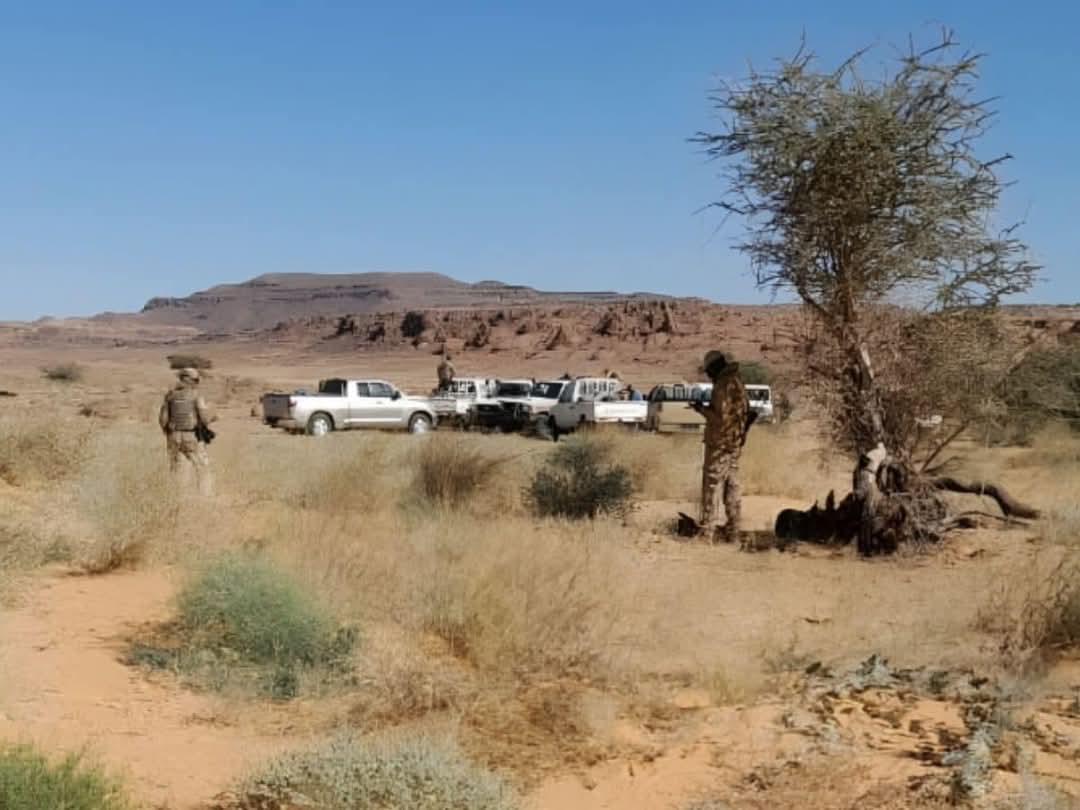
The Citizen
The British newspaper The Guardian, in collaboration with the Colombian platform La Cia Facia, published an investigative report revealing how the war in Sudan has become a new arena for the recruitment of Colombian mercenaries, via private security companies linked to the United Arab Emirates, to support the Rapid Support Forces militia in its battles against the Sudanese Armed Forces.
From Colombia to Darfur via Somalia
The investigation, prepared by journalists Harriet Barber from Medellin and Santiago Rodríguez Álvarez from Bogotá, is based on the testimony of a mercenary named “Carlos,” a former Colombian soldier. Carlos recounts that he was recruited in the capital, Bogotá, and first traveled to a UAE military base in the coastal city of Bosaso in Somalia, where he underwent additional training, before being transferred to the city of Nyala in Sudan’s Darfur region.
He says: “My first mission was to train Sudanese recruits, most of whom were children, in the use of assault rifles, machine guns, and RPG launchers. We trained them to go and kill.”
Visual Evidence and Field Testimonies
The investigation includes photos and videos from within conflict zones, showing the presence of Colombian fighters in El Fasher and the Zamzam camp for internally displaced persons, which witnessed a bloody massacre last April that, according to UN documentation, claimed the lives of hundreds of civilians. Field testimonies confirm that foreign mercenaries were directly involved in taking control of the camp after forcibly displacing its residents.
The Role of the UAE and Private Security Companies
The investigation accuses the UAE of playing a “pivotal and systematic” role in recruiting and financing these mercenaries, through a network of private security and defense companies that serve as a cover for proxy combat operations. It notes that this pattern recalls the UAE’s experience in Yemen, where it used Latin American mercenaries to fight the Houthis as part of what was then described as the “privatization of war.”
The report asserts that this strategy aims to reduce the political and legal costs for sponsoring states, given the absence of effective international accountability.
Colombia: A Market for Former Soldiers
The investigation reveals that Colombia, emerging from a protracted armed conflict, has tens of thousands of highly trained soldiers who are forced into early retirement, receiving meager salaries and limited economic opportunities. This makes them easy prey for the offers of private security companies, which now recruit them even through applications such as WhatsApp and Facebook, offering salaries of up to thousands of dollars per month.
One security expert cited in the investigation says:
“We’re talking about soldiers being recruited as if they were commodities to be bought and sold, sent into conflicts they know nothing about, to kill or be killed for money.”
Proxy Wars… and Real Destruction
The investigation concludes by noting that the war in Sudan represents the latest chapter in proxy wars, waged behind the scenes by wealthy countries like the UAE, using mercenary fighters, while Sudanese civilians bear the brunt of their blood and the destruction of their lives.
The report concludes that the “privatization of war” is not limited to weapons and money, but also includes lives, turning conflicts into a lucrative international business that exploits the poverty of the south to fuel conflicts in the north.