
Environmental Protection Association Golden Jubilee
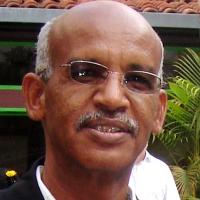
Mohammed Ahmed Al-Feelabi
(Environmental Affairs Specialist)
When a person reaches the age of fifty, they continue to spread their positive energy to those around them.
At that point, the brain has reached its peak performance levels, because the brain’s ability to learn remains strong until the seventh decade of life, according to experts.
Fifty years also represents a transition between various stages, from attachment to parents to weaning, learning from peers, and various stages of education.
It means meeting thousands of people, gaining more experiences, and equipping oneself with what will enable one to cross the isthmus.
Fifty years of environmental civil society organizations represent the passage of thousands of people with expertise, knowledge, energies, and experiences worthy of documentation and learning.
It also means that this organization has become a school and a university of sciences and knowledge, graduating thousands who are entrusted with holding the threads of the present and future of humanity and the environment.
But for an organization to be concerned with raising the level of environmental knowledge is a different matter, a challenge that surpasses all other challenges, especially at a time when the term “environment” itself was unfamiliar, and work in this field was considered a form of intellectual luxury and elitist orientation.
This was the case until the 1972 Stockholm Conference, which cast the first stone in the stagnant pond of environmental reality, raising the slogan “One Earth,” a clear indication that the environment is an indivisible whole. It defined the environment as “the balance of material and social resources available at a given time and in a given place to satisfy human needs and aspirations.” A group of Sudanese concerned with the issue took up the gauntlet, forming the first environmental organization, the Sudanese Society for Environmental Protection. This organization emerged from the University of Khartoum’s Science Association in 1975. The beginnings were marked by serious efforts to consolidate the concept and instill it in the consciousness of workers in all walks of life and institutions with an environmental focus. The group worked to overcome numerous challenges, most notably the political regime’s opposition to all things civil.
The challenge was to prove that the civil sector is the third pillar of the state, alongside the public and private sectors, and that equal opportunities and capabilities are essential.
The Sudanese Society for Environmental Protection was here to stay. It has survived a period when organizations cannot survive without a firm belief in the cause and a unique ability to instill this belief in subsequent generations. This has been achieved over the past fifty years of its existence (1975-2025), which was celebrated at a time when cruelty to the environment and resources, to organizations, and even to people themselves was exemplary.
In its golden jubilee, the association is attempting to light a candle amidst the harsh darkness, celebrating the past and believing that what lies ahead will be better, despite everything.
Thank you to all those who have continued to hold on to the embers of the dream that the right to live in a healthy environment will be realized, respected, protected, and safeguarded by humanitarian principles.