
When the Trains Stop, the Nation Stops: A Call to Revive Sudan Railways
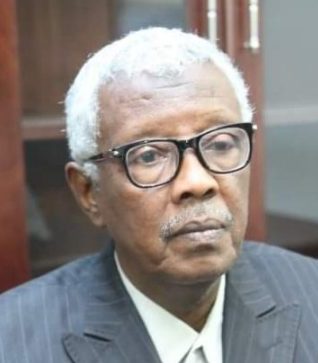
By: Prof. Talat Dafallah Abdelmajid
Sudan Railways were never just steel tracks and trains carrying people and goods. They were a lifeline, breathing life into entire towns and communities along more than 5,800 kilometers of rail lines—once the third largest network in Africa. Around its major and minor stations, neighborhoods, clubs, schools, and hospitals sprang up. The railway became a complete ecosystem of life, not merely a mode of transportation.
Among the most enduring symbols of this heritage were the railway housing estates built in Atbara, Khartoum, Kosti, and other cities. These houses were more than shelters for workers; they became the nuclei of entire neighborhoods. Residences were allocated according to rank: modest huts for laborers, semi-detached houses for supervisors, and spacious villas for engineers and administrators. Within these communities lived trackmen, drivers, technicians, and engineers, surrounded by markets, schools, and clubs such as the Atbara Workers’ Club, a beacon of culture and sports.
The Role of Railway Workers in the National Struggle:
Railway workers were not simply an industrial workforce keeping the trains running and the tracks maintained. They were the vanguard of Sudan’s labor and political movements. They organized unions that fought for workers’ rights, transforming Atbara’s workshops and stations into platforms of national and social awareness. From within this movement emerged calls for equality between the poor and the wealthy, and demands for better working conditions evolved into slogans for independence. Their role did not end with resistance to British colonial rule; in later years, they also stood as a barrier against dictatorship, defending freedom, justice, and union rights. In this way, railway workers became an embodiment of resilience and collective consciousness—pillars in Sudan’s history of struggle.
Yet with time, this great institution declined. Workshops were abandoned and fell into ruin. Some houses were sold, others demolished—homes tied to the memories of thousands of families. As one veteran railwayman lamented: “In England, the house of any railway unionist or intellectual is preserved as a heritage site. Here, they are left to decay.”
Despite the decline, the railways remain a vital part of Sudan’s history and memory. Experience has shown that the network was never just a means of transport, but an economic backbone, a community hub, and an environmental safeguard. Rail transport is among the most fuel-efficient modes of transportation, able to carry far more than trucks using significantly less energy. Studies indicate that railways produce only about a quarter of the carbon emissions generated by long-haul road freight. This means reviving the railways would directly reduce the carbon footprint and air pollution, while easing pressure on Sudan’s highways—where accidents and fuel consumption take a heavy toll.
Today, more than ever, Sudan needs to breathe new life into this sector. Revitalizing the railways means reviving trade, reconnecting regions, and ensuring equitable access to services. It also means building a more sustainable transport system that can support the economy while protecting the environment.
The message is clear: when the trains stop, the nation stops. But when Sudan Railways return to life, hope for a better future will return with them.